
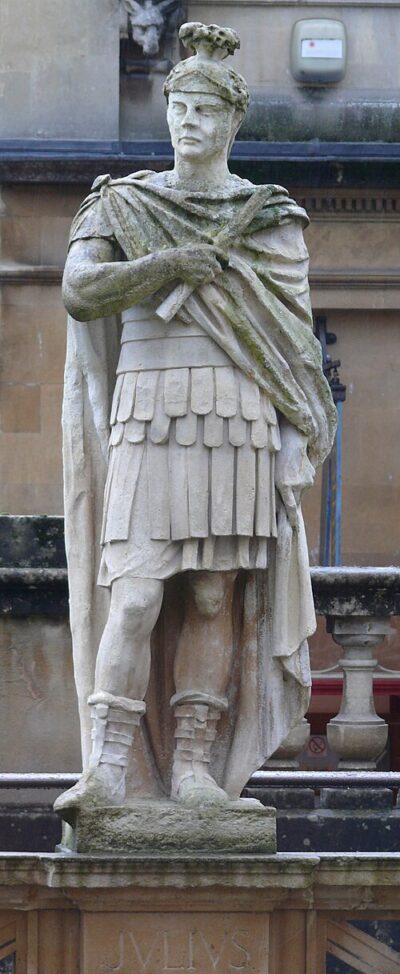
Gnaeus Julius Agricola
Gnaeus Julius Agricola was a Roman governor and general, AD 40-93. Born June 13, 40, in Forum Iulii. Died August 23, 93, in Rome. Positions held include ancient Roman senator, tribune of the plebs and legatus Augusti pro praetore Britanniae (78–85).
Facts
18 facts · 0 confirmed by two sources · 6 cited · 12 from one source
Where this comes from
Papalocal keeps its own record. It started from these sources; what each one said is kept here as it was copied, so a change on their side never changes this page by itself. Tap one to read its version.
What Wikidata says · copied November 16, 2026 · revision 2532899551
- Described as
- Roman governor and general, AD 40-93 (40-93)
- Other names
- Agricola, Gnaeus Iulius Agricola
- Born
- June 13, 40
- Died
- August 23, 93
- Born in
- Forum Iulii · 2 references
- Died in
- Rome
- Citizen of
- Ancient Rome
- Occupation
- politician · 1 reference; military personnel; military leader · 1 reference
- Positions held
- ancient Roman senator; tribune of the plebs; legatus Augusti pro praetore Britanniae (78–85); praetors; quaestor; Roman consul
- Spouse
- Domitia Decidiana (61–) · 1 reference
- Children
- Julia Agricola
- Father
- Lucius Julius Graecinus · 1 reference
- Mother
- Julia Procilla · 1 reference
- Wikipedias with a page
- 45
Wikidata item Q272082 (wikidata.org/wiki/Q272082), public domain (CC0). Copied November 16, 2026.
What Wikipedia says · copied November 16, 2026 · revision 1379806054
Gnaeus Julius Agricola (; 13 June 40 – 23 August 93) was a Roman general and politician responsible for much of the Roman conquest of Britain. Born to a political family of senatorial rank, Agricola began his military career as a military tribune under governor Gaius Suetonius Paulinus. In his subsequent career, he served in a variety of political positions in Rome. In 64, he was appointed quaestor in Asia province. Two years later, he was appointed Plebeian Tribune, and in 68, he was made praetor. During the Year of the Four Emperors in 69, he supported Vespasian, general of the Syrian army, in his bid for the throne.
When Vespasian became emperor, Agricola was made a patrician and appointed governor of Gallia Aquitania. In 77, he was made consul and governor of Britannia. As governor, he completed the conquest of what is today Wales and northern England, and led his army to the far north of Scotland, establishing forts across much of the lowlands. In 85, Agricola was recalled from Britain after an unusually lengthy service by Emperor Domitian. After his return, he retired from military and public life and died in 93. Most of what is known about Agricola and his governorship was written in the De vita et moribus Iulii Agricolae, a primary source, written by Tacitus, Agricola's son-in-law, and detailed archaeological evidence from northern Britain.
From the Wikipedia article “Gnaeus Julius Agricola” (en.wikipedia.org/wiki/Gnaeus_Julius_Agricola), by its contributors, under CC BY-SA 4.0 (creativecommons.org/licenses/by-sa/4.0/). Copied November 16, 2026; not changed.
Confirmed Two sources agree. Cited One source, and it names where it got it. One source One source, without a reference of its own. Sources disagree The sources disagree. We show the best-supported value and keep theirs below.
