
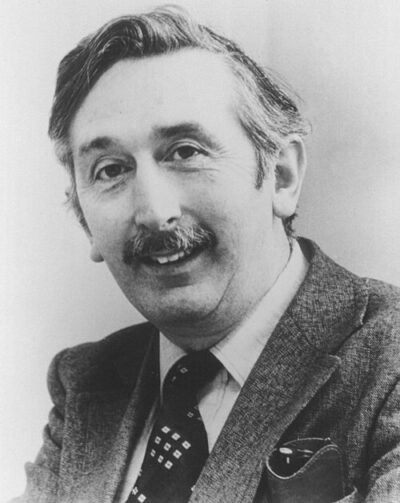
Godfrey Hounsfield
Godfrey Hounsfield was an English electrical engineer. Born August 28, 1919, in Sutton on Trent. Died August 12, 2004, in Kingston upon Thames. Educated at Magnus Church of England School and Faraday House. Awards include Fellow of the Royal Society, Nobel Prize in Physiology or Medicine and Commander of the Order of the British Empire.
Facts
29 facts · 2 confirmed by two sources · 11 cited · 16 from one source
Where this comes from
Papalocal keeps its own record. It started from these sources; what each one said is kept here as it was copied, so a change on their side never changes this page by itself. Tap one to read its version.
What Wikidata says · copied November 16, 2026 · revision 2565433338
- Described as
- English electrical engineer (1919–2004)
- Other names
- Sir Godfrey Newbold Hounsfield, Godfrey N. Hounsfield, Godfrey Newbold Hounsfield
- Born
- August 28, 1919 · 2 references
- Died
- August 12, 2004 · 5 references
- Born in
- Sutton on Trent
- Died in
- Kingston upon Thames
- Name at birth
- Godfrey Newbold Hounsfield · 1 reference
- Citizen of
- United Kingdom; United Kingdom of Great Britain and Ireland (–1927)
- Occupation
- engineer; physicist
- Education
- Magnus Church of England School; Faraday House
- Member of
- Royal Society of London
- Awards
- Fellow of the Royal Society; Nobel Prize in Physiology or Medicine (1979) · 2 references; Commander of the Order of the British Empire; Canada Gairdner International Award (1976); Howard N. Potts Medal (1977) · 1 reference; Wilhelm Exner Medal (1974) · 1 reference; Lasker-DeBakey Clinical Medical Research Award (1975) · 1 reference; National Inventors Hall of Fame (2007) · 1 reference; X-ray badge (1980); Knight Bachelor; Honorary Fellow of the Royal College of Surgeons (1980) · 1 reference; Dennis Gabor Medal and Prize (1976) · 1 reference; John Scott Award (1977) · 1 reference; Mullard Award (1977) · 1 reference
- Field
- electrical engineering · 1 reference; computed tomography · 1 reference
- Military branch
- Royal Air Force
- Wikipedias with a page
- 56
Wikidata item Q273769 (wikidata.org/wiki/Q273769), public domain (CC0). Copied November 16, 2026.
What Wikipedia says · copied November 16, 2026 · revision 1377824759
Sir Godfrey Newbold Hounsfield ( HOWNZ-feeld; 28 August 1919 – 12 August 2004) was an English electrical engineer who shared the 1979 Nobel Prize for Physiology or Medicine with Allan MacLeod Cormack for his part in developing the diagnostic technique of X-ray computed tomography (CT).
His name is immortalised in the Hounsfield scale, a quantitative measure of radiodensity used in evaluating CT scans. The scale is defined in Hounsfield units (symbol HU), running from air at −1000 HU, through water at 0 HU, and up to dense cortical bone at +1000 HU and more.
- Born, in its opening lines
- August 28, 1919
- Died, in its opening lines
- August 12, 2004
From the Wikipedia article “Godfrey Hounsfield” (en.wikipedia.org/wiki/Godfrey_Hounsfield), by its contributors, under CC BY-SA 4.0 (creativecommons.org/licenses/by-sa/4.0/). Copied November 16, 2026; not changed.
Confirmed Two sources agree. Cited One source, and it names where it got it. One source One source, without a reference of its own. Sources disagree The sources disagree. We show the best-supported value and keep theirs below.
