
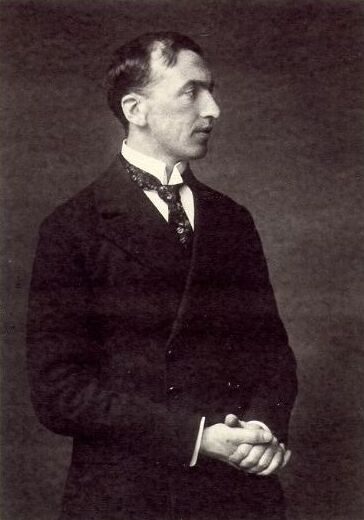
Hans Gerhard Creutzfeldt
Hans Gerhard Creutzfeldt was a German neuropathologist. Born June 2, 1885, in Harburg. Died December 30, 1964, in Munich. Positions held include professor. Educated at Kiel University and University of Jena.
Facts
20 facts · 2 confirmed by two sources · 4 cited · 14 from one source
Where this comes from
Papalocal keeps its own record. It started from these sources; what each one said is kept here as it was copied, so a change on their side never changes this page by itself. Tap one to read its version.
What Wikidata says · copied November 18, 2026 · revision 2569068873
- Described as
- German neuropathologist (1885–1964)
- Born
- June 2, 1885 · 1 reference
- Died
- December 30, 1964
- Born in
- Harburg · 1 reference
- Died in
- Munich · 1 reference
- Citizen of
- Germany
- Occupation
- judge; neuroscientist; neuropathologist; university teacher; neurologist · 1 reference; psychiatrist · 1 reference; pathologist
- Positions held
- professor
- Worked for
- Kiel University; Charité
- Education
- Kiel University; University of Jena; University of Rostock
- Member of
- Jenaische Burschenschaft Germania
- Field
- neurology
- Wikipedias with a page
- 22
Wikidata item Q62474 (wikidata.org/wiki/Q62474), public domain (CC0). Copied November 18, 2026.
What Wikipedia says · copied November 18, 2026 · revision 1380212969
Hans Gerhard Creutzfeldt (June 2, 1885 – December 30, 1964) was a German neurologist and neuropathologist. Although he is typically credited as the physician to first describe the Creutzfeldt–Jakob disease, this has been disputed. He was born in Harburg an der Elbe and died in Munich.
- Born, in its opening lines
- June 2, 1885
- Died, in its opening lines
- December 30, 1964
From the Wikipedia article “Hans Gerhard Creutzfeldt” (en.wikipedia.org/wiki/Hans_Gerhard_Creutzfeldt), by its contributors, under CC BY-SA 4.0 (creativecommons.org/licenses/by-sa/4.0/). Copied November 18, 2026; not changed.
Confirmed Two sources agree. Cited One source, and it names where it got it. One source One source, without a reference of its own. Sources disagree The sources disagree. We show the best-supported value and keep theirs below.
