
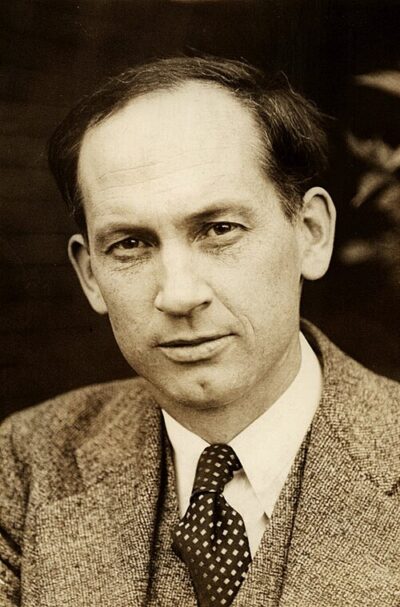
Harold Innis
Harold Innis was a Canadian professor of political economy. Born November 5, 1894, in Otterville. Died November 8, 1952, in Toronto. Positions held include president (1937–). Educated at McMaster University and University of Chicago. Awards include honorary doctorate at the Laval University, Fellow of the Royal Society of Canada and J. B. Tyrrell Historical Medal.
Facts
26 facts · 2 confirmed by two sources · 11 cited · 13 from one source
Where this comes from
Papalocal keeps its own record. It started from these sources; what each one said is kept here as it was copied, so a change on their side never changes this page by itself. Tap one to read its version.
What Wikidata says · copied November 15, 2026 · revision 2568781442
- Described as
- Canadian professor of political economy (1894–1952)
- Other names
- Harold Adams Innis
- Born
- November 5, 1894 · 2 references
- Died
- November 8, 1952 · 2 references
- Born in
- Otterville
- Died in
- Toronto · 1 reference
- Buried in
- Mount Pleasant Cemetery · 1 reference
- Cause of death
- prostate cancer
- Citizen of
- Canada
- Occupation
- economist · 1 reference; historian · 2 references; philosopher; university teacher; sociologist; geographer · 1 reference
- Positions held
- president (1937–) · 1 reference
- Worked for
- University of Toronto; McMaster University
- Education
- McMaster University; University of Chicago
- Member of
- American Philosophical Society (1948–)
- Awards
- honorary doctorate at the Laval University · 1 reference; Fellow of the Royal Society of Canada; J. B. Tyrrell Historical Medal (1944) · 1 reference; Person of National Historic Significance · 1 reference
- Field
- economics · 1 reference
- Spouse
- Mary Quayle Innis · 1 reference
- Children
- Anne Innis Dagg · 1 reference
- Wikipedias with a page
- 28
Wikidata item Q505528 (wikidata.org/wiki/Q505528), public domain (CC0). Copied November 15, 2026.
What Wikipedia says · copied November 15, 2026 · revision 1383949299
Harold Adams Innis (November 5, 1894 – November 8, 1952) was a Canadian professor of political economy at the University of Toronto and the author of seminal works on media, communication theory, and Canadian economic history. He helped develop the staples thesis, which holds that Canada's culture, political history, and economy have been decisively influenced by the exploitation and export of a series of "staples" such as fur, fish, lumber, wheat, mined metals, and coal. The staple thesis dominated economic history in Canada from the 1930s to 1960s, and continues to be a fundamental part of the Canadian political economic tradition. Innis has been referred to as the "father of communications theory" and as the "father of Canadian economic history".
Innis's writings on communication explore the role of media in shaping the culture and development of civilizations. He argued, for example, that a balance between oral and written forms of communication contributed to the flourishing of Greek civilization in the 5th century BC. He warned, however, that Western civilization is now imperiled by powerful, advertising-driven media obsessed by "present-mindedness" and the "continuous, systematic, ruthless destruction of elements of permanence essential to cultural activity." His intellectual bond with Eric A. Havelock formed the foundations of the Toronto School of communication theory, which provided a source of inspiration for future members of the school Marshall McLuhan and Edmund Snow Carpenter.
Innis laid the basis for scholarship that looked at the social sciences from a distinctly Canadian point of view. As the head of the University of Toronto's political economy department, he worked to build up a cadre of Canadian scholars so that universities would not continue to rely as heavily on British or American-trained professors unfamiliar with Canada's history and culture. He was successful in establishing sources of financing for Canadian scholarly research.
As the Cold War grew hotter after 1947, Innis grew increasingly hostile to the United States. He warned repeatedly that Canada was becoming a subservient colony to its much more powerful southern neighbor. "We are indeed fighting for our lives", he warned, pointing especially to the "pernicious influence of American advertising ... We can only survive by taking persistent action at strategic points against American imperialism in all its attractive guises." His views influenced some younger scholars, including Donald Creighton.
Innis also tried to defend universities from political and economic pressures. He believed that independent universities, as centres of critical thought, were essential to the survival of Western civilization. His intellectual disciple and university colleague, Marshall McLuhan, lamented Innis's premature death as a disastrous loss for human understanding. McLuhan wrote: "I am pleased to think of my own book The Gutenberg Galaxy as a footnote to the observations of Innis on the subject of the psychic and social consequences, first of writing then of printing." Mel Watkins declared that Innis was "without doubt the most distinguished social scientist and historian, and one of the most distinguished intellectuals, that Canada has ever produced".
- Born, in its opening lines
- November 5, 1894
- Died, in its opening lines
- November 8, 1952
From the Wikipedia article “Harold Innis” (en.wikipedia.org/wiki/Harold_Innis), by its contributors, under CC BY-SA 4.0 (creativecommons.org/licenses/by-sa/4.0/). Copied November 15, 2026; not changed.
Confirmed Two sources agree. Cited One source, and it names where it got it. One source One source, without a reference of its own. Sources disagree The sources disagree. We show the best-supported value and keep theirs below.
