
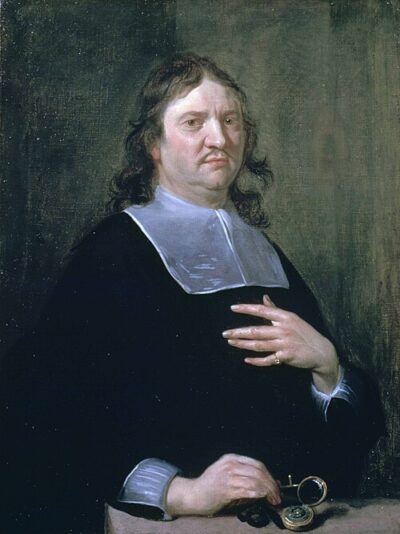
Henry Oldenburg was a German theologian. Born 1619, in Bremen. Died September 5, 1677, in Charlton. Positions held include ambassador and secretary of the Royal Society.
Facts
16 facts · 0 confirmed by two sources · 7 cited · 9 from one source
Where this comes from
Papalocal keeps its own record. It started from these sources; what each one said is kept here as it was copied, so a change on their side never changes this page by itself. Tap one to read its version.
What Wikidata says · copied November 17, 2026 · revision 2567384453
- Described as
- German theologian
- Born
- 1619
- Died
- September 5, 1677
- Born in
- Bremen
- Died in
- Charlton
- Citizen of
- Bremen
- Occupation
- editor; philosopher · 2 references; diplomat · 1 reference; university teacher · 1 reference; writer · 1 reference; secretary · 1 reference; natural philosopher · 1 reference
- Positions held
- ambassador; secretary of the Royal Society
- Member of
- Royal Society of London (1663–)
- Father
- Heinrich Oldenburg · 1 reference
- Wikipedias with a page
- 24
Wikidata item Q700422 (wikidata.org/wiki/Q700422), public domain (CC0). Copied November 17, 2026.
What Wikipedia says · copied November 17, 2026 · revision 1368127011
Henry Oldenburg (also Henry Oldenbourg) (c. 1618 as Heinrich Oldenburg – 5 September 1677) was a German theologian, diplomat, and natural philosopher, known as one of the creators of modern scientific peer review. He was one of the foremost intelligencers of 17th-century Europe, with a network of correspondents to rival those of Fabri de Peiresc, Marin Mersenne, and Ismaël Boulliau. At the foundation of the Royal Society in London, he took on the task of foreign correspondence, as the first Secretary.
From the Wikipedia article “Henry Oldenburg” (en.wikipedia.org/wiki/Henry_Oldenburg), by its contributors, under CC BY-SA 4.0 (creativecommons.org/licenses/by-sa/4.0/). Copied November 17, 2026; not changed.
Confirmed Two sources agree. Cited One source, and it names where it got it. One source One source, without a reference of its own. Sources disagree The sources disagree. We show the best-supported value and keep theirs below.
