
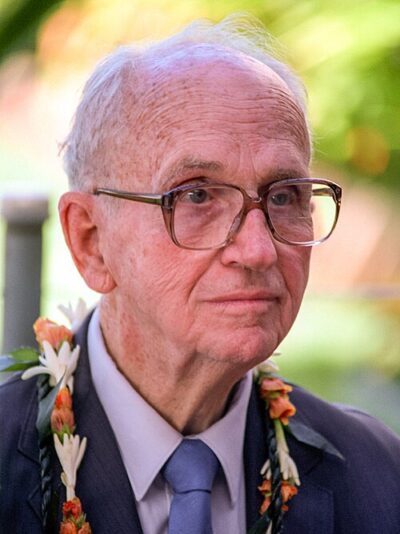
James A. Michener
James A. Michener was an American author. Born February 3, 1907, in Doylestown. Died October 16, 1997, in Austin. Known for Tales of the South Pacific. Educated at Swarthmore College and University of Northern Colorado. Awards include Pulitzer Prize for Fiction, Presidential Medal of Freedom and St. Louis Literary Award.
Facts
41 facts · 2 confirmed by two sources · 10 cited · 29 from one source
Where this comes from
Papalocal keeps its own record. It started from these sources; what each one said is kept here as it was copied, so a change on their side never changes this page by itself. Tap one to read its version.
What Wikidata says · copied November 13, 2026 · revision 2557948500
- Described as
- American author (1907-1997)
- Other names
- James Albert Michener, James Michener
- Born
- February 3, 1907 · 11 references
- Died
- October 16, 1997 · 11 references
- Born in
- Doylestown
- Died in
- Austin · 3 references
- Buried in
- Texas State Cemetery
- Cause of death
- kidney failure
- Citizen of
- United States · 1 reference
- Occupation
- writer · 2 references; military officer; novelist; screenwriter · 2 references; autobiographer · 1 reference; teacher; art collector · 1 reference
- Political party
- Democratic Party
- Worked for
- The Hill School; George School (1933–1936); University of Northern Colorado; Harvard University (1939–1940); Macmillan Inc.
- Education
- Swarthmore College (–1929); University of Northern Colorado; University of St Andrews; Central Bucks High School West
- Known for
- Tales of the South Pacific
- Awards
- Pulitzer Prize for Fiction (1948) · 1 reference; Presidential Medal of Freedom (1977) · 1 reference; St. Louis Literary Award (1981); Common Wealth Award of Distinguished Service (1992); Distinguished Americans series (2008); Golden Plate Award (1970); National Medal of Arts; honorary doctor of the University of Miami (1987) · 1 reference
- Field
- literary activity · 1 reference; belletristic literature · 1 reference
- Spouse
- Mari Yoriko Sabusawa (1955–1994)
- Military branch
- United States Navy
- Lived in
- Austin; Colorado; Greeley; Pennsylvania
- Wikipedias with a page
- 50
Wikidata item Q361653 (wikidata.org/wiki/Q361653), public domain (CC0). Copied November 13, 2026.
What Wikipedia says · copied November 13, 2026 · revision 1372121235
James Albert Michener ( or ; February 3, 1907 – October 16, 1997) was an American writer. He wrote more than 40 books, most of which were long, fictional family sagas covering the lives of many generations, set in particular geographic locales and incorporating detailed history. Many of his works were bestsellers and were chosen by the Book of the Month Club. He was also known for the meticulous research that went into his books.
Michener's books include his first book, Tales of the South Pacific, for which he won the Pulitzer Prize for Fiction in 1948; Hawaii; The Drifters; Centennial; The Source; The Fires of Spring; Chesapeake; Caribbean; Caravans; Alaska; Texas; Space; Poland; and The Bridges at Toko-ri. His non-fiction works include Iberia, about his travels in Spain and Portugal; his memoir, The World Is My Home; and Sports in America. Return to Paradise combines fictional short stories with Michener's factual descriptions of the Pacific areas where they take place.
Tales of the South Pacific was adapted as the popular Broadway musical South Pacific, by Rodgers and Hammerstein. The musical in turn was adapted as a feature film in 1958 and 2001, adding to his financial success. A number of his other stories and novels were adapted for films and TV series.
He also wrote Presidential Lottery: The Reckless Gamble in Our Electoral System, in which he condemned the United States' Electoral College system. It was published in 1969, and republished in 2014 and 2016.
- Born, in its opening lines
- February 3, 1907
- Died, in its opening lines
- October 16, 1997
From the Wikipedia article “James A. Michener” (en.wikipedia.org/wiki/James_A._Michener), by its contributors, under CC BY-SA 4.0 (creativecommons.org/licenses/by-sa/4.0/). Copied November 13, 2026; not changed.
Confirmed Two sources agree. Cited One source, and it names where it got it. One source One source, without a reference of its own. Sources disagree The sources disagree. We show the best-supported value and keep theirs below.
