
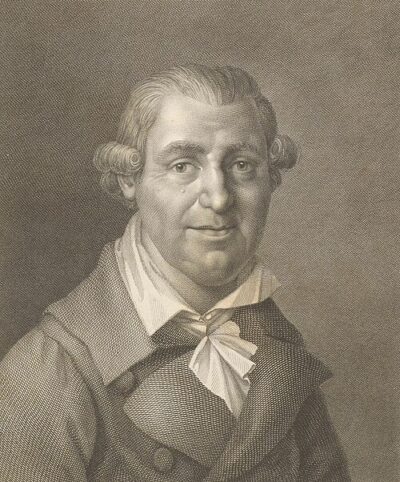
Johann Karl August Musäus
Johann Karl August Musäus was a German writer. Born March 29, 1735, in Jena. Died October 28, 1787, in Weimar. Educated at University of Jena.
Facts
20 facts · 2 confirmed by two sources · 10 cited · 8 from one source
Where this comes from
Papalocal keeps its own record. It started from these sources; what each one said is kept here as it was copied, so a change on their side never changes this page by itself. Tap one to read its version.
What Wikidata says · copied November 17, 2026 · revision 2565542016
- Described as
- German writer (1735-1787)
- Other names
- John August Musæus, John August Musaeus
- Born
- March 29, 1735 · 7 references
- Died
- October 28, 1787 · 7 references
- Born in
- Jena · 1 reference
- Died in
- Weimar · 1 reference
- Citizen of
- Holy Roman Empire
- Occupation
- writer · 2 references; literary critic · 1 reference; poet; children's writer; collector of fairy tales; pedagogue · 1 reference
- Education
- University of Jena
- Member of
- Illuminati
- Field
- literary activity · 1 reference; fairy tale · 1 reference; literary criticism · 1 reference; young adult literature · 1 reference
- Spouse
- Juliane Musäus
- Children
- Carl Musäus · 1 reference
- Father
- Johann Christoph Musäus · 1 reference
- Wikipedias with a page
- 26
Wikidata item Q213974 (wikidata.org/wiki/Q213974), public domain (CC0). Copied November 17, 2026.
What Wikipedia says · copied November 17, 2026 · revision 1372783135
Johann Karl August Musäus (29 March 1735 – 28 October 1787) was a German author. He was one of the first collectors of German folk stories, most celebrated for his Volksmärchen der Deutschen (1782–1787), a collection of German fairy tales retold as satires.
- Born, in its opening lines
- March 29, 1735
- Died, in its opening lines
- October 28, 1787
From the Wikipedia article “Johann Karl August Musäus” (en.wikipedia.org/wiki/Johann_Karl_August_Musäus), by its contributors, under CC BY-SA 4.0 (creativecommons.org/licenses/by-sa/4.0/). Copied November 17, 2026; not changed.
Confirmed Two sources agree. Cited One source, and it names where it got it. One source One source, without a reference of its own. Sources disagree The sources disagree. We show the best-supported value and keep theirs below.
