
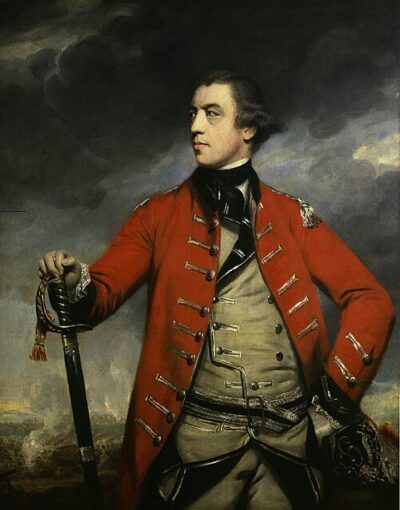
John Burgoyne
John Burgoyne was a British general and playwright. Born February 24, 1722, in Sutton. Died August 4, 1792, in London. Positions held include Member of the Privy Council of Ireland, member of the 12th Parliament of Great Britain and member of the 13th Parliament of Great Britain. Educated at Westminster School.
Facts
31 facts · 2 confirmed by two sources · 12 cited · 17 from one source
What’s different
- Died: we show August 4, 1792 (Confirmed). Wikidata also lists June 4, 1792
Where this comes from
Papalocal keeps its own record. It started from these sources; what each one said is kept here as it was copied, so a change on their side never changes this page by itself. Tap one to read its version.
What Wikidata says · copied November 16, 2026 · revision 2563055987
- Described as
- British general and playwright (1722–1792)
- Born
- February 24, 1722 · 4 references
- Died
- August 4, 1792 · 1 reference; June 4, 1792 · 1 reference
- Born in
- Sutton
- Died in
- London · 1 reference
- Buried in
- Westminster Abbey
- Citizen of
- Kingdom of Great Britain
- Occupation
- politician; playwright; writer · 1 reference; military personnel; soldier · 1 reference
- Positions held
- Member of the Privy Council of Ireland; member of the 12th Parliament of Great Britain; member of the 13th Parliament of Great Britain; member of the 14th Parliament of Great Britain; member of the 15th Parliament of Great Britain; member of the 16th Parliament of Great Britain; member of the 17th Parliament of Great Britain; Governor of Fort William (1769–1779)
- Education
- Westminster School
- Spouse
- Susan Caulfield · 1 reference; Charlotte Stanley (1749–) · 2 references
- Children
- John Fox Burgoyne · 2 references; Maria Sophia Burgoyne · 2 references; Charlotte Elizabeth Burgoyne · 1 reference
- Father
- John Burgoyne · 1 reference
- Mother
- Anna Maria · 1 reference
- Military branch
- British Army
- Military rank
- lieutenant general; general · 1 reference
- Lived in
- Linden Street · 1 reference
- Wikipedias with a page
- 32
Wikidata item Q436775 (wikidata.org/wiki/Q436775), public domain (CC0). Copied November 16, 2026.
What Wikipedia says · copied November 16, 2026 · revision 1386010770
General John Burgoyne (24 February 1722 – 4 August 1792) was a British Army officer, playwright and politician who was a member of the House of Commons of Great Britain from 1761 to 1792. He first saw action during the Seven Years' War when he participated in several battles, most notably during the Spanish invasion of Portugal in 1762.
Burgoyne is best known for his role in the American Revolutionary War. He designed an invasion scheme and was appointed to command a force moving south from Canada to split away New England and end the rebellion. Burgoyne advanced from Canada but his slow movement allowed the Americans to concentrate their forces. Instead of coming to his aid according to the overall plan, the British Army in New York City moved south to capture Philadelphia. Burgoyne fought two small battles near Saratoga but was surrounded by American forces and, with no relief in sight, surrendered his entire army of 6,200 men on 17 October 1777. His surrender, according to the historian Edmund Morgan, "was a great turning point of the war, because it won for Americans the foreign assistance which was the last element needed for victory". France had been supplying the North American colonists since the spring of 1776. Burgoyne and his officers returned to England; the enlisted men became prisoners of war. He came under sharp criticism when he returned to London.
The rise of the politically friendly Shelburne ministry in 1782 saw a brief revival of his military career. He was appointed commander-in-chief of crown forces in Ireland and appointed colonel of the 4th Regiment of Foot. However the return to power of the Tories in 1784 marked the end of Burgoyne's active service. Burgoyne was also an accomplished playwright, known for his works such as The Maid of the Oaks and The Heiress, but his plays never reached the fame of his military career. He served as a member of the House of Commons for many years, sitting for the seats of Midhurst and Preston.
- Born, in its opening lines
- February 24, 1722
- Died, in its opening lines
- August 4, 1792
From the Wikipedia article “John Burgoyne” (en.wikipedia.org/wiki/John_Burgoyne), by its contributors, under CC BY-SA 4.0 (creativecommons.org/licenses/by-sa/4.0/). Copied November 16, 2026; not changed.
Confirmed Two sources agree. Cited One source, and it names where it got it. One source One source, without a reference of its own. Sources disagree The sources disagree. We show the best-supported value and keep theirs below.
