
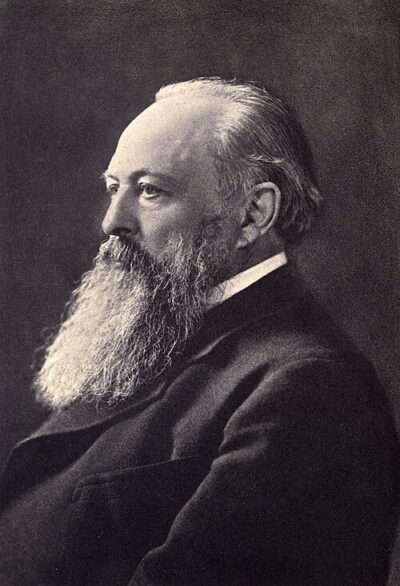
John Dalberg-Acton, 1st Baron Acton
John Dalberg-Acton, 1st Baron Acton was a British politician and historian. Born January 10, 1834, in Naples. Died June 19, 1902, in Tegernsee. Positions held include Regius Professor of History, Cambridge University (1895–1902), member of the 19th Parliament of the United Kingdom (1865–1866) and member of the 18th Parliament of the United Kingdom (1859–1865). Known for Lectures on Modern History. Educated at St Mary's College, Oscott and LMU Munich. Awards include Knight Commander of the Royal Victorian Order.
Facts
37 facts · 2 confirmed by two sources · 20 cited · 15 from one source
Where this comes from
Papalocal keeps its own record. It started from these sources; what each one said is kept here as it was copied, so a change on their side never changes this page by itself. Tap one to read its version.
What Wikidata says · copied November 16, 2026 · revision 2557989113
- Described as
- British politician and historian (1834–1902)
- Other names
- Lord Acton, John Emerich Edward Dalberg-Acton, 1st Baron Acton, Sir John Dalberg-Acton, 8th Baronet, John Emerich Edward Dalberg-Acton, John Dalberg-Acton, John Acton, Sir John Dalberg-Acton, "Magistrate of History"
- Born
- January 10, 1834 · 8 references
- Died
- June 19, 1902 · 8 references
- Born in
- Naples · 2 references
- Died in
- Tegernsee · 2 references
- Buried in
- Tegernsee cemetery · 1 reference
- Citizen of
- United Kingdom of Great Britain and Ireland
- Occupation
- politician · 2 references; historian · 2 references; pedagogue; writer · 1 reference; university teacher; journalist · 1 reference; philosopher · 1 reference; lord · 1 reference
- Positions held
- Regius Professor of History, Cambridge University (1895–1902); member of the 19th Parliament of the United Kingdom (1865–1866) · 1 reference; member of the 18th Parliament of the United Kingdom (1859–1865) · 1 reference
- Political party
- Liberal Party
- Worked for
- University of Oxford; University of Cambridge
- Education
- St Mary's College, Oscott; LMU Munich
- Member of
- Bavarian Academy of Sciences and Humanities
- Known for
- Lectures on Modern History
- Awards
- Knight Commander of the Royal Victorian Order
- Field
- history
- Spouse
- Maria Anna Ludomilla Euphrosina von und zu Arco auf Valley (1865–) · 3 references
- Children
- Richard Lyon-Dalberg-Acton, 2nd Baron Acton · 1 reference; Elizabeth Mary Catherine Dalberg-Acton · 1 reference; Mary Elizabeth Anne Dalberg-Acton · 2 references; Annie Mary Catherine Georgiana Dalberg-Acton · 2 references; John Dalberg Dalberg-Acton · 2 references; Jeanne Marie Dalberg-Acton · 2 references; Robert Dobson · 1 reference
- Father
- Ferdinand Dalberg-Acton · 1 reference
- Mother
- Marie Louise von Dalberg · 2 references
- Religion
- Catholicism
- Wikipedias with a page
- 53
Wikidata item Q311778 (wikidata.org/wiki/Q311778), public domain (CC0). Copied November 16, 2026.
What Wikipedia says · copied November 16, 2026 · revision 1372621040
John Emerich Edward Dalberg-Acton, 1st Baron Acton, 13th Marquess of Groppoli, (10 January 1834 – 19 June 1902), better known as Lord Acton, was an English Catholic historian, Liberal politician, and writer. A strong advocate for individual liberty, Acton is best known for his observation on the dangers of concentrated authority. In an 1887 letter to an Anglican bishop, he famously wrote, 'Power tends to corrupt, and absolute power corrupts absolutely', underscoring his belief that unchecked power poses the greatest threat to human freedom. His works consistently emphasised the importance of limiting governmental and institutional power in favour of individual rights and personal liberty.
- Born, in its opening lines
- January 10, 1834
- Died, in its opening lines
- June 19, 1902
From the Wikipedia article “John Dalberg-Acton, 1st Baron Acton” (en.wikipedia.org/wiki/John_Dalberg-Acton,_1st_Baron_Acton), by its contributors, under CC BY-SA 4.0 (creativecommons.org/licenses/by-sa/4.0/). Copied November 16, 2026; not changed.
Confirmed Two sources agree. Cited One source, and it names where it got it. One source One source, without a reference of its own. Sources disagree The sources disagree. We show the best-supported value and keep theirs below.
