
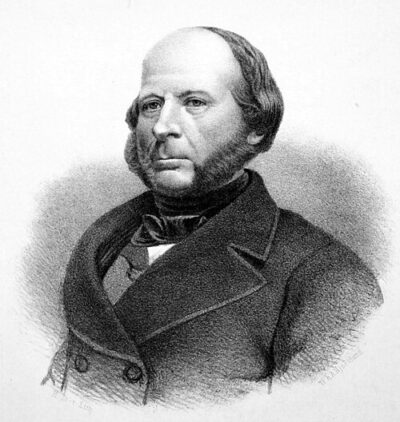
John Ericsson
John Ericsson was a Swedish-US engineer. Born July 31, 1803, in Färnebo församling. Died March 8, 1889, in New York City. Awards include Rumford Prize, National Inventors Hall of Fame and Knight of the Order of Vasa.
Facts
27 facts · 2 confirmed by two sources · 11 cited · 14 from one source
Where this comes from
Papalocal keeps its own record. It started from these sources; what each one said is kept here as it was copied, so a change on their side never changes this page by itself. Tap one to read its version.
What Wikidata says · copied November 16, 2026 · revision 2568677125
- Described as
- Swedish-US engineer (1803-1889)
- Born
- July 31, 1803 · 10 references
- Died
- March 8, 1889 · 10 references
- Born in
- Färnebo församling · 2 references
- Died in
- New York City · 3 references
- Buried in
- Östra kyrkogården · 1 reference
- Citizen of
- Sweden · 1 reference
- Occupation
- engineer · 2 references; military personnel · 1 reference; inventor · 2 references; mechanical engineer · 1 reference; railway engineer
- Member of
- Royal Swedish Academy of Sciences; Royal Physiographic Society in Lund; Royal Society of Arts and Sciences in Gothenburg; Royal Swedish Academy of War Sciences; American Philosophical Society (1877–)
- Awards
- Rumford Prize (1862) · 1 reference; National Inventors Hall of Fame (1993) · 1 reference; Knight of the Order of Vasa · 1 reference
- Field
- mechanical engineering · 1 reference
- Spouse
- Amelia Jane Byam
- Children
- Hjalmar Elworth · 1 reference
- Father
- Olof Ericsson
- Siblings
- Nils Ericson · 1 reference; Anna Carolina Ericsson · 1 reference
- Religion
- agnosticism
- Height
- 1.79 m (5 ft 11 in) · 1 reference
- Wikipedias with a page
- 29
Wikidata item Q435290 (wikidata.org/wiki/Q435290), public domain (CC0). Copied November 16, 2026.
What Wikipedia says · copied November 16, 2026 · revision 1384793792
John Ericsson (born Johan Ericsson; July 31, 1803 – March 8, 1889) was a Swedish-American engineer and inventor. He was active in England and the United States.
Ericsson collaborated on the design of the railroad steam locomotive Novelty, which competed in the Rainhill Trials on the Liverpool and Manchester Railway, which were won by inventor George Stephenson's (1781–1848), Rocket. Later in North America, he designed the United States Navy's first screw-propelled steam frigate USS Princeton, in partnership with Captain (later Commodore) Robert F. Stockton (1795–1866) of the U.S. Navy, who unjustly blamed him for a fatal accident on the new vessel in 1844. A new partnership with Cornelius H. DeLamater (1821–1889), of the DeLamater Iron Works in New York City resulted in the first armored ironclad warship equipped with a rotating gun turret, USS Monitor, which dramatically saved the U.S. (Union Navy) naval blockading squadron from destruction by an ironclad Confederate States naval vessel, CSS Virginia, at the famous Battle of Hampton Roads at the southern mouth of the Chesapeake Bay (at the confluence of the James and Elizabeth Rivers) in March 1862, during the American Civil War (1861–1865).
- Born, in its opening lines
- July 31, 1803
- Died, in its opening lines
- March 8, 1889
From the Wikipedia article “John Ericsson” (en.wikipedia.org/wiki/John_Ericsson), by its contributors, under CC BY-SA 4.0 (creativecommons.org/licenses/by-sa/4.0/). Copied November 16, 2026; not changed.
Confirmed Two sources agree. Cited One source, and it names where it got it. One source One source, without a reference of its own. Sources disagree The sources disagree. We show the best-supported value and keep theirs below.
