
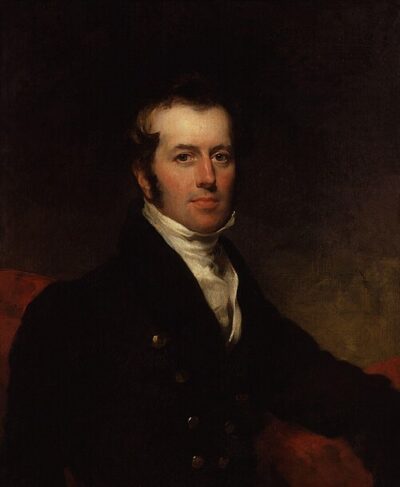
John George Children
John George Children was a British chemist, mineralogist and zoologist. Born May 18, 1777, in Tonbridge. Died January 1, 1852, in Halstead. Positions held include President of the Royal Entomological Society (1833–1834). Educated at Queens' College and Eton College. Awards include Fellow of the Royal Society.
Facts
23 facts · 2 confirmed by two sources · 3 cited · 18 from one source
Where this comes from
Papalocal keeps its own record. It started from these sources; what each one said is kept here as it was copied, so a change on their side never changes this page by itself. Tap one to read its version.
What Wikidata says · copied November 18, 2026 · revision 2527858825
- Described as
- British chemist, mineralogist and zoologist
- Other names
- Children, J G Children
- Born
- May 18, 1777 · 1 reference
- Died
- January 1, 1852 · 1 reference
- Born in
- Tonbridge
- Died in
- Halstead
- Citizen of
- United Kingdom of Great Britain and Ireland; Kingdom of Great Britain (–1801)
- Occupation
- chemist; entomologist; zoologist; ornithologist · 1 reference
- Positions held
- President of the Royal Entomological Society (1833–1834) · 1 reference
- Worked for
- British Museum
- Education
- Queens' College; Eton College; Tonbridge School · 1 reference
- Member of
- Royal Society of London (1807–) · 1 reference; Royal Entomological Society · 1 reference
- Awards
- Fellow of the Royal Society
- Field
- chemist; mineralogy; zoology
- Children
- Anna Atkins
- Father
- George Children
- Wikipedias with a page
- 21
Wikidata item Q520537 (wikidata.org/wiki/Q520537), public domain (CC0). Copied November 18, 2026.
What Wikipedia says · copied November 18, 2026 · revision 1379821460
John George Children FRS FRSE FLS PRES DL (18 May 1777 – 1 January 1852 in Halstead, Kent) was a British chemist, mineralogist and zoologist. Children established a chemical laboratory at his father's home Ferox Hall and conducted experiments into galvanic cells. Following Children's father's bankruptcy and sale of the family estates in 1812 he was forced to seek employment, and in 1816 following a failed attempt at establishing a gunpowder business with his friend Sir Humphry Davy he became the assistant librarian of the department of antiquities at the British Museum in London. In 1822 Davy helped him secure a controversial appointment to the post of assistant keeper of the Natural History Department of the British Museum. He later served as Keeper of the Zoological Department following the division of the Natural History Department into three distinct departments in 1837 (though he had managed the Zoological collections since 1823), he remained in this post until his retirement from the museum in 1840. Along with Davy he built a large galvanic cell, assisted him in experiments and invented a method to extract silver from ore without the need for mercury. Children was also the founding president of the Royal Entomological Society. His daughter Anna Atkins became a pioneer of botanical photography.
- Born, in its opening lines
- May 18, 1777
- Died, in its opening lines
- January 1, 1852
From the Wikipedia article “John George Children” (en.wikipedia.org/wiki/John_George_Children), by its contributors, under CC BY-SA 4.0 (creativecommons.org/licenses/by-sa/4.0/). Copied November 18, 2026; not changed.
Confirmed Two sources agree. Cited One source, and it names where it got it. One source One source, without a reference of its own. Sources disagree The sources disagree. We show the best-supported value and keep theirs below.
