
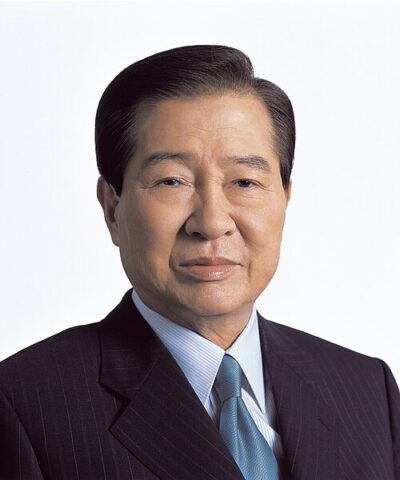
Kim Dae-jung
Kim Dae-jung was the 8th President of the Republic of Korea. Born January 6, 1924, in Hauido. Died August 18, 2009, in Severance Hospital. Positions held include President of South Korea (1998–2003), Member of the National Assembly of South Korea (3 times) (1961–1992) and president. Educated at Ha-ui Elementary School and Mokpo Bukkyo Elementary School. Awards include Nobel Peace Prize, Knight Grand Cross of the Order of the Bath and Knight Grand Cross of the Order of St Michael and St George.
Facts
37 facts · 2 confirmed by two sources · 5 cited · 29 from one source · 1 where the sources disagree
What’s different
- Cause of death: we show heart failure (Sources disagree). Wikidata also lists pneumonia
Where this comes from
Papalocal keeps its own record. It started from these sources; what each one said is kept here as it was copied, so a change on their side never changes this page by itself. Tap one to read its version.
What Wikidata says · copied November 16, 2026 · revision 2568262225
- Described as
- 8th President of the Republic of Korea (1924–2009)
- Other names
- Kim Daecanq, Kim Dae Jung
- Born
- January 6, 1924 · 3 references
- Died
- August 18, 2009 · 8 references
- Born in
- Hauido
- Died in
- Severance Hospital · 1 reference
- Buried in
- Seoul National Cemetery
- Cause of death
- pneumonia; heart failure · 1 reference
- Citizen of
- South Korea
- Occupation
- politician · 1 reference; journalist
- Positions held
- President of South Korea (1998–2003); Member of the National Assembly of South Korea (3 times) (1961–1992); president
- Political party
- Democratic Party
- Worked for
- University of Cambridge
- Education
- Ha-ui Elementary School; Mokpo Bukkyo Elementary School
- Awards
- Nobel Peace Prize (2000) · 3 references; Knight Grand Cross of the Order of the Bath; Knight Grand Cross of the Order of St Michael and St George; Rafto Prize (2000); Bruno Kreisky Award for Services to Human Rights; Philadelphia Liberty Medal; Grand Cross 1st class of the Order of Merit of the Federal Republic of Germany; Knight Grand Cross with Collar of the Order of Merit of the Italian Republic; Silver Olympic Order (1999) · 1 reference; honorary doctor of the University of Portland; honorary doctorate from the University of Cambridge (2001); Grand Order of Mugunghwa · 1 reference
- Spouse
- Cha Yong-ae (1945–1959) · 1 reference; Lee Hui-ho (1962–2009) · 1 reference
- Children
- Kim Hong-gul; Kim Hong-il; Kim Hong-eop
- Father
- Kim Won Sik
- Religion
- Catholicism
- Military rank
- sub-lieutenant
- Nickname
- DJ
- Wikipedias with a page
- 94
Wikidata item Q45785 (wikidata.org/wiki/Q45785), public domain (CC0). Copied November 16, 2026.
What Wikipedia says · copied November 16, 2026 · revision 1384842894
Kim Dae-jung (Korean: 김대중; 6 January 1924 – 18 August 2009) was a South Korean politician, statesman and activist who served as the eighth President of South Korea from 1998 to 2003.
Born in Hauido during Japanese colonial rule, Kim graduated from Mokpo Commercial School and later worked at a Japanese shipping company in Mokpo and later established his own shipping business after World War II. Originally an entrepreneur, Kim abandoned business and entered politics after the Korean War, becoming a member of the new wing of the Democratic Party.
He was an opposition politician who carried out a democratization movement against the military dictatorship from the Third Republic in the 1960s to the Fifth Republic in the 1980s. He escaped death five times, spent six years in prison and ten years under house arrest and in exile. He was repeatedly imprisoned, exiled, almost killed by vehicular homicide, and sentenced to death by the military and political authorities.
He ran unsuccessfully in presidential elections in 1971, 1987, and 1992. In the country's 15th presidential election in 1997, he defeated Grand National Party candidate Lee Hoi-chang through an alliance with Kim Jong-pil and the Democratic Liberal Party. Kim was the first opposition candidate to win the presidency. At the time of his inauguration in 1998, he was 74 years old, making him the oldest president in Korean history.
During his tenure, Kim Dae-jung worked to revive the South Korean economy, which had been hit by the 1997 Asian financial crisis, and reformed the South Korean economic system, enabling South Korea to successfully complete the privatization of enterprises and the transformation of its industrial structure. He promoted the Sunshine Policy, a policy of détente toward North Korea, and held the first-ever inter-Korean summit with North Korean leader Kim Jong Il in June 2000. In addition, he effectively maintained peace and stability on the Korean Peninsula by coordinating the development of relations with the United States, Japan, China and Russia, and enhanced South Korea's international status and prestige.
In 2000, he was awarded the Nobel Peace Prize for his work for democracy and human rights in South Korea and in East Asia in general, and for peace and reconciliation with North Korea and Japan in December 2000. He was the first South Korean to be awarded a Nobel Prize and one of only two, the second being awarded to Han Kang in 2024 for Literature. He was sometimes referred to as "the Nelson Mandela of Asia".
- Born, in its opening lines
- January 6, 1924
- Died, in its opening lines
- August 18, 2009
From the Wikipedia article “Kim Dae-jung” (en.wikipedia.org/wiki/Kim_Dae-jung), by its contributors, under CC BY-SA 4.0 (creativecommons.org/licenses/by-sa/4.0/). Copied November 16, 2026; not changed.
Confirmed Two sources agree. Cited One source, and it names where it got it. One source One source, without a reference of its own. Sources disagree The sources disagree. We show the best-supported value and keep theirs below.
