
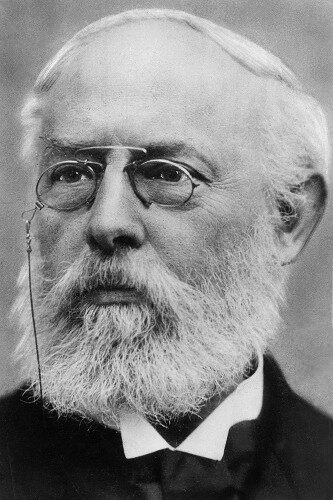
Konrad Duden
Konrad Duden was a German philologist. Born January 3, 1829, in Gut Bossigt. Died August 1, 1911, in Sonnenberg. Positions held include Geheimrat. Educated at University of Bonn and University of Marburg.
Facts
20 facts · 2 confirmed by two sources · 5 cited · 13 from one source
Where this comes from
Papalocal keeps its own record. It started from these sources; what each one said is kept here as it was copied, so a change on their side never changes this page by itself. Tap one to read its version.
What Wikidata says · copied November 16, 2026 · revision 2569083544
- Described as
- German philologist (1829-1911)
- Other names
- Konrad Alexander Friedrich Duden
- Born
- January 3, 1829 · 5 references
- Died
- August 1, 1911 · 5 references
- Born in
- Gut Bossigt
- Died in
- Sonnenberg · 1 reference
- Buried in
- Friedhof Bad Hersfeld Am Frauenberg · 1 reference
- Name at birth
- Konrad Alexander Friedrich Duden
- Citizen of
- Kingdom of Prussia
- Occupation
- lexicographer · 1 reference; linguist · 1 reference; writer; philologist · 1 reference
- Positions held
- Geheimrat
- Education
- University of Bonn; University of Marburg · 1 reference
- Member of
- Bonner Wingolf
- Spouse
- Adeline Jakob (1861–) · 1 reference
- Children
- Paul Duden · 1 reference; ??? Duden · 1 reference
- Father
- Johann Konrad Duden · 1 reference
- Mother
- Juliane Charlotte Monjé · 1 reference
- Wikipedias with a page
- 31
Wikidata item Q65340 (wikidata.org/wiki/Q65340), public domain (CC0). Copied November 16, 2026.
What Wikipedia says · copied November 16, 2026 · revision 1352582281
Konrad Alexander Friedrich Duden (3 January 1829 – 1 August 1911) was a German philologist and teacher. He founded the well-known German language dictionary bearing his name, Duden.
- Born, in its opening lines
- January 3, 1829
- Died, in its opening lines
- August 1, 1911
From the Wikipedia article “Konrad Duden” (en.wikipedia.org/wiki/Konrad_Duden), by its contributors, under CC BY-SA 4.0 (creativecommons.org/licenses/by-sa/4.0/). Copied November 16, 2026; not changed.
Confirmed Two sources agree. Cited One source, and it names where it got it. One source One source, without a reference of its own. Sources disagree The sources disagree. We show the best-supported value and keep theirs below.
