
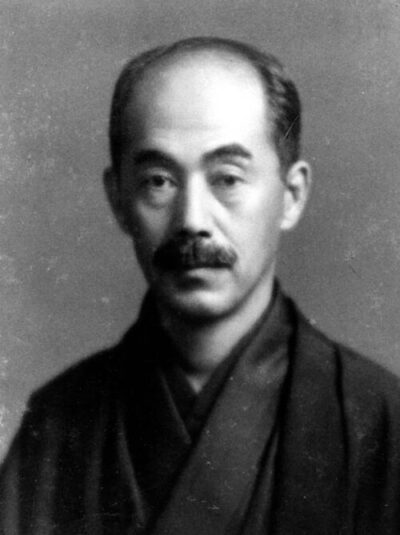
Kunio Yanagita
Kunio Yanagita was a Japanese folklorist. Born July 31, 1875, in Fukusaki. Died August 8, 1962, in Tokyo. Positions held include Shokikanchō. Known for Tōno Monogatari, Kagyū Kō and Center versus periphery. Educated at University of Tokyo, Faculty of Law, Graduate Schools for Law and Politics and Kaisei Junior & Senior High School. Awards include Order of Culture, Order of the Rising Sun, 1st class and Person of Cultural Merit.
Facts
49 facts · 2 confirmed by two sources · 6 cited · 41 from one source
Where this comes from
Papalocal keeps its own record. It started from these sources; what each one said is kept here as it was copied, so a change on their side never changes this page by itself. Tap one to read its version.
What Wikidata says · copied November 18, 2026 · revision 2562742759
- Described as
- Japanese folklorist (1875–1962)
- Other names
- Kunio Yanagida, Kunio Matsuoka
- Born
- July 31, 1875 · 4 references
- Died
- August 8, 1962 · 4 references
- Born in
- Fukusaki
- Died in
- Tokyo
- Buried in
- Shunjū-en · 1 reference
- Name at birth
- 松岡國男
- Citizen of
- Japan; Empire of Japan (–1947)
- Occupation
- lexicographer; anthropologist; linguist; writer; Esperantist; university teacher; agronomist; folklorist
- Positions held
- Shokikanchō
- Worked for
- Kokugakuin University; Ministry of Agriculture and Commerce; Tokyo Asahi Shimbun; Permanent Mandates Commission; Keio University; Privy Council of the Empire of Japan
- Education
- University of Tokyo, Faculty of Law, Graduate Schools for Law and Politics; Kaisei Junior & Senior High School; First Higher School
- Member of
- Japan Academy (1949–) · 1 reference; Japanese Esperanto Institute; Kokumin Gakujutsu Kyokai; Japan Art Academy
- Known for
- Tōno Monogatari; Kagyū Kō; Center versus periphery
- Awards
- Order of Culture (1951); Order of the Rising Sun, 1st class; Person of Cultural Merit (1952); Asahi Prize
- Field
- Japanese folklore; ethnology · 1 reference; anthropology · 1 reference; folkloristics · 1 reference; lexicography · 1 reference; linguistics · 1 reference
- Father
- Misao Matsuoka
- Siblings
- Kanae Matsuoka; Inoue Michiyasu; Shizuo Matsuoka; Eikyū Matsuoka
- Lived in
- Miki House
- Wikipedias with a page
- 20
Wikidata item Q971687 (wikidata.org/wiki/Q971687), public domain (CC0). Copied November 18, 2026.
What Wikipedia says · copied November 18, 2026 · revision 1364810136
Kunio Yanagita (Japanese: 柳田 國男, Hepburn: Yanagita Kunio; July 31, 1875 – August 8, 1962) was a Japanese author, scholar, ethnographer, and folklorist. He began his career as a bureaucrat, but developed an interest in rural Japan and its folk traditions. This led to a change in his career. His pursuit of this led to his eventual establishment of Japanese native folkloristics, or minzokugaku, as an academic field in Japan. As a result, he is often considered to be the father of modern Japanese folklore studies.
- Born, in its opening lines
- July 31, 1875
- Died, in its opening lines
- August 8, 1962
From the Wikipedia article “Kunio Yanagita” (en.wikipedia.org/wiki/Kunio_Yanagita), by its contributors, under CC BY-SA 4.0 (creativecommons.org/licenses/by-sa/4.0/). Copied November 18, 2026; not changed.
Confirmed Two sources agree. Cited One source, and it names where it got it. One source One source, without a reference of its own. Sources disagree The sources disagree. We show the best-supported value and keep theirs below.
