
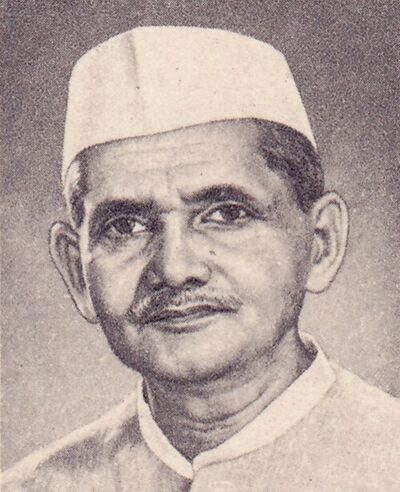
Lal Bahadur Shastri
Lal Bahadur Shastri was a Prime Minister of India from 1964 to 1966. Born October 2, 1904, in Pandit Deen Dayal Upadhyaya Nagar. Died January 11, 1966, in Tashkent. Positions held include Minister of External Affairs (1964), Minister of Home Affairs (1961–1963) and Prime Minister of India (1964–1966). Educated at Harish Chandra Postgraduate College and Mahatma Gandhi Kashi Vidyapeeth. Awards include Bharat Ratna.
Facts
28 facts · 2 confirmed by two sources · 3 cited · 23 from one source
Where this comes from
Papalocal keeps its own record. It started from these sources; what each one said is kept here as it was copied, so a change on their side never changes this page by itself. Tap one to read its version.
What Wikidata says · copied November 16, 2026 · revision 2562810432
- Described as
- Prime Minister of India from 1964 to 1966
- Other names
- Lal Bahadur Srivastava, Shastri Ji, Shastriji, Shastri, Lal Shastri, Lal Srivastava
- Born
- October 2, 1904 · 9 references
- Died
- January 11, 1966 · 8 references
- Born in
- Pandit Deen Dayal Upadhyaya Nagar
- Died in
- Tashkent · 2 references
- Buried in
- Raj Ghat and associated memorials · 1 reference
- Cause of death
- myocardial infarction
- Citizen of
- British Raj (–1947); India (1950–); Dominion of India (1947–1950)
- Occupation
- politician · 1 reference
- Positions held
- Minister of External Affairs (1964); Minister of Home Affairs (1961–1963); Prime Minister of India (1964–1966) · 1 reference; Member of the Lok Sabha; Minister of Railways (1952–1956) · 1 reference
- Political party
- Indian National Congress
- Education
- Harish Chandra Postgraduate College; Mahatma Gandhi Kashi Vidyapeeth
- Awards
- Bharat Ratna (1966)
- Spouse
- Lalita Shastri
- Children
- Suman Shastri; Sunil Shastri; Ashok Shastri; Anil Shastri · 1 reference; Hari Krishna Shastri · 1 reference
- Religion
- Hinduism
- Lived in
- 10 Janpath (–1966) · 1 reference
- Nickname
- Nanhe · 1 reference
- Wikipedias with a page
- 73
Wikidata item Q244689 (wikidata.org/wiki/Q244689), public domain (CC0). Copied November 16, 2026.
What Wikipedia says · copied November 16, 2026 · revision 1380836844
Lal Bahadur Shastri (2 October 1904 – 11 January 1966) was an Indian politician and statesman who served as the prime minister of India from 1964 to 1966. He previously served as home minister from 1961 to 1963.
Shastri was born to Sharad Prasad Srivastava and Ramdulari Devi in Mughalsarai on 2 October 1904. He studied in East Central Railway Inter college and the Harish Chandra High School, which he left to join the non-cooperation movement. He worked for the betterment of the Harijans at Muzaffarpur and dropped his caste-derived surname of "Srivastava". Influenced by Mahatma Gandhi, he joined the Indian Independence movement in the 1920s. He served as the president of Servants of the People Society, founded by Lala Lajpat Rai and held prominent positions in the Indian National Congress (INC). Following Indian independence in 1947, Shastri led several union ministries under prime minister Jawaharlal Nehru.
As prime minister, Shastri promoted the White revolution, a national campaign to increase the production and supply of milk, by supporting the Amul milk co-operative and creating the National Dairy Development Board. Underlining the need to boost India's food production, Shastri also promoted the Green Revolution in India in 1965. This led to an increase in food grain production, especially in the states of Punjab, Haryana and Uttar Pradesh. He led the country during the India–Pakistan war of 1965. His slogan "Jai Jawan, Jai Kisan" ("Hail to the soldier; Hail to the farmer") became very popular during the war. The war formally ended with the Tashkent Declaration on 10 January 1966; Shastri died the next day.
- Born, in its opening lines
- October 2, 1904
- Died, in its opening lines
- January 11, 1966
From the Wikipedia article “Lal Bahadur Shastri” (en.wikipedia.org/wiki/Lal_Bahadur_Shastri), by its contributors, under CC BY-SA 4.0 (creativecommons.org/licenses/by-sa/4.0/). Copied November 16, 2026; not changed.
Confirmed Two sources agree. Cited One source, and it names where it got it. One source One source, without a reference of its own. Sources disagree The sources disagree. We show the best-supported value and keep theirs below.
