
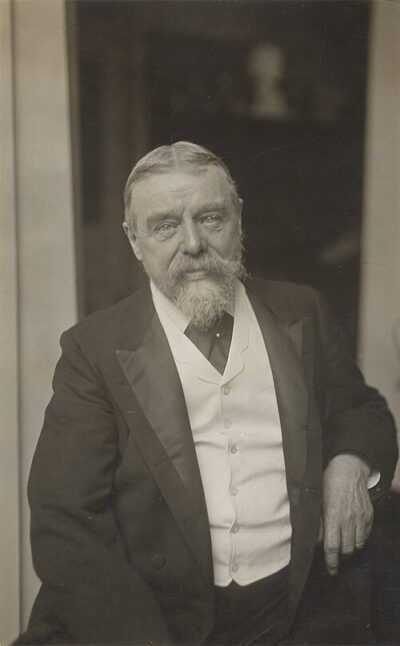
Lawrence Alma-Tadema
Lawrence Alma-Tadema was a Dutch-born British painter. Born January 8, 1836, in Dronryp. Died June 25, 1912, in Wiesbaden. Known for The Roses of Heliogabalus, The women of Amphissa and Spring. Educated at Royal Academy of Fine Arts. Awards include Order of Saint Michael, Royal Gold Medal and Pour le Mérite for Sciences and Arts order.
Facts
42 facts · 2 confirmed by two sources · 15 cited · 25 from one source
Where this comes from
Papalocal keeps its own record. It started from these sources; what each one said is kept here as it was copied, so a change on their side never changes this page by itself. Tap one to read its version.
What Wikidata says · copied November 16, 2026 · revision 2570011168
- Described as
- Dutch-born British painter (1836–1912)
- Other names
- Alma-Tadema, Sir Lawrence Alma-Tadema, Sir Laurence Alma-Tadema, Sir Alma-Tadema, Laurens Alma Tadema, Lawrence Alma Tadema, Sir Lawrence Alma Tadema, Alma Tadema, L. Alma-Tadema, Sir Alma Tadema, Alma Thadéma, Sir Laurence Alma Tadema
- Born
- January 8, 1836 · 15 references
- Died
- June 25, 1912 · 11 references
- Born in
- Dronryp · 1 reference
- Died in
- Wiesbaden · 1 reference
- Buried in
- St Paul's Cathedral
- Name at birth
- Lourens Alma Tadema
- Citizen of
- Belgium; Kingdom of the Netherlands; United Kingdom of Great Britain and Ireland (1873–) · 1 reference
- Occupation
- painter · 1 reference; visual artist · 1 reference; illustrator · 2 references; graphic artist · 1 reference; watercolorist · 1 reference; etcher · 1 reference; muralist · 1 reference; lithographer · 1 reference
- Education
- Royal Academy of Fine Arts
- Member of
- Royal Academy of Arts; Royal Academy of Science, Letters and Fine Arts of Belgium; Académie des beaux-arts
- Genre
- history painting
- Known for
- The Roses of Heliogabalus; The women of Amphissa; Spring; Unconscious Rivals
- Awards
- Order of Saint Michael (1869); Royal Gold Medal (1906); Pour le Mérite for Sciences and Arts order (1881); Knight of the Legion of Honour (1873); Order of Merit (1907) · 1 reference; Knight of the Order of Leopold (1866) · 1 reference; Knight Bachelor (1899) · 1 reference; Pour le Mérite · 1 reference; Order of the Netherlands Lion (1868); Order of the Gold Lion of the House of Nassau (1876); 3rd Class Order of the Crown (1877)
- Field
- painting · 1 reference
- Spouse
- Laura Theresa Alma-Tadema · 1 reference; [Marie] Pauline Gressin · 1 reference
- Children
- Laurence Alma-Tadema · 1 reference; Anna Alma-Tadema · 1 reference
- Wikipedias with a page
- 51
Wikidata item Q240526 (wikidata.org/wiki/Q240526), public domain (CC0). Copied November 16, 2026.
What Wikipedia says · copied November 16, 2026 · revision 1379514149
Sir Lawrence Alma-Tadema ( AL-mə TAD-ay-mə; born Lourens Alma Tadema, Dutch: [ˈlʌurəns ˈɑlmaː ˈtaːdəmaː]; 8 January 1836 – 25 June 1912) was a Dutch painter who later settled in the United Kingdom, becoming the last officially recognised denizen in 1873. Born in Dronryp, the Netherlands (Fryslân), and trained at the Royal Academy of Antwerp, Belgium, he settled in London, England in 1870 and spent the rest of his life there.
A painter of mostly classical subjects, he became famous for his depictions of the luxury and decadence of the Roman Empire, with languorous figures set in fabulous marbled interiors or against a backdrop of dazzling blue Mediterranean sea and sky. One of the most popular Victorian painters, Alma-Tadema was admired during his lifetime for his draftsmanship and accurate depictions of classical antiquity, but his work fell out of fashion after his death, and only since the 1960s has it been appreciated for its importance within Victorian painting.
- Born, in its opening lines
- January 8, 1836
- Died, in its opening lines
- June 25, 1912
From the Wikipedia article “Lawrence Alma-Tadema” (en.wikipedia.org/wiki/Lawrence_Alma-Tadema), by its contributors, under CC BY-SA 4.0 (creativecommons.org/licenses/by-sa/4.0/). Copied November 16, 2026; not changed.
Confirmed Two sources agree. Cited One source, and it names where it got it. One source One source, without a reference of its own. Sources disagree The sources disagree. We show the best-supported value and keep theirs below.
