
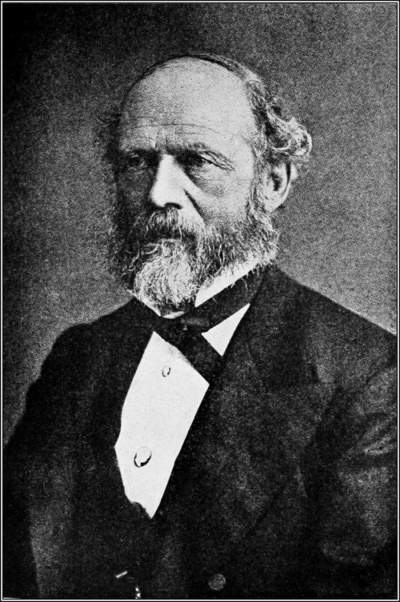
Lewis H. Morgan
Lewis H. Morgan was an American anthropologist. Born November 21, 1818, in Aurora. Died December 17, 1881, in Rochester. Positions held include member of the State Senate of New York and member of the New York State Assembly. Known for Mind or Instinct: An Inquiry Concerning the Manifestation of Mind by the Lower Orders of Animals, Ancient Society and Systems of Consanguinity and Affinity of the Human Family. Educated at Union College.
Facts
27 facts · 2 confirmed by two sources · 7 cited · 18 from one source
Where this comes from
Papalocal keeps its own record. It started from these sources; what each one said is kept here as it was copied, so a change on their side never changes this page by itself. Tap one to read its version.
What Wikidata says · copied November 13, 2026 · revision 2558118772
- Described as
- American anthropologist (1818–1881)
- Other names
- Lewis Henry Morgan
- Born
- November 21, 1818 · 6 references
- Died
- December 17, 1881 · 7 references
- Born in
- Aurora
- Died in
- Rochester · 2 references
- Buried in
- Mount Hope Cemetery · 1 reference
- Citizen of
- United States
- Occupation
- anthropologist; historian; politician; sociologist; lawyer; archaeologist · 1 reference; writer · 1 reference; ethnologist · 1 reference
- Positions held
- member of the State Senate of New York; member of the New York State Assembly
- Political party
- Republican Party
- Education
- Union College (–1840)
- Member of
- National Academy of Sciences; American Academy of Arts and Sciences; American Antiquarian Society; American Association for the Advancement of Science · 1 reference
- Known for
- Mind or Instinct: An Inquiry Concerning the Manifestation of Mind by the Lower Orders of Animals; Ancient Society; Systems of Consanguinity and Affinity of the Human Family
- Father
- Jedediah Morgan · 1 reference
- Mother
- Harriet Morgan · 1 reference
- Wikipedias with a page
- 55
Wikidata item Q313458 (wikidata.org/wiki/Q313458), public domain (CC0). Copied November 13, 2026.
What Wikipedia says · copied November 13, 2026 · revision 1378609799
Lewis Henry Morgan (November 21, 1818 – December 17, 1881) was an American anthropologist and social theorist, who worked as a railroad lawyer. He is best known for his work on kinship and social structure, his theories of social evolution, and his ethnography of the Haudenosaunee (Iroquois). Interested in what holds societies together, he proposed the concept that the earliest human domestic institution was the matrilineal clan, not the patriarchal family.
Also interested in what leads to social change, he was a contemporary of the European social theorists Karl Marx and Friedrich Engels, who were influenced by reading his work on social structure and material culture, the influence of technology on progress. Morgan is the only American social theorist to be cited by such diverse scholars as Marx, Charles Darwin, and Sigmund Freud. Elected as a member of the National Academy of Sciences, Morgan served as president of the American Association for the Advancement of Science in 1880.
Morgan was a Republican member of the New York State Assembly (Monroe Co., 2nd D.) in 1861, and of the New York State Senate in 1868 and 1869.
- Born, in its opening lines
- November 21, 1818
- Died, in its opening lines
- December 17, 1881
From the Wikipedia article “Lewis H. Morgan” (en.wikipedia.org/wiki/Lewis_H._Morgan), by its contributors, under CC BY-SA 4.0 (creativecommons.org/licenses/by-sa/4.0/). Copied November 13, 2026; not changed.
Confirmed Two sources agree. Cited One source, and it names where it got it. One source One source, without a reference of its own. Sources disagree The sources disagree. We show the best-supported value and keep theirs below.
