
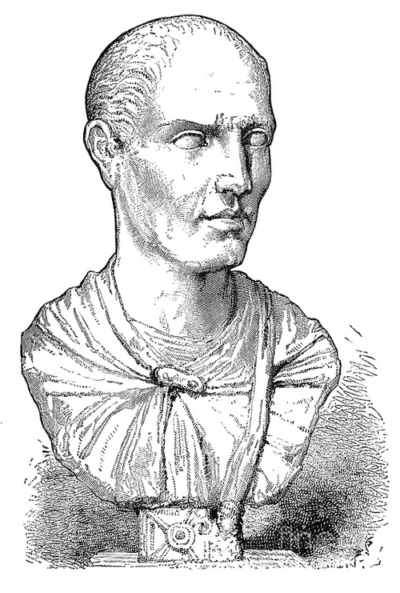
Lucullus
Lucullus was an ancient Roman statesman and general. Born 117 BC, in Ancient Rome. Died 57 BC. Positions held include quaestor, aedile (-79) and ancient Roman senator.
Facts
22 facts · 0 confirmed by two sources · 10 cited · 12 from one source
Where this comes from
Papalocal keeps its own record. It started from these sources; what each one said is kept here as it was copied, so a change on their side never changes this page by itself. Tap one to read its version.
What Wikidata says · copied November 16, 2026 · revision 2558227783
- Described as
- ancient Roman statesman and general
- Other names
- Lucius Licinius Lucullus, Lucius Lucullus, Ponticus, Lucius Licinius Lucullus Ponticus
- Born
- 117 BC · 3 references
- Died
- 57 BC · 1 reference
- Born in
- Ancient Rome
- Citizen of
- Ancient Rome
- Occupation
- politician · 1 reference; military personnel; military leader · 1 reference
- Positions held
- quaestor; aedile (-79) · 1 reference; ancient Roman senator · 1 reference; Roman consul (-74) · 2 references; praetors (-77) · 1 reference
- Political party
- optimates
- Spouse
- Clodia; Servilia Minor
- Children
- Licinia; Marcus Licinius Lucullus · 1 reference
- Father
- Lucius Licinius Lucullus · 1 reference
- Mother
- Caecilia Metella
- Siblings
- Marcus Terentius Varro Lucullus · 1 reference
- Religion
- ancient Roman religion
- Lived in
- Rome
- Wikipedias with a page
- 42
Wikidata item Q242819 (wikidata.org/wiki/Q242819), public domain (CC0). Copied November 16, 2026.
What Wikipedia says · copied November 16, 2026 · revision 1357396565
Lucius Licinius Lucullus ( ; 118–57/56 BC) was a Roman general and statesman, closely connected with Lucius Cornelius Sulla. In culmination of over 20 years of almost continuous military and government service, he conquered the eastern kingdoms in the course of the Third Mithridatic War, exhibiting extraordinary generalship in diverse situations, most famously during the Siege of Cyzicus in 73–72 BC, and at the Battle of Tigranocerta in Armenian Arzanene in 69 BC. His command style received unusually favourable attention from ancient military experts, and his campaigns appear to have been studied as examples of skillful generalship.
Lucullus returned to Rome from the East with so much captured booty that the vast sums of treasure, jewels, priceless works of art, and slaves could not be fully accounted for. On his return Lucullus poured enormous sums into private building projects, husbandry and even aquaculture projects, which shocked and amazed his contemporaries by their magnitude. He also patronised the arts and sciences lavishly, transforming his hereditary estate in the highlands of Tusculum into a hotel-and-library complex for scholars and philosophers. He built the famous horti Lucullani (Palace and gardens of Lucullus) on the Pincian Hill in Rome, and became a cultural innovator in the deployment of imperial wealth. His achievements led Pliny the Elder to refer to him as "Xerxes in a Toga". He died during the winter of 57–56 BC and was buried at the family estate near Tusculum.
The conquest agnomen of Ponticus is sometimes incorrectly appended to his name in modern texts. In ancient sources it is attributed only to his consular colleague Marcus Aurelius Cotta after the latter’s capture and brutal destruction of Heraclea Pontica during the Third Mithridatic War.
From the Wikipedia article “Lucullus” (en.wikipedia.org/wiki/Lucullus), by its contributors, under CC BY-SA 4.0 (creativecommons.org/licenses/by-sa/4.0/). Copied November 16, 2026; not changed.
Confirmed Two sources agree. Cited One source, and it names where it got it. One source One source, without a reference of its own. Sources disagree The sources disagree. We show the best-supported value and keep theirs below.
