
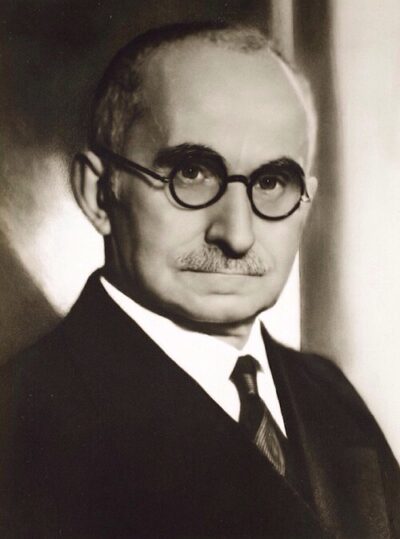
Luigi Einaudi
Luigi Einaudi was a (1874-1961) President of Italy from 1948 to 1955. Born March 24, 1874, in Carrù. Died October 30, 1961, in Rome. Positions held include Italian senator for life (1955–1961), President of Italy (1948–1955) and Governor of the Banca d'Italia (1945–1948). Educated at University of Turin and Bocconi University. Awards include Fellow of the Econometric Society, honorary doctor of the University of Toulouse and doctor honoris causa from the University of Paris.
Facts
53 facts · 2 confirmed by two sources · 15 cited · 36 from one source
Where this comes from
Papalocal keeps its own record. It started from these sources; what each one said is kept here as it was copied, so a change on their side never changes this page by itself. Tap one to read its version.
What Wikidata says · copied November 16, 2026 · revision 2568750009
- Described as
- (1874-1961) President of Italy from 1948 to 1955
- Other names
- Luigi Numa Lorenzo Einaudi
- Born
- March 24, 1874 · 11 references
- Died
- October 30, 1961 · 12 references
- Born in
- Carrù · 3 references
- Died in
- Rome · 5 references
- Buried in
- Dogliani
- Name at birth
- Luigi Einaudi
- Citizen of
- Italy (1946–); Kingdom of Italy (–1946)
- Occupation
- economist · 2 references; politician · 3 references; journalist · 1 reference; professor; lawyer · 1 reference; banker; opinion journalist · 1 reference
- Positions held
- Italian senator for life (1955–1961); President of Italy (1948–1955); Governor of the Banca d'Italia (1945–1948); member of the Senate of the Italian Republic (1948); Vice President of the Council of Ministers of Italy (1947–1948); Minister of Budget (1947–1948); Italian Finance Minister (1947); member of the Constituent Assembly of Italy; senator · 1 reference
- Political party
- Italian Liberal Party
- Worked for
- Bocconi University; University of Turin · 1 reference; Polytechnic University of Turin · 1 reference
- Education
- University of Turin; Bocconi University · 1 reference; Liceo Classico e Musicale "C. Cavour"
- Member of
- American Academy of Arts and Sciences; Mont Pelerin Society; National Council of the Kingdom of Italy; Academy of Sciences of Turin (1910–) · 1 reference; Econometric Society (1948–) · 1 reference; American Philosophical Society (1947–); Accademia Nazionale dei Lincei (1906–) · 1 reference; Royal Academy of Italy · 1 reference
- Awards
- Fellow of the Econometric Society (1948) · 1 reference; honorary doctor of the University of Toulouse (1949) · 1 reference; doctor honoris causa from the University of Paris (1949) · 1 reference; doctor honoris causa from the University of Alger (1952) · 1 reference; Grand Cross Special Class of the Order of Merit of the Federal Republic of Germany (1954); Knight Grand Cross with Collar of the Order of Merit of the Italian Republic (1955); Pour le Mérite for Sciences and Arts order; Order of the Golden Spur · 1 reference; Grand Cross of the Order of Saint-Charles (1950) · 1 reference
- Spouse
- Ida Pellegrini
- Children
- Giulio Einaudi; Mario Einaudi
- Siblings
- Costanzo Einaudi
- Religion
- Catholicism · 1 reference
- Wikipedias with a page
- 61
Wikidata item Q1242 (wikidata.org/wiki/Q1242), public domain (CC0). Copied November 16, 2026.
What Wikipedia says · copied November 16, 2026 · revision 1375735148
Luigi Numa Lorenzo Einaudi (Italian: [luˈiːdʒi eiˈnaudi]; 24 March 1874 – 30 October 1961) was an Italian politician, economist and banker who served as the president of Italy from 1948 to 1955 and is considered one of the founding fathers of the Italian Republic.
- Born, in its opening lines
- March 24, 1874
- Died, in its opening lines
- October 30, 1961
From the Wikipedia article “Luigi Einaudi” (en.wikipedia.org/wiki/Luigi_Einaudi), by its contributors, under CC BY-SA 4.0 (creativecommons.org/licenses/by-sa/4.0/). Copied November 16, 2026; not changed.
Confirmed Two sources agree. Cited One source, and it names where it got it. One source One source, without a reference of its own. Sources disagree The sources disagree. We show the best-supported value and keep theirs below.
