
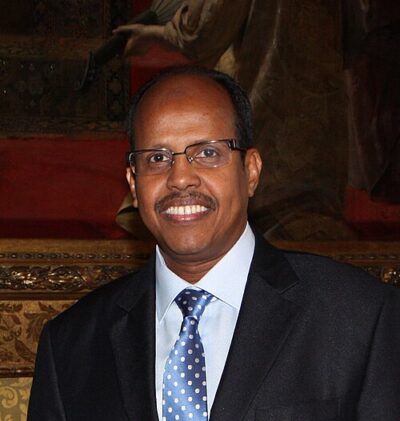
Mahamoud Ali Youssouf
Mahamoud Ali Youssouf is a Djiboutian politician. Born September 2, 1965, in Djibouti. Positions held include ambassador (2025–), Minister of Foreign Affairs (2005–2025) and Chairperson of the African Union Commission (2025–). Educated at Laval University and Lumière University Lyon 2.
Facts
11 facts · 1 confirmed by two sources · 3 cited · 7 from one source
Where this comes from
Papalocal keeps its own record. It started from these sources; what each one said is kept here as it was copied, so a change on their side never changes this page by itself. Tap one to read its version.
What Wikidata says · copied November 18, 2026 · revision 2569162872
- Described as
- Djiboutian politician (born 1965)
- Born
- September 2, 1965 · 1 reference
- Born in
- Djibouti
- Citizen of
- Djibouti · 1 reference
- Occupation
- diplomat; politician · 1 reference
- Positions held
- ambassador (2025–) · 1 reference; Minister of Foreign Affairs (2005–2025); Chairperson of the African Union Commission (2025–)
- Political party
- independent politician · 1 reference
- Education
- Laval University; Lumière University Lyon 2
- Wikipedias with a page
- 22
Wikidata item Q58256 (wikidata.org/wiki/Q58256), public domain (CC0). Copied November 18, 2026.
What Wikipedia says · copied November 18, 2026 · revision 1384889087
Mahamoud Ali Youssouf (born 2 September 1965) is a Djiboutian diplomat and the chairperson of the African Union Commission. He is the longest-serving Djiboutian foreign minister, having served from 2005 to 2025.
In April 2024, he was nominated by Djibouti for the position of the chairperson of the African Union Commission. On 15 February 2025, he won the election in Addis Ababa, Ethiopia, after 7 rounds of voting.
- Born, in its opening lines
- September 2, 1965
From the Wikipedia article “Mahamoud Ali Youssouf” (en.wikipedia.org/wiki/Mahamoud_Ali_Youssouf), by its contributors, under CC BY-SA 4.0 (creativecommons.org/licenses/by-sa/4.0/). Copied November 18, 2026; not changed.
Confirmed Two sources agree. Cited One source, and it names where it got it. One source One source, without a reference of its own. Sources disagree The sources disagree. We show the best-supported value and keep theirs below.
