
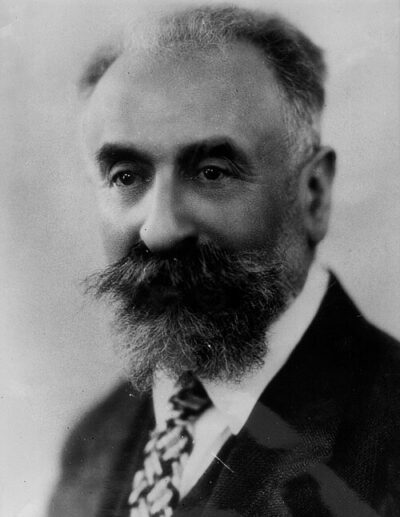
Marcel Mauss
Marcel Mauss was a French sociologist and anthropologist. Born May 10, 1872, in Épinal. Died February 10, 1950, in Paris. Positions held include president (1924–1927). Educated at University of Bordeaux.
Facts
21 facts · 2 confirmed by two sources · 10 cited · 9 from one source
Where this comes from
Papalocal keeps its own record. It started from these sources; what each one said is kept here as it was copied, so a change on their side never changes this page by itself. Tap one to read its version.
What Wikidata says · copied November 16, 2026 · revision 2568290780
- Described as
- French sociologist and anthropologist (1872-1950)
- Born
- May 10, 1872 · 9 references
- Died
- February 10, 1950 · 7 references
- Born in
- Épinal · 2 references
- Died in
- Paris · 2 references
- Buried in
- Cimetière parisien de Bagneux
- Citizen of
- France
- Occupation
- politician; sociologist · 4 references; ethnologist · 2 references; anthropologist · 1 reference; professor · 1 reference; philosopher; religious studies scholar · 1 reference; docent · 1 reference
- Positions held
- president (1924–1927)
- Political party
- French Section of the Workers' International
- Worked for
- Collège de France (1931–1942) · 1 reference; École pratique des hautes études
- Education
- University of Bordeaux
- Field
- ethnography · 1 reference; sociology of religion
- Wikipedias with a page
- 53
Wikidata item Q295393 (wikidata.org/wiki/Q295393), public domain (CC0). Copied November 16, 2026.
What Wikipedia says · copied November 16, 2026 · revision 1378775916
Marcel Israël Mauss (French: [mos]; 10 May 1872 – 10 February 1950) was a French sociologist and anthropologist known as the "father of French ethnology". The nephew of Émile Durkheim, Mauss, in his academic work, crossed the boundaries between sociology and anthropology. Today, he is perhaps better recognised for his influence on the latter discipline, particularly with respect to his analyses of topics such as magic, sacrifice and gift exchange in different cultures around the world. Mauss had a significant influence upon Claude Lévi-Strauss, the founder of structural anthropology. His most famous work is The Gift (1925).
- Born, in its opening lines
- May 10, 1872
- Died, in its opening lines
- February 10, 1950
From the Wikipedia article “Marcel Mauss” (en.wikipedia.org/wiki/Marcel_Mauss), by its contributors, under CC BY-SA 4.0 (creativecommons.org/licenses/by-sa/4.0/). Copied November 16, 2026; not changed.
Confirmed Two sources agree. Cited One source, and it names where it got it. One source One source, without a reference of its own. Sources disagree The sources disagree. We show the best-supported value and keep theirs below.
