
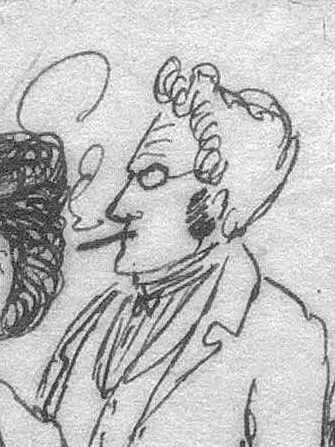
Max Stirner
Max Stirner was a German philosopher. Born October 25, 1806, in Bayreuth. Died June 26, 1856, in Berlin. Known for The Ego and Its Own. Educated at Humboldt-Universität zu Berlin (2 times) and University of Erlangen–Nuremberg.
Facts
27 facts · 2 confirmed by two sources · 6 cited · 19 from one source
What’s different
- Died: we show June 26, 1856 (Confirmed). Wikidata also lists June 25, 1856
Where this comes from
Papalocal keeps its own record. It started from these sources; what each one said is kept here as it was copied, so a change on their side never changes this page by itself. Tap one to read its version.
What Wikidata says · copied November 16, 2026 · revision 2563985175
- Described as
- German philosopher (1806–1856)
- Other names
- Johann Kaspar Schmidt, Johann Schmidt, Johann Caspar Schmidt
- Born
- October 25, 1806 · 7 references
- Died
- June 26, 1856 · 3 references; June 25, 1856 · 2 references
- Born in
- Bayreuth · 3 references
- Died in
- Berlin · 3 references
- Buried in
- Friedhof II der Sophiengemeinde Berlin · 1 reference
- Cause of death
- insect-inflicted wound · 1 reference
- Name at birth
- Johann Caspar Schmidt
- Citizen of
- Kingdom of Bavaria; Kingdom of Prussia
- Occupation
- philosopher · 2 references; journalist; translator; writer · 2 references; educator; professor of philosophy; teacher at a Gymnasium · 1 reference
- Education
- Humboldt-Universität zu Berlin (2 times) (1826–1834); University of Erlangen–Nuremberg (1828–1829); University of Königsberg (1832–1833)
- Known for
- The Ego and Its Own
- Field
- philosophy; ethics · 1 reference; political philosophy · 1 reference; property · 1 reference; axiology · 1 reference
- Spouse
- Marie Dähnhardt (1843–1846)
- Religion
- atheism
- Wikipedias with a page
- 91
Wikidata item Q76725 (wikidata.org/wiki/Q76725), public domain (CC0). Copied November 16, 2026.
What Wikipedia says · copied November 16, 2026 · revision 1385513681
Johann Caspar Schmidt (25 October 1806 – 26 June 1856), known by the pen name Max Stirner (; German: [ˈʃtɪʁnɐ]), was a German philosopher, dealing mainly with the Hegelian notion of social alienation and self-consciousness. Stirner is often seen as one of the forerunners of nihilism, existentialism, psychoanalytic theory, postmodernism, individualist anarchism, and egoism.
Born in 1806 in Bayreuth, Bavaria, Stirner's life and work are known largely through a biography written by John Henry Mackay. Following the death of his father, he was raised in West Prussia after his mother's remarriage. Stirner studied at the University of Berlin, where he attended Hegel's lectures. He then moved into teaching and became involved with the Young Hegelians in Berlin. Although he struggled to secure a permanent academic post, Stirner became a fixture in intellectual circles and wrote his most famous work, The Ego and Its Own (1844), while supporting himself as a teacher.
Stirner married twice, first to Agnes Burtz, who died in 1838, and later to Marie Dähnhardt. He attempted and failed at business before turning to translation and writing. Stirner died in Berlin in 1856, having spent his later years in relative obscurity, despite the enduring influence of his radical individualist philosophy.
- Born, in its opening lines
- October 25, 1806
- Died, in its opening lines
- June 26, 1856
From the Wikipedia article “Max Stirner” (en.wikipedia.org/wiki/Max_Stirner), by its contributors, under CC BY-SA 4.0 (creativecommons.org/licenses/by-sa/4.0/). Copied November 16, 2026; not changed.
Confirmed Two sources agree. Cited One source, and it names where it got it. One source One source, without a reference of its own. Sources disagree The sources disagree. We show the best-supported value and keep theirs below.
