
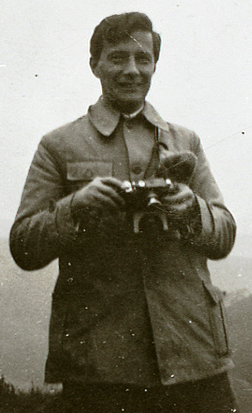
Michael Polanyi
Michael Polanyi was a Hungarian-British polymath. Born March 11, 1891, in Budapest. Died February 22, 1976, in Northampton. Positions held include president (1944–1946). Educated at Eötvös Loránd University (2 times).
Facts
23 facts · 2 confirmed by two sources · 12 cited · 9 from one source
What’s different
- Born: we show March 11, 1891 (Confirmed). Wikidata also lists March 12, 1891
Where this comes from
Papalocal keeps its own record. It started from these sources; what each one said is kept here as it was copied, so a change on their side never changes this page by itself. Tap one to read its version.
What Wikidata says · copied November 16, 2026 · revision 2567357907
- Described as
- Hungarian-British polymath (1891–1976)
- Other names
- Mihály Polányi
- Born
- March 11, 1891 · 1 reference; March 12, 1891 · 2 references
- Died
- February 22, 1976 · 4 references
- Born in
- Budapest · 1 reference
- Died in
- Northampton · 1 reference
- Name at birth
- Pollacsek Mihály
- Citizen of
- Hungary (–1919) · 1 reference; United Kingdom (1939–) · 1 reference; Austria (1919–) · 1 reference
- Occupation
- philosopher · 1 reference; economist; chemist · 1 reference
- Positions held
- president (1944–1946)
- Worked for
- University of Manchester
- Education
- Eötvös Loránd University (2 times) (1914–1917) · 1 reference
- Member of
- Royal Society of London; American Academy of Arts and Sciences · 1 reference; Manchester Literary and Philosophical Society
- Children
- John Polanyi · 1 reference; George Polanyi · 1 reference
- Mother
- Cecília Wohl
- Siblings
- Karl Polanyi · 1 reference; Laura Striker
- Religion
- Catholic Church
- Wikipedias with a page
- 42
Wikidata item Q163087 (wikidata.org/wiki/Q163087), public domain (CC0). Copied November 16, 2026.
What Wikipedia says · copied November 16, 2026 · revision 1385684038
Michael Polanyi ( poh-LAN-yee; Hungarian: Polányi Mihály; 11 March 1891 – 22 February 1976) was a Hungarian-British polymath active as a physical chemist, philosopher and physician, contributing to fields including materials science, thermodynamics, theoretical biology, economics, sociology, psychology and philosophy of science. Polanyi argued that positivism is a false account of knowing.
His wide-ranging research in physical science included chemical kinetics, x-ray diffraction, and adsorption of gases. He pioneered the theory of fibre diffraction analysis in 1921, and the dislocation theory of plastic deformation of ductile metals and other materials in 1934. He emigrated to Germany, in 1926 becoming a chemistry professor at the Kaiser Wilhelm Institute in Berlin, and then in 1933 to England, becoming first a chemistry professor, and then a social sciences professor at the University of Manchester. Two of his students won the Nobel Prize, as did his son. In 1944 Polanyi was elected to the Royal Society.
The contributions which Polanyi made to the social sciences include the concept of a polycentric spontaneous order and his rejection of a value neutral conception of liberty. They were developed in the context of his opposition to central planning.
- Born, in its opening lines
- March 11, 1891
- Died, in its opening lines
- February 22, 1976
From the Wikipedia article “Michael Polanyi” (en.wikipedia.org/wiki/Michael_Polanyi), by its contributors, under CC BY-SA 4.0 (creativecommons.org/licenses/by-sa/4.0/). Copied November 16, 2026; not changed.
Confirmed Two sources agree. Cited One source, and it names where it got it. One source One source, without a reference of its own. Sources disagree The sources disagree. We show the best-supported value and keep theirs below.
