
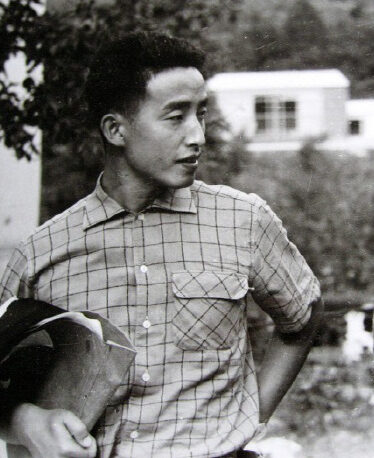
Nam June Paik
Nam June Paik was an American video art pioneer. Born July 20, 1932, in Seoul. Died January 29, 2006, in Miami. Known for Internet Dream. Educated at University of Tokyo and Kyunggi High School. Awards include Guggenheim Fellowship, Maya Deren Award and Goslarer Kaiserring.
Facts
36 facts · 2 confirmed by two sources · 17 cited · 17 from one source
Where this comes from
Papalocal keeps its own record. It started from these sources; what each one said is kept here as it was copied, so a change on their side never changes this page by itself. Tap one to read its version.
What Wikidata says · copied November 15, 2026 · revision 2568756859
- Described as
- American video art pioneer (1932–2006)
- Other names
- Naum June Paik
- Born
- July 20, 1932 · 13 references
- Died
- January 29, 2006 · 14 references
- Born in
- Seoul · 5 references
- Died in
- Miami · 3 references
- Citizen of
- United States · 1 reference; Germany · 1 reference; South Korea · 1 reference
- Occupation
- video artist · 5 references; university teacher; composer · 2 references; painter · 1 reference; photographer · 2 references; television producer · 1 reference; installation artist · 2 references; multimedia artist · 1 reference
- Worked for
- Kunstakademie Düsseldorf
- Education
- University of Tokyo; Kyunggi High School
- Genre
- installation art · 1 reference
- Known for
- Internet Dream
- Awards
- Guggenheim Fellowship (1977) · 1 reference; Maya Deren Award (1986) · 1 reference; Goslarer Kaiserring (1991); Ho-Am Prize in the Arts (1995); Fukuoka Asian Culture Prize (1995); Goethe Medal (1997) · 1 reference; Kyoto Prize in Arts and Philosophy (1998) · 1 reference; Wilhelm Lehmbruck Award (2001); Will Grohmann Award; Worthy of the City (1988) · 1 reference; Order of Cultural Merit, 1st class (2007) · 1 reference
- Field
- video art
- Spouse
- Shigeko Kubota (1965–)
- Father
- Paik Nak-seung
- Lived in
- Westbeth Artists Community · 1 reference
- Website
- https://www.paikstudios.com/
- Wikipedias with a page
- 36
Wikidata item Q158056 (wikidata.org/wiki/Q158056), public domain (CC0). Copied November 15, 2026.
What Wikipedia says · copied November 15, 2026 · revision 1381817363
Nam June Paik (Korean: 백남준 [pɛŋ.nam.dʑun] ; July 20, 1932 – January 29, 2006) was a South Korean artist. He worked with a variety of media and is considered to be the founder of video art. He is credited with the first use (1974) of the term "electronic super highway" to describe the future of telecommunications.
Born in Seoul to a wealthy business family, Paik trained as a classical musician, spending time in Japan and West Germany, where he joined the Fluxus collective and developed a friendship with experimental composer John Cage. He moved to New York City in 1964 and began working with cellist Charlotte Moorman to create performance art. Soon after, he began to incorporate televisions and video tape recorders into his work, acquiring growing fame. A stroke in 1996 left him partially paralyzed for the last decade of his life.
- Born, in its opening lines
- July 20, 1932
- Died, in its opening lines
- January 29, 2006
From the Wikipedia article “Nam June Paik” (en.wikipedia.org/wiki/Nam_June_Paik), by its contributors, under CC BY-SA 4.0 (creativecommons.org/licenses/by-sa/4.0/). Copied November 15, 2026; not changed.
Confirmed Two sources agree. Cited One source, and it names where it got it. One source One source, without a reference of its own. Sources disagree The sources disagree. We show the best-supported value and keep theirs below.
