
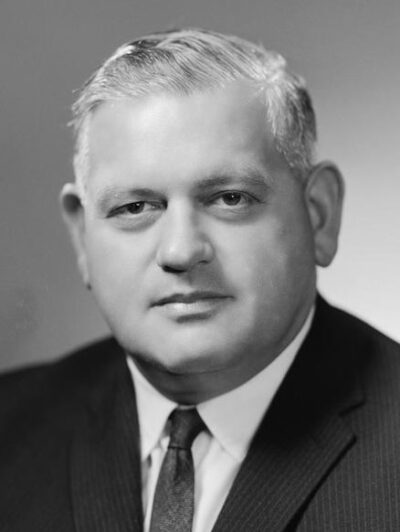
Norman Kirk
Norman Kirk was a Prime Minister of New Zealand, politician. Born January 6, 1923, in Waimate. Died August 31, 1974, in Wellington. Positions held include Member of the New Zealand Parliament (1974), Leader of the Opposition (1965–1972) and Member of the Privy Council of the United Kingdom.
Facts
20 facts · 2 confirmed by two sources · 3 cited · 15 from one source
Where this comes from
Papalocal keeps its own record. It started from these sources; what each one said is kept here as it was copied, so a change on their side never changes this page by itself. Tap one to read its version.
What Wikidata says · copied November 18, 2026 · revision 2567723614
- Described as
- Prime Minister of New Zealand, politician (1923–1974)
- Other names
- Norman E. Kirk, Norman Eric Eirk, Norm Kirk, Norman Eric Kirk
- Born
- January 6, 1923 · 4 references
- Died
- August 31, 1974 · 4 references
- Born in
- Waimate
- Died in
- Wellington · 1 reference
- Buried in
- Waimate Lawn Cemetery
- Cause of death
- pulmonary embolism
- Citizen of
- New Zealand
- Occupation
- politician · 1 reference; diplomat; train driver; head of government · 1 reference
- Positions held
- Member of the New Zealand Parliament (1974); Leader of the Opposition (1965–1972); Member of the Privy Council of the United Kingdom; Prime Minister of New Zealand (1972–1974); Minister of Foreign Affairs (1972–1974) · 1 reference
- Political party
- New Zealand Labour Party (1943–)
- Spouse
- Ruth Kirk · 1 reference
- Children
- Bob Kirk; John Kirk · 1 reference
- Wikipedias with a page
- 20
Wikidata item Q1237120 (wikidata.org/wiki/Q1237120), public domain (CC0). Copied November 18, 2026.
What Wikipedia says · copied November 18, 2026 · revision 1386387559
Norman Eric Kirk (6 January 1923 – 31 August 1974) was a New Zealand politician who served as the 29th prime minister of New Zealand and as well as the minister of Foreign
Affairs from 1972 until his sudden death in 1974. He also served as the seventh leader of the Labour Party from 1965 to 1974.
Born into poverty in South Canterbury, Kirk left school at the age of 13 and later joined the New Zealand Labour Party in 1943. He was mayor of Kaiapoi from 1953 until 1957, when he was elected to the New Zealand Parliament. He became the leader of his party in 1964. Following a Labour victory in the 1972 election, Kirk became Prime Minister and Minister of Foreign Affairs, utilising a more assertive approach than previous Ministers. He stressed the need for regional economic development, and affirmed New Zealand's solidarity with Australia in adopting an independent and mutually beneficial foreign policy. Having withdrawn New Zealand troops from Vietnam upon taking office, he was highly critical of US foreign policy. In the same year he strongly opposed French nuclear tests in the Pacific, and threatened to break off diplomatic relations if they continued. He promoted racial equality at home and abroad; his government prevented the South African rugby team from touring New Zealand during 1973. However, his government has been criticised for the launching of the Dawn Raids, the aggressive crackdown on alleged overstayers that near-exclusively targeted Pacific Islanders. Kirk relented to public pressure and discontinued the raids in April 1974.
Kirk had a reputation as the most formidable debater of his time and once famously said that "there are four things that matter to people: they have to have somewhere to live, they have to have food to eat, they have to have clothing to wear, and they have to have something to hope for", often misquoted as "somewhere to live, someone to love, somewhere to work and something to hope for". In private, he suffered from effects of obesity and work exhaustion; his health rapidly deteriorated in the winter of 1974, and he died suddenly on 31 August that year. His death shocked the nation and led to an outpouring of grief; he is the most recent New Zealand prime minister to die in office. He was given a combined state funeral and tangi in two locations, with a combination of European and Māori rites.
Owing to his energy, charisma and powerful oratory, as well as his untimely death, Kirk remains one of the most popular New Zealand prime ministers. He was succeeded as head of government by Bill Rowling, who lost the subsequent election.
- Born, in its opening lines
- January 6, 1923
- Died, in its opening lines
- August 31, 1974
From the Wikipedia article “Norman Kirk” (en.wikipedia.org/wiki/Norman_Kirk), by its contributors, under CC BY-SA 4.0 (creativecommons.org/licenses/by-sa/4.0/). Copied November 18, 2026; not changed.
Confirmed Two sources agree. Cited One source, and it names where it got it. One source One source, without a reference of its own. Sources disagree The sources disagree. We show the best-supported value and keep theirs below.
