
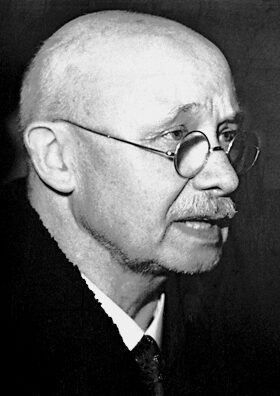
Otto Diels
Otto Diels was a German chemist. Born January 23, 1876, in Hamburg. Died March 7, 1954, in Kiel. Educated at Humboldt-Universität zu Berlin. Awards include Commander's Cross of the Order of Merit of the Federal Republic of Germany, Nobel Prize in Chemistry and Adolf-von-Baeyer Gold Medal.
Facts
21 facts · 2 confirmed by two sources · 8 cited · 11 from one source
Where this comes from
Papalocal keeps its own record. It started from these sources; what each one said is kept here as it was copied, so a change on their side never changes this page by itself. Tap one to read its version.
What Wikidata says · copied November 16, 2026 · revision 2569007661
- Described as
- German chemist (1876–1954)
- Other names
- Otto Paul Hermann Diels
- Born
- January 23, 1876 · 7 references
- Died
- March 7, 1954 · 7 references
- Born in
- Hamburg · 1 reference
- Died in
- Kiel · 1 reference
- Buried in
- Ulsnis Cemetery · 1 reference
- Citizen of
- Germany
- Occupation
- chemist · 1 reference; university teacher
- Worked for
- Kiel University; Humboldt-Universität zu Berlin · 1 reference
- Education
- Humboldt-Universität zu Berlin
- Member of
- German Academy of Sciences Leopoldina; Bavarian Academy of Sciences and Humanities; Göttingen Academy of Sciences and Humanities in Lower Saxony
- Awards
- Commander's Cross of the Order of Merit of the Federal Republic of Germany; Nobel Prize in Chemistry (1950) · 2 references; Adolf-von-Baeyer Gold Medal (1931)
- Field
- chemistry
- Father
- Hermann Diels · 1 reference
- Siblings
- Ludwig Diels · 1 reference; Paul Diels · 1 reference
- Wikipedias with a page
- 70
Wikidata item Q76616 (wikidata.org/wiki/Q76616), public domain (CC0). Copied November 16, 2026.
What Wikipedia says · copied November 16, 2026 · revision 1378032279
Otto Paul Hermann Diels (German: [ˈɔto ˈdiːls] ; 23 January 1876 – 7 March 1954) was a German chemist. His most notable work was done with Kurt Alder on the Diels–Alder reaction, a method for cyclohexene synthesis. The pair was awarded the Nobel Prize in Chemistry in 1950 for their work. Their method of synthesizing cyclic organic compounds proved valuable for the manufacture of synthetic rubber and plastic. He completed his education at the University of Berlin, where he later worked. Diels was employed at the University of Kiel when he completed his Nobel Prize-winning work, and remained there until he retired in 1945. Diels was married, with five children.
- Born, in its opening lines
- January 23, 1876
- Died, in its opening lines
- March 7, 1954
From the Wikipedia article “Otto Diels” (en.wikipedia.org/wiki/Otto_Diels), by its contributors, under CC BY-SA 4.0 (creativecommons.org/licenses/by-sa/4.0/). Copied November 16, 2026; not changed.
Confirmed Two sources agree. Cited One source, and it names where it got it. One source One source, without a reference of its own. Sources disagree The sources disagree. We show the best-supported value and keep theirs below.
