
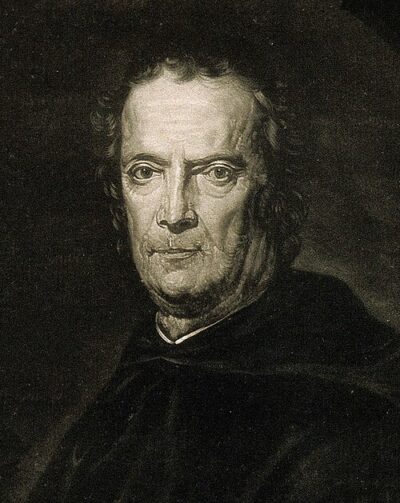
Paolo Sarpi
Paolo Sarpi was a Venetian patriot, scholar, scientist and church reformer. Born August 14, 1552, in Venice. Died January 15, 1623, in Venice. Educated at University of Padua.
Facts
16 facts · 2 confirmed by two sources · 6 cited · 8 from one source
Where this comes from
Papalocal keeps its own record. It started from these sources; what each one said is kept here as it was copied, so a change on their side never changes this page by itself. Tap one to read its version.
What Wikidata says · copied November 18, 2026 · revision 2564801118
- Described as
- Venetian patriot, scholar, scientist and church reformer
- Other names
- Fra (Brother) Paolo Sarpi, Paul Sarpi, Father Paul
- Born
- August 14, 1552 · 3 references
- Died
- January 15, 1623 · 3 references
- Born in
- Venice · 1 reference
- Died in
- Venice · 1 reference
- Buried in
- Cemetery of San Michele
- Citizen of
- Republic of Venice
- Occupation
- philosopher; historian · 1 reference; writer; astronomer; anatomist · 1 reference; theologian · 1 reference; regular priest · 1 reference; Catholic theologian · 1 reference
- Education
- University of Padua
- Religion
- Catholic Church
- Wikipedias with a page
- 24
Wikidata item Q1349158 (wikidata.org/wiki/Q1349158), public domain (CC0). Copied November 18, 2026.
What Wikipedia says · copied November 18, 2026 · revision 1369743199
Paolo Sarpi, O.S.M. (14 August 1552 – 15 January 1623) was an Italian Servite friar and Catholic priest who was a notable historian, scientist, canon lawyer, polymath, and statesman active on behalf of the Venetian Republic during the period of its successful defiance of the papal interdict (1605–1607) and its war (1615–1617) with Austria over the Uskok pirates. His writings, frankly polemical and highly critical of the Catholic Church and its Scholastic tradition, "inspired both Hobbes and Edward Gibbon in their own historical debunkings of priestcraft." Sarpi's major work, the History of the Council of Trent (1619), was published in London in 1619; other works: a History of Ecclesiastical Benefices, History of the Interdict and his Supplement to the History of the Uskoks, appeared posthumously. Organized around single topics, they are early examples of the genre of the historical monograph.
As a defender of the liberties of Republican Venice and proponent of the separation of Church and state, Sarpi attained fame as a hero of republicanism and free thought and possible crypto Protestant. His last words, "Esto perpetua" ("may she [i.e., the republic] live forever"), were recalled by John Adams in 1820 in a letter to Thomas Jefferson, when Adams "wished 'as devoutly as Father Paul for the preservation of our vast American empire and our free institutions', as Sarpi had wished for the preservation of Venice and its institutions."
Sarpi was also an experimental scientist, a proponent of the Copernican system, a friend and patron of Galileo Galilei, and a keen follower of the latest research on anatomy, astronomy, and ballistics at the University of Padua. His extensive network of correspondents included Francis Bacon and William Harvey.
Sarpi believed that government institutions should rescind their censorship of the Avvisi—the newsletters that started to be common in his time—and instead of censorship, publish their own versions of the news to counter enemy publications. In that spirit, Sarpi himself published several pamphlets in defence of Venice's rights over the Adriatic. As such, Sarpi could be considered as an early advocate of the freedom of the press, though the concept did not yet exist in his lifetime.
- Born, in its opening lines
- August 14, 1552
- Died, in its opening lines
- January 15, 1623
From the Wikipedia article “Paolo Sarpi” (en.wikipedia.org/wiki/Paolo_Sarpi), by its contributors, under CC BY-SA 4.0 (creativecommons.org/licenses/by-sa/4.0/). Copied November 18, 2026; not changed.
Confirmed Two sources agree. Cited One source, and it names where it got it. One source One source, without a reference of its own. Sources disagree The sources disagree. We show the best-supported value and keep theirs below.
