
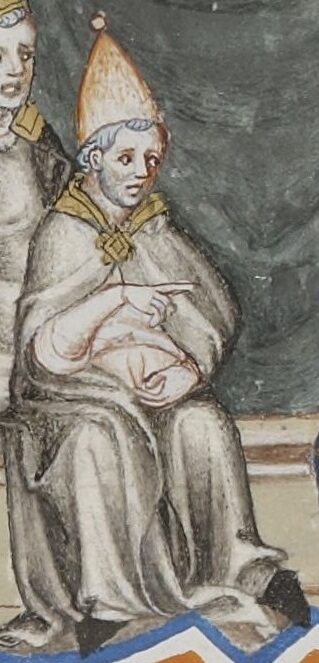
Paschal II was a Head of the Catholic Church from 1099 to 1118. Born 1050s, in Galeata. Died January 21, 1118, in Rome. Positions held include Pope (1099–1118) and cardinal (1073–).
Facts
12 facts · 0 confirmed by two sources · 9 cited · 3 from one source
Where this comes from
Papalocal keeps its own record. It started from these sources; what each one said is kept here as it was copied, so a change on their side never changes this page by itself. Tap one to read its version.
What Wikidata says · copied November 16, 2026 · revision 2558205549
- Described as
- Head of the Catholic Church from 1099 to 1118
- Other names
- Ranierius Raineri of Bleda, Ranierius, Pope Paschal II
- Born
- 1050s · 2 references
- Died
- January 21, 1118 · 3 references
- Born in
- Galeata · 4 references
- Died in
- Rome · 2 references
- Buried in
- Archbasilica of St. John Lateran · 2 references
- Citizen of
- March of Tuscany
- Occupation
- Catholic priest; writer · 1 reference; Catholic bishop (1099–)
- Positions held
- Pope (1099–1118) · 1 reference; cardinal (1073–) · 1 reference
- Religion
- Catholic Church · 1 reference
- Wikipedias with a page
- 74
Wikidata item Q227967 (wikidata.org/wiki/Q227967), public domain (CC0). Copied November 16, 2026.
What Wikipedia says · copied November 16, 2026 · revision 1360837256
Pope Paschal II (Latin: Paschalis II; 1050 x 1055 – 21 January 1118), born Raniero Raineri di Bleda, was head of the Catholic Church and ruler of the Papal States from 13 August 1099 to his death in 1118. A monk of the Abbey of Cluny, he was created the cardinal-priest of San Clemente by Pope Gregory VII (1073–85) in 1073. He was consecrated as pope in succession to Pope Urban II (1088–99) on 19 August 1099. His reign of almost twenty years was exceptionally long for a medieval pope.
From the Wikipedia article “Pope Paschal II” (en.wikipedia.org/wiki/Pope_Paschal_II), by its contributors, under CC BY-SA 4.0 (creativecommons.org/licenses/by-sa/4.0/). Copied November 16, 2026; not changed.
Confirmed Two sources agree. Cited One source, and it names where it got it. One source One source, without a reference of its own. Sources disagree The sources disagree. We show the best-supported value and keep theirs below.
