
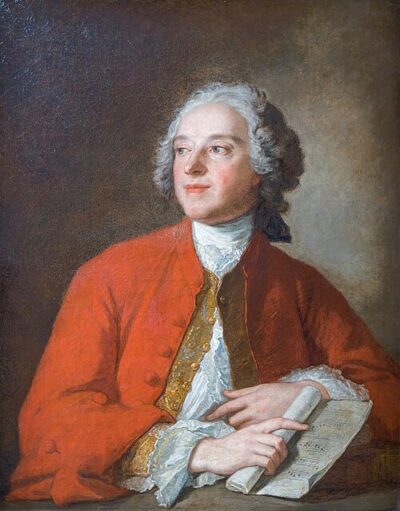
Pierre-Augustin de Beaumarchais
Pierre-Augustin de Beaumarchais was a French playwright, diplomat and polymath. Born January 24, 1732, in rue Saint-Denis. Died May 18, 1799, in former 8th arrondissement of Paris. Known for The Barber of Seville, The Marriage of Figaro and The Guilty Mother.
Facts
24 facts · 2 confirmed by two sources · 8 cited · 14 from one source
Where this comes from
Papalocal keeps its own record. It started from these sources; what each one said is kept here as it was copied, so a change on their side never changes this page by itself. Tap one to read its version.
What Wikidata says · copied November 16, 2026 · revision 2569115260
- Described as
- French playwright, diplomat and polymath (1732–1799)
- Other names
- Pierre-Augustin Caron de Beaumarchais, Beaumarchais
- Born
- January 24, 1732 · 19 references
- Died
- May 18, 1799 · 5 references
- Born in
- rue Saint-Denis · 1 reference
- Died in
- former 8th arrondissement of Paris · 1 reference
- Buried in
- Père Lachaise Cemetery · 2 references
- Citizen of
- France · 1 reference
- Occupation
- musician · 1 reference; poet; businessperson; publisher; playwright · 3 references; diplomat; financier; opinion journalist · 2 references
- Known for
- The Barber of Seville; The Marriage of Figaro; The Guilty Mother
- Field
- performing arts
- Spouse
- Madeleine-Catherine Franquet; Geneviève-Madeleine Lévêque; Marie-Thérèse-Amélie Caron de Beaumarchais · 1 reference
- Children
- Amélie-Eugénie Caron de Beaumarchais
- Father
- André-Charles Caron
- Lived in
- Hôtel de Beaumarchais
- Wikipedias with a page
- 96
Wikidata item Q70326 (wikidata.org/wiki/Q70326), public domain (CC0). Copied November 16, 2026.
What Wikipedia says · copied November 16, 2026 · revision 1384098693
Pierre-Augustin Caron de Beaumarchais (French: [pjɛʁ oɡystɛ̃ kaʁɔ̃ d(ə) bomaʁʃɛ]; né Caron; 24 January 1732 – 18 May 1799) was a French playwright and diplomat of the Age of Enlightenment. Best known for his three Figaro plays, at various times in his life he was also a watchmaker, inventor, musician, spy, publisher, arms dealer, and revolutionary (both French and American).
Born a Parisian watchmaker's son, Beaumarchais rose in French society and became influential in the court of Louis XV as an inventor and music teacher. He made a number of important business and social contacts, played various roles as a diplomat and spy, and had earned a considerable fortune before a series of costly court battles jeopardized his reputation.
An early French supporter of American independence, Beaumarchais lobbied the French government on behalf of the American rebels during the American War of Independence. Beaumarchais oversaw covert aid from the French and Spanish governments to supply arms and financial assistance to the rebels in the years before France's formal entry into the war in 1778. He later struggled to recover money he had personally invested in the scheme. Beaumarchais was also a participant in the early stages of the 1789 French Revolution.
- Born, in its opening lines
- January 24, 1732
- Died, in its opening lines
- May 18, 1799
From the Wikipedia article “Pierre-Augustin de Beaumarchais” (en.wikipedia.org/wiki/Pierre-Augustin_de_Beaumarchais), by its contributors, under CC BY-SA 4.0 (creativecommons.org/licenses/by-sa/4.0/). Copied November 16, 2026; not changed.
Confirmed Two sources agree. Cited One source, and it names where it got it. One source One source, without a reference of its own. Sources disagree The sources disagree. We show the best-supported value and keep theirs below.
