
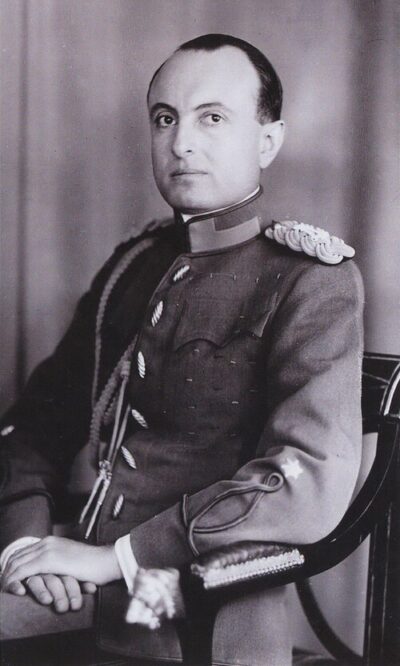
Prince Paul of Yugoslavia
Prince Paul of Yugoslavia was a Regent of the Kingdom of Yugoslavia. Born April 27, 1893, in Saint Petersburg. Died September 14, 1976, in Paris. Positions held include regent. Educated at Christ Church. Awards include Order of the White Eagle, Royal Victorian Chain and Order of the Star of Karađorđe.
Facts
34 facts · 2 confirmed by two sources · 3 cited · 29 from one source
Where this comes from
Papalocal keeps its own record. It started from these sources; what each one said is kept here as it was copied, so a change on their side never changes this page by itself. Tap one to read its version.
What Wikidata says · copied November 16, 2026 · revision 2558206061
- Described as
- Regent of the Kingdom of Yugoslavia (1893-1976)
- Other names
- Pavle Karađorđević, Paul Karageorgevich, Prince of Yugoslavia Pavle, Prince of Yugoslavia Paul, Prince of Yugoslavia Pavle Karađorđević, Pablo Karagjorgjevich, Paul of Yugoslavia
- Born
- April 27, 1893 · 4 references
- Died
- September 14, 1976 · 8 references
- Born in
- Saint Petersburg · 2 references
- Died in
- Paris · 2 references
- Buried in
- Oplenac
- Citizen of
- Russian Empire; Kingdom of Serbia (1904–); Kingdom of Serbs, Croats and Slovenes; Kingdom of Yugoslavia
- Occupation
- politician; monarch; Prince regent · 1 reference
- Positions held
- regent
- Education
- Christ Church
- Awards
- Order of the White Eagle; Royal Victorian Chain (1934); Order of the Star of Karađorđe; Order of the White Eagle · 1 reference; Knight of the Order of the Most Holy Annunciation · 1 reference; Order of the Garter · 1 reference; Order of the White Lion; Order of St. Sylvester · 1 reference; Knight Grand Cross of the Order of Saints Maurice and Lazarus; Order of Saint John · 1 reference; Knight grand cross of the order of the crown of Italy; Knight of the Order of the Elephant (1934)
- Spouse
- Princess Olga of Greece and Denmark (1923–1976) · 1 reference
- Children
- Prince Nikola of Yugoslavia · 1 reference; Prince Alexander of Serbia; Princess Elizabeth of Serbia
- Father
- Prince Arsen of Yugoslavia
- Mother
- Aurora Pavlovna Demidova
- Religion
- Serbian Orthodox Church
- Military rank
- army general · 1 reference
- Wikipedias with a page
- 35
Wikidata item Q313128 (wikidata.org/wiki/Q313128), public domain (CC0). Copied November 16, 2026.
What Wikipedia says · copied November 16, 2026 · revision 1379817566
Prince Paul of Yugoslavia, also known as Paul Karađorđević (Serbo-Croatian: Павле Карађорђевић, romanized: Pavle Karađorđević, English transliteration: Paul Karageorgevich; 27 April 1893 – 14 September 1976), was prince regent of the Kingdom of Yugoslavia during the minority of King Peter II. Paul was a first cousin of Peter's father, Alexander I.
- Born, in its opening lines
- April 27, 1893
- Died, in its opening lines
- September 14, 1976
From the Wikipedia article “Prince Paul of Yugoslavia” (en.wikipedia.org/wiki/Prince_Paul_of_Yugoslavia), by its contributors, under CC BY-SA 4.0 (creativecommons.org/licenses/by-sa/4.0/). Copied November 16, 2026; not changed.
Confirmed Two sources agree. Cited One source, and it names where it got it. One source One source, without a reference of its own. Sources disagree The sources disagree. We show the best-supported value and keep theirs below.
