
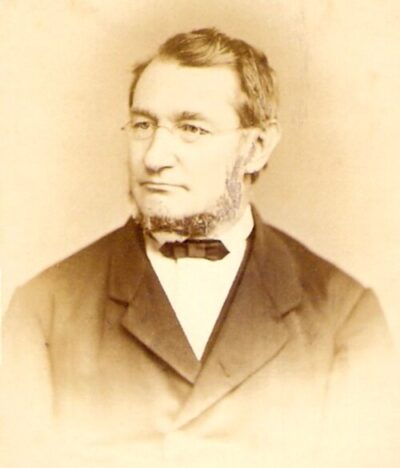
Robert Mayer
Robert Mayer was a German physicist. Born November 25, 1814, in Heilbronn. Died March 20, 1878, in Heilbronn. Educated at University of Tübingen. Awards include Copley Medal, Poncelet Prize and honorary member of the Physics Association (Frankfurt am Main, Germany).
Facts
22 facts · 2 confirmed by two sources · 11 cited · 9 from one source
Where this comes from
Papalocal keeps its own record. It started from these sources; what each one said is kept here as it was copied, so a change on their side never changes this page by itself. Tap one to read its version.
What Wikidata says · copied November 16, 2026 · revision 2569004087
- Described as
- German physicist (1814-1878)
- Other names
- Julius Robert von Mayer, Julius von Mayer, Robert von Mayer, Mayer Yulius Robert
- Born
- November 25, 1814 · 7 references
- Died
- March 20, 1878 · 5 references
- Born in
- Heilbronn · 1 reference
- Died in
- Heilbronn · 1 reference
- Buried in
- Alter Friedhof
- Cause of death
- tuberculosis
- Citizen of
- Kingdom of Württemberg
- Occupation
- physicist · 1 reference; physician · 1 reference; chemist · 1 reference
- Education
- University of Tübingen (–1838)
- Member of
- Bavarian Academy of Sciences and Humanities; Academy of Sciences of Turin (1867–) · 1 reference
- Awards
- Copley Medal (1871) · 1 reference; Poncelet Prize (1869) · 1 reference; honorary member of the Physics Association (Frankfurt am Main, Germany) (1867)
- Field
- physics; medicine
- Spouse
- Wilhelmine Mayer · 1 reference
- Father
- Christian Mayer
- Siblings
- Friedrich Mayer · 1 reference; Gustav Mayer · 1 reference
- Wikipedias with a page
- 53
Wikidata item Q57171 (wikidata.org/wiki/Q57171), public domain (CC0). Copied November 16, 2026.
What Wikipedia says · copied November 16, 2026 · revision 1372035312
Julius Robert von Mayer (25 November 1814 – 20 March 1878) was a German physician, chemist, and physicist and one of the founders of thermodynamics. He is best known for enunciating in 1841 one of the original statements of the conservation of energy or what is now known as one of the first versions of the first law of thermodynamics, namely that "energy can be neither created nor destroyed". In 1842, Mayer described the vital chemical process now referred to as oxidation as the primary source of energy for any living creature. He also proposed that plants convert light into chemical energy.
His achievements were overlooked and priority for the discovery in 1842 of the mechanical equivalent of heat was attributed to James Joule in the following year.
- Born, in its opening lines
- November 25, 1814
- Died, in its opening lines
- March 20, 1878
From the Wikipedia article “Julius von Mayer” (en.wikipedia.org/wiki/Julius_von_Mayer), by its contributors, under CC BY-SA 4.0 (creativecommons.org/licenses/by-sa/4.0/). Copied November 16, 2026; not changed.
Confirmed Two sources agree. Cited One source, and it names where it got it. One source One source, without a reference of its own. Sources disagree The sources disagree. We show the best-supported value and keep theirs below.
