
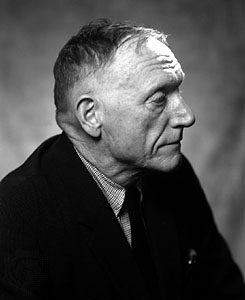
Robert Penn Warren
Robert Penn Warren was an American poet, novelist, and literary critic. Born April 24, 1905, in Guthrie. Died September 15, 1989, in Stratton. Known for Understanding Poetry, Night Rider and At Heaven's Gate. Educated at Vanderbilt University and University of California, Berkeley. Awards include Guggenheim Fellowship (2 times), Rome Prize and National Medal of Arts.
Facts
58 facts · 2 confirmed by two sources · 33 cited · 23 from one source
Where this comes from
Papalocal keeps its own record. It started from these sources; what each one said is kept here as it was copied, so a change on their side never changes this page by itself. Tap one to read its version.
What Wikidata says · copied November 13, 2026 · revision 2565596699
- Described as
- American poet, novelist, and literary critic (1905-1989)
- Born
- April 24, 1905 · 15 references
- Died
- September 15, 1989 · 13 references
- Born in
- Guthrie · 2 references
- Died in
- Stratton · 3 references
- Buried in
- Vermont
- Cause of death
- bone cancer
- Citizen of
- United States · 3 references
- Occupation
- poet · 3 references; novelist; writer · 3 references; literary critic; journalist; children's writer · 1 reference
- Worked for
- Yale University · 1 reference; Louisiana State University · 1 reference; University of Iowa · 1 reference; Southwestern College · 1 reference; Vanderbilt University · 1 reference
- Education
- Vanderbilt University (–1925) · 2 references; University of California, Berkeley (–1927) · 2 references; Yale University (1927–1928) · 1 reference; University of Oxford (1928–1930) · 2 references; Clarksville Senior High School; Clarksville High School
- Member of
- American Academy of Arts and Sciences; Phi Beta Kappa Society; American Academy of Arts and Letters; Fellowship of Southern Writers · 1 reference; American Philosophical Society (1962–)
- Genre
- poetry
- Known for
- Understanding Poetry · 1 reference; Night Rider · 1 reference; At Heaven's Gate · 1 reference; All the King's Men · 1 reference; Who Speaks for the Negro? · 1 reference
- Awards
- Guggenheim Fellowship (2 times) (1939, 1947) · 1 reference; Rome Prize (1957) · 1 reference; National Medal of Arts (1987) · 1 reference; United States Poet Laureate (2 times) (1944–1987) · 1 reference; Pulitzer Prize for the Novel (1947) · 1 reference; Pulitzer Prize for Poetry (2 times) (1958, 1979) · 1 reference; Bollingen Prize (1967) · 1 reference; MacArthur Fellows Program (1981) · 1 reference; Presidential Medal of Freedom (1980) · 1 reference; Shelley Memorial Award (1943); National Book Award (1958) · 1 reference; Rhodes Scholarship (1928) · 1 reference; Robert Frost Medal (1985) · 2 references; The Hillman Prize for Magazine Journalism (1957) · 1 reference
- Spouse
- Eleanor Clark (1952–1989) · 1 reference; Emma Brescia Gardner
- Children
- Rosanna Warren
- Mother
- Anna Ruth Warren · 1 reference
- Lived in
- Connecticut (1950–1973); Fairfield (–1989); Louisiana; Stratton (–1989)
- Website
- http://www.robertpennwarren.com/
- Wikipedias with a page
- 50
Wikidata item Q312720 (wikidata.org/wiki/Q312720), public domain (CC0). Copied November 13, 2026.
What Wikipedia says · copied November 13, 2026 · revision 1372308277
Robert Penn Warren (April 24, 1905 – September 15, 1989) was an American poet, novelist, literary critic and professor at Yale University. He was one of the founders of New Criticism. He was also a charter member of the Fellowship of Southern Writers. He founded the literary journal The Southern Review with Cleanth Brooks in 1935. He received the 1947 Pulitzer Prize for the Novel for All the King's Men (1946) and the Pulitzer Prize for Poetry in 1958 and 1979. He is the only person to have won Pulitzer Prizes for both fiction and poetry. Yale awarded Warren an honorary Doctor of Letters degree in 1973.
- Born, in its opening lines
- April 24, 1905
- Died, in its opening lines
- September 15, 1989
From the Wikipedia article “Robert Penn Warren” (en.wikipedia.org/wiki/Robert_Penn_Warren), by its contributors, under CC BY-SA 4.0 (creativecommons.org/licenses/by-sa/4.0/). Copied November 13, 2026; not changed.
Confirmed Two sources agree. Cited One source, and it names where it got it. One source One source, without a reference of its own. Sources disagree The sources disagree. We show the best-supported value and keep theirs below.
