
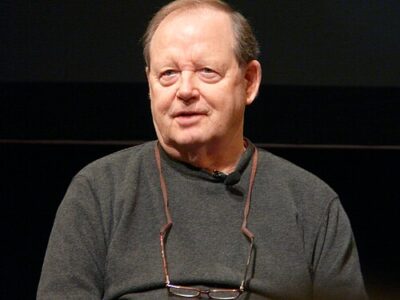
Robert Taylor
Robert Taylor was an American computer scientist. Born February 10, 1932, in Dallas. Died April 13, 2017, in Woodside. Educated at University of Texas at Austin. Awards include National Medal of Technology and Innovation, Charles Stark Draper Prize and ACM Software System Award.
Facts
26 facts · 2 confirmed by two sources · 5 cited · 19 from one source
Where this comes from
Papalocal keeps its own record. It started from these sources; what each one said is kept here as it was copied, so a change on their side never changes this page by itself. Tap one to read its version.
What Wikidata says · copied November 16, 2026 · revision 2517524314
- Described as
- American computer scientist (1932–2017)
- Other names
- Robert W. Taylor, Robert William Taylor, Bob Taylor
- Born
- February 10, 1932
- Died
- April 13, 2017 · 1 reference
- Born in
- Dallas
- Died in
- Woodside
- Cause of death
- Parkinson's disease
- Name at birth
- Robert William Taylor
- Citizen of
- United States
- Occupation
- computer scientist; psychologist
- Worked for
- Martin Marietta (–1961); National Aeronautics and Space Administration (1961–1965); Defense Advanced Research Projects Agency (1965–1969); University of Utah (1969–1970); Palo Alto Research Center (1970–1983); DEC Systems Research Center (1983–); Digital Equipment Corporation
- Education
- University of Texas at Austin
- Member of
- Association for Computing Machinery (1994–) · 1 reference
- Awards
- National Medal of Technology and Innovation (1999) · 1 reference; Charles Stark Draper Prize (2004); ACM Software System Award (1984) · 1 reference; ACM Fellow (1994) · 1 reference; Computer History Museum Fellow (2013); Internet Hall of Fame (2013) · 1 reference
- Field
- computer science · 1 reference
- Nickname
- Bob Taylor
- Wikipedias with a page
- 23
Wikidata item Q93038 (wikidata.org/wiki/Q93038), public domain (CC0). Copied November 16, 2026.
What Wikipedia says · copied November 16, 2026 · revision 1378920365
Robert William Taylor (February 10, 1932 – April 13, 2017), known as Bob Taylor, was an American Internet pioneer, who led teams that made major contributions to the personal computer, and other related technologies. He was director of ARPA's Information Processing Techniques Office from 1965 through 1969, founder and later manager of Xerox PARC's Computer Science Laboratory from 1970 through 1983, and founder and manager of Digital Equipment Corporation's Systems Research Center until 1996.
Uniquely, Taylor had no formal academic training or research experience in computer science; Severo Ornstein likened Taylor to a "concert pianist without fingers", a perception reaffirmed by historian Leslie Berlin: "Taylor could hear a faint melody in the distance, but he could not play it himself. He knew whether to move up or down the scale to approximate the sound, he could recognize when a note was wrong, but he needed someone else to make the music."
His awards include the National Medal of Technology and Innovation and the Draper Prize. Taylor was known for his high-level vision: "The Internet is not about technology; it's about communication. The Internet connects people who have shared interests, ideas and needs, regardless of geography."
- Born, in its opening lines
- February 10, 1932
- Died, in its opening lines
- April 13, 2017
From the Wikipedia article “Robert Taylor (computer scientist)” (en.wikipedia.org/wiki/Robert_Taylor_(computer_scientist)), by its contributors, under CC BY-SA 4.0 (creativecommons.org/licenses/by-sa/4.0/). Copied November 16, 2026; not changed.
Confirmed Two sources agree. Cited One source, and it names where it got it. One source One source, without a reference of its own. Sources disagree The sources disagree. We show the best-supported value and keep theirs below.
