
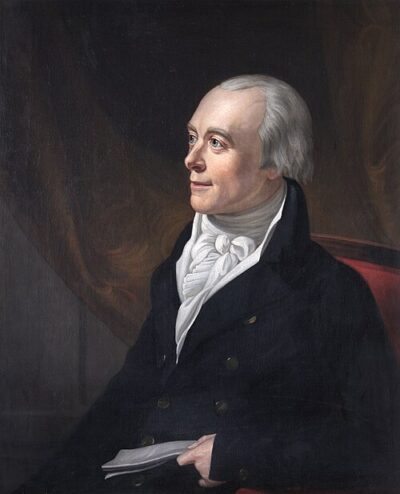
Spencer Perceval
Spencer Perceval was the 19th-century prime minister of the United Kingdom. Born November 1, 1762, in Mayfair. Died May 11, 1812, in Palace of Westminster. Positions held include Prime Minister of the United Kingdom (1809–1812), Chancellor of the Exchequer (1807–1812) and Solicitor General for England and Wales (1801–1802). Educated at Trinity College and Harrow School.
Facts
47 facts · 2 confirmed by two sources · 20 cited · 25 from one source
Where this comes from
Papalocal keeps its own record. It started from these sources; what each one said is kept here as it was copied, so a change on their side never changes this page by itself. Tap one to read its version.
What Wikidata says · copied November 16, 2026 · revision 2562947380
- Described as
- 19th-century prime minister of the United Kingdom (1762–1812)
- Born
- November 1, 1762 · 5 references
- Died
- May 11, 1812 · 6 references
- Born in
- Mayfair
- Died in
- Palace of Westminster
- Buried in
- St Luke's Church, Charlton
- Cause of death
- gunshot wound
- Citizen of
- United Kingdom of Great Britain and Ireland
- Occupation
- politician · 1 reference; lawyer; jurist · 1 reference
- Positions held
- Prime Minister of the United Kingdom (1809–1812); Chancellor of the Exchequer (1807–1812); Solicitor General for England and Wales (1801–1802); Leader of the House of Commons (1807–1812); Member of the Privy Council of the United Kingdom; Chancellor of the Duchy of Lancaster (1807–1812); Attorney General for England and Wales (1802–1806); First Lord of the Treasury (1809–1812); member of the 1st Parliament of the United Kingdom; member of the 2nd Parliament of the United Kingdom; member of the 3rd Parliament of the United Kingdom; member of the 4th Parliament of the United Kingdom; member of the 18th Parliament of Great Britain; member of the 17th Parliament of Great Britain
- Political party
- Tories
- Education
- Trinity College · 1 reference; Harrow School
- Spouse
- Jane Wilson (1790–) · 2 references
- Children
- Spencer Perceval · 1 reference; John Thomas Perceval · 1 reference; Frederick James Perceval · 2 references; Henry Perceval · 2 references; Dudley Montagu Perceval · 2 references; Jane Perceval · 2 references; Isabella Perceval · 2 references; Ernest Augustas Perceval · 2 references; Frances Perceval · 1 reference; Louise Perceval · 1 reference; Michael Henry Perceval · 1 reference; Frederica Elizabeth Perceval · 1 reference
- Father
- John Perceval, 2nd Earl of Egmont · 1 reference
- Mother
- Catherine Compton, Baroness Arden · 2 references
- Siblings
- John Perceval, 3rd Earl of Egmont; Charles Perceval, 2nd Baron Arden · 1 reference; Lady Margaret Perceval · 1 reference; Lady Frances Perceval · 1 reference
- Religion
- Anglicanism
- Wikipedias with a page
- 55
Wikidata item Q233992 (wikidata.org/wiki/Q233992), public domain (CC0). Copied November 16, 2026.
What Wikipedia says · copied November 16, 2026 · revision 1383176471
Spencer Perceval (1 November 1762 – 11 May 1812) was Prime Minister of the United Kingdom from October 1809 until his assassination in May 1812. He is the only British prime minister to have been assassinated, and the only solicitor-general or attorney-general to have become prime minister.
The younger son of The Earl of Egmont, an Anglo-Irish earl, Perceval was educated at Harrow School and Trinity College, Cambridge. He studied law at Lincoln's Inn, practised as a barrister on the Midland circuit, and in 1796 became a King's Counsel. He entered politics at age 33 as a member of Parliament (MP) for Northampton. A follower of William Pitt the Younger, Perceval always described himself as a "friend of Mr. Pitt", rather than a Tory. He was opposed to Catholic emancipation and reform of Parliament; he supported the war against Napoleon and the abolition of the Atlantic slave trade.
After a late entry into politics, his rise to power was rapid; he was appointed as Solicitor General and then Attorney General for England and Wales in the Addington ministry, Chancellor of the Exchequer and Leader of the House of Commons in the second Portland ministry, and then became prime minister in 1809. At the head of a weak government, Perceval faced a number of crises during his term in office, including an inquiry into the Walcheren expedition, the mental illness and incapacity of King George III, economic depression, and Luddite riots. He overcame those crises, successfully pursued the Peninsular War in the face of opposition defeatism, and won the support of the Prince Regent. His position was stronger by early 1812, when in the lobby of the House of Commons, he was assassinated by John Bellingham, a merchant with a grievance against his government. Bellingham was hanged one week later.
Perceval had four older brothers who survived to adulthood. Through expiry of their male-line, male heirs, the earldom of Egmont passed to one of his great-grandsons in the early 20th century and became extinct in 2011.
- Born, in its opening lines
- November 1, 1762
- Died, in its opening lines
- May 11, 1812
From the Wikipedia article “Spencer Perceval” (en.wikipedia.org/wiki/Spencer_Perceval), by its contributors, under CC BY-SA 4.0 (creativecommons.org/licenses/by-sa/4.0/). Copied November 16, 2026; not changed.
Confirmed Two sources agree. Cited One source, and it names where it got it. One source One source, without a reference of its own. Sources disagree The sources disagree. We show the best-supported value and keep theirs below.
