
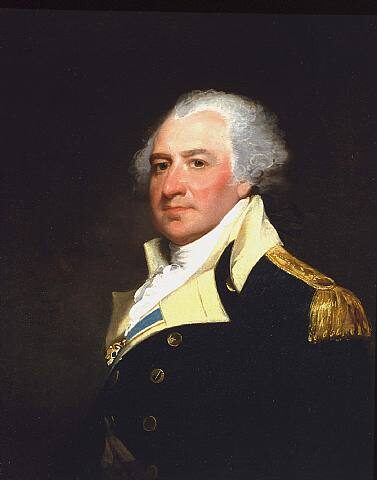
Thomas Mifflin
Thomas Mifflin was an American politician. Born January 10, 1744, in Philadelphia. Died January 20, 1800, in Lancaster. Positions held include President of the Continental Congress (1783–1784), member of the Pennsylvania House of Representatives and Speaker of the Pennsylvania House of Representatives (1785–1788). Educated at University of Pennsylvania and The Academy and College of Philadelphia.
Facts
26 facts · 2 confirmed by two sources · 8 cited · 16 from one source
Where this comes from
Papalocal keeps its own record. It started from these sources; what each one said is kept here as it was copied, so a change on their side never changes this page by itself. Tap one to read its version.
What Wikidata says · copied November 15, 2026 · revision 2567452708
- Described as
- American politician (1744-1800)
- Born
- January 10, 1744 · 2 references
- Died
- January 20, 1800 · 2 references
- Born in
- Philadelphia · 1 reference
- Died in
- Lancaster · 1 reference
- Buried in
- Pennsylvania
- Citizen of
- United States
- Occupation
- military officer; politician · 2 references; governor · 1 reference; major general · 1 reference
- Positions held
- President of the Continental Congress (1783–1784); member of the Pennsylvania House of Representatives; Speaker of the Pennsylvania House of Representatives (1785–1788) · 1 reference; Governor of Pennsylvania (1790–1799); President of the Supreme Executive Council of Pennsylvania (1788–1790); Delegate to the United States Constitutional Convention (1787) · 1 reference
- Political party
- Federalist Party
- Education
- University of Pennsylvania; The Academy and College of Philadelphia
- Member of
- American Philosophical Society
- Spouse
- Sarah Morris Mifflin · 1 reference
- Children
- Emily Mifflin Hopkinson
- Father
- John Mifflin
- Mother
- Elizabeth Bagnall
- Religion
- Lutheranism
- Military branch
- Continental Army
- Wikipedias with a page
- 26
Wikidata item Q142644 (wikidata.org/wiki/Q142644), public domain (CC0). Copied November 15, 2026.
What Wikipedia says · copied November 15, 2026 · revision 1383318712
Thomas Mifflin (January 10, 1744 – January 20, 1800) was an American merchant, soldier, and politician from Pennsylvania, who is regarded as a Founding Father of the United States for his roles during and after the American Revolution. Mifflin signed the United States Constitution, was the first governor of Pennsylvania, serving from 1790 to 1799, and was also the state's last president, succeeding Benjamin Franklin in 1788.
Born in Philadelphia, Mifflin became a merchant following his graduation from the College of Philadelphia. After serving in the Pennsylvania Provincial Assembly and the First Continental Congress, where he signed the Continental Association, he joined the Continental Army in 1775. During the Revolutionary War, Mifflin was an aide to General George Washington and was appointed the army's Quartermaster General, rising to the rank of major general. He returned to Congress in 1782 and was elected president of the Congress the following year. He served as speaker of the Pennsylvania House of Representatives from 1785 to 1787 and as president of Pennsylvania's Supreme Executive Council from 1788 to 1790.
Mifflin was a delegate to the Constitutional Convention in 1787 and signed the United States Constitution. He then presided over the committee that wrote Pennsylvania's state constitution, becoming the state's first governor after the constitution's ratification in 1790. Mifflin left office as governor in 1799 and died a month later in 1800.
- Born, in its opening lines
- January 10, 1744
- Died, in its opening lines
- January 20, 1800
From the Wikipedia article “Thomas Mifflin” (en.wikipedia.org/wiki/Thomas_Mifflin), by its contributors, under CC BY-SA 4.0 (creativecommons.org/licenses/by-sa/4.0/). Copied November 15, 2026; not changed.
Confirmed Two sources agree. Cited One source, and it names where it got it. One source One source, without a reference of its own. Sources disagree The sources disagree. We show the best-supported value and keep theirs below.
