
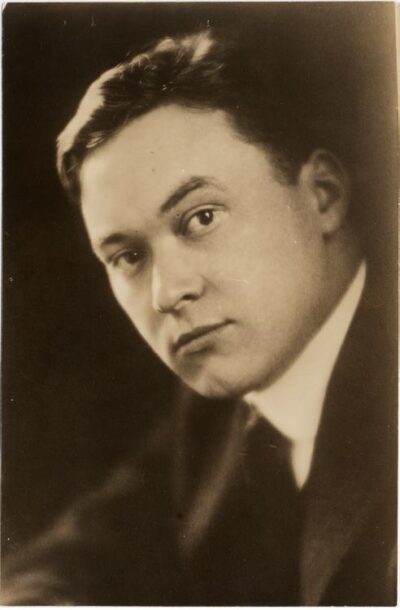
Walter Lippmann
Walter Lippmann was an American journalist and political commentator. Born September 23, 1889, in New York City. Died December 14, 1974, in New York City. Educated at Harvard University and Dwight School. Awards include Peabody Awards, Presidential Medal of Freedom and Pulitzer Prize for International Reporting.
Facts
27 facts · 2 confirmed by two sources · 14 cited · 11 from one source
Where this comes from
Papalocal keeps its own record. It started from these sources; what each one said is kept here as it was copied, so a change on their side never changes this page by itself. Tap one to read its version.
What Wikidata says · copied November 13, 2026 · revision 2558277447
- Described as
- American journalist and political commentator (1889–1974)
- Born
- September 23, 1889 · 10 references
- Died
- December 14, 1974 · 10 references
- Born in
- New York City · 2 references
- Died in
- New York City · 2 references
- Buried in
- Atlantic Ocean · 1 reference
- Citizen of
- United States
- Occupation
- journalist · 1 reference; writer; politician · 1 reference; political analyst · 1 reference; consultant · 1 reference; opinion journalist · 1 reference
- Education
- Harvard University; Dwight School · 1 reference
- Member of
- American Academy of Arts and Sciences; Phi Beta Kappa Society; American Philosophical Society (1947–) · 1 reference; American Academy of Arts and Letters
- Awards
- Peabody Awards; Presidential Medal of Freedom (1964) · 1 reference; Pulitzer Prize for International Reporting (1962) · 1 reference; Pulitzer Prize Special Citations and Awards (1958) · 1 reference
- Field
- politics · 1 reference; mass media · 1 reference; journalism · 1 reference
- Spouse
- Helen Byrne Lippman (1938–); Faye Albertson (1917–1937)
- Wikipedias with a page
- 55
Wikidata item Q316568 (wikidata.org/wiki/Q316568), public domain (CC0). Copied November 13, 2026.
What Wikipedia says · copied November 13, 2026 · revision 1385224311
Walter Lippmann (September 23, 1889 – December 14, 1974) was an American journalist. With a career spanning 60 years, he is famous for being among the first to introduce the concept of the Cold War, coining the term "stereotype" in the modern psychological meaning, as well as critiquing media and democracy in his newspaper column and several books, most notably his 1922 Public Opinion.
Lippmann also played a notable role as research director of Woodrow Wilson's post–World War I board of inquiry. His views on the role of journalism in a democracy were contrasted with the contemporaneous writings of John Dewey in what has been retrospectively named the Lippmann–Dewey Debate. Lippmann won two Pulitzer Prizes, one for his syndicated newspaper column "Today and Tomorrow" and one for his 1961 interview of Nikita Khrushchev.
He has also been highly praised with titles ranging from "most influential" journalist of the 20th century to "Father of Modern Journalism". Michael Schudson writes that James W. Carey considered Walter Lippmann's book Public Opinion as "the founding book of modern journalism" and also "the founding book in American media studies".
- Born, in its opening lines
- September 23, 1889
- Died, in its opening lines
- December 14, 1974
From the Wikipedia article “Walter Lippmann” (en.wikipedia.org/wiki/Walter_Lippmann), by its contributors, under CC BY-SA 4.0 (creativecommons.org/licenses/by-sa/4.0/). Copied November 13, 2026; not changed.
Confirmed Two sources agree. Cited One source, and it names where it got it. One source One source, without a reference of its own. Sources disagree The sources disagree. We show the best-supported value and keep theirs below.
