
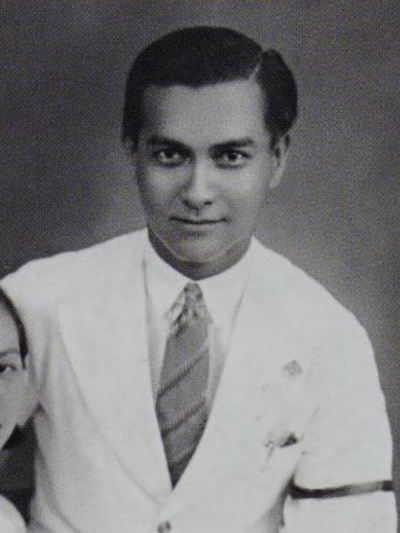
Wee Kim Wee
Wee Kim Wee was the 4th President of Singapore. Born November 4, 1915, in Singapore. Died May 2, 2005, in Siglap. Positions held include President of Singapore (1985–1993) and ambassador of Singapore. Known for Glimpses and Reflections. Educated at Outram Secondary School and Raffles Institution. Awards include Order of Temasek.
Facts
22 facts · 2 confirmed by two sources · 2 cited · 18 from one source
Where this comes from
Papalocal keeps its own record. It started from these sources; what each one said is kept here as it was copied, so a change on their side never changes this page by itself. Tap one to read its version.
What Wikidata says · copied November 16, 2026 · revision 2558808561
- Described as
- 4th President of Singapore (1915–2005)
- Born
- November 4, 1915 · 2 references
- Died
- May 2, 2005 · 3 references
- Born in
- Singapore · 1 reference
- Died in
- Siglap
- Buried in
- Mandai Crematorium and Columbarium · 1 reference
- Cause of death
- prostate cancer
- Citizen of
- Singapore
- Occupation
- diplomat; journalist; politician; sports executive
- Positions held
- President of Singapore (1985–1993); ambassador of Singapore
- Political party
- People's Action Party
- Education
- Outram Secondary School; Raffles Institution
- Sport
- badminton
- Known for
- Glimpses and Reflections
- Awards
- Order of Temasek (1993) · 1 reference
- Spouse
- Koh Sok Hiong
- Children
- Bill Wee Hock Kee
- Religion
- Buddhism
- Wikipedias with a page
- 36
Wikidata item Q399998 (wikidata.org/wiki/Q399998), public domain (CC0). Copied November 16, 2026.
What Wikipedia says · copied November 16, 2026 · revision 1378853424
Wee Kim Wee (4 November 1915 – 2 May 2005) was a Singaporean journalist, diplomat and politician who served as the fourth president of Singapore between 1985 and 1993.
Born in Singapore during colonial rule, Wee was educated at Outram Secondary School and Raffles Institution, dropping out to work at The Straits Times in 1930. He left The Straits Times to join the United Press Associations in 1941, working there through the Second World War and eventually becoming the office manager and chief correspondent by 1959. That same year, he returned to The Straits Times after being offered the position of Deputy Editor.
During his time with them, he was best known for his interview of Lieutenant General Suharto, where he reported his intentions for peace during the Indonesia–Malaysia confrontation. He also became the first Singaporean journalist to enter Jakarta when he went to interview Suharto. He retired from journalism in 1973 at the position of editorial manager and became a diplomat, serving as Singapore's High Commissioner to Malaysia from 1973 and 1980 and Ambassador to Japan and South Korea concurrently from 1980 and 1984, on the request of Foreign Minister S. Rajaratnam.
In 1985, Wee was elected president by Parliament and served in the role for two terms, ending in 1993. For the ensuing presidential election in 1993, the first in Singapore to be decided by popular vote, Wee decided not to contest and retired after his second term had ended. During his presidency, he was known for improving relations between Singapore with Israel, Malaysia, and China, along with attending or officiating many events. He was also the first president to exercise custodial powers pursuant to the constitutional amendments in Singapore's history. He was succeeded by Ong Teng Cheong as president and went into retirement. Wee released an autobiography in 2004, and died of prostate cancer the following year in his home at Siglap Plain on 2 May 2005, at the age of 89.
- Born, in its opening lines
- November 4, 1915
- Died, in its opening lines
- May 2, 2005
From the Wikipedia article “Wee Kim Wee” (en.wikipedia.org/wiki/Wee_Kim_Wee), by its contributors, under CC BY-SA 4.0 (creativecommons.org/licenses/by-sa/4.0/). Copied November 16, 2026; not changed.
Confirmed Two sources agree. Cited One source, and it names where it got it. One source One source, without a reference of its own. Sources disagree The sources disagree. We show the best-supported value and keep theirs below.
