
President of Singapore
President of Singapore is a head of state of the Republic of Singapore. It was created in 1965.
All 5 facts, and where they come from
Facts
5 facts · 0 confirmed by two sources · 0 cited · 5 from one source
Where this comes from
Papalocal keeps its own record. It started from these sources; what each one said is kept here as it was copied, so a change on their side never changes this page by itself. Tap one to read its version.
What Wikidata says · copied November 17, 2026 · revision 2559614249
- Described as
- head of state of the Republic of Singapore
- Other names
- President of the Republic of Singapore
- What it is
- position
- Created
- August 9, 1965
- Country
- Singapore
- Office of
- Singapore
- Official website
- https://www.istana.gov.sg
- Wikipedias with a page
- 34
Wikidata item Q39021 (wikidata.org/wiki/Q39021), public domain (CC0). Copied 2026-11-17.
What Wikipedia says · copied November 17, 2026 · revision 1384991668
The president of Singapore, officially the President of the Republic of Singapore, is the head of state of Singapore. The president represents the country in official diplomatic functions and possesses certain executive powers over the government of Singapore, including the control of the national reserves and the ability to revoke and appoint public service appointments. The President also exercises discretionary powers to veto budgets and to make key public service appointments, consulting the Council of Presidential Advisors.
After Singapore achieved full internal self-governance from the British Empire in 1959, the ceremonial office of the Yang di-Pertuan Negara (lit. 'Lord of the State') was created and first held by William Goode, the prior governor of Singapore. The office was later succeeded by the president of Singapore following Singapore's independence from Malaysia in 1965. The initial role of the president was predominantly a ceremonial institution, serving as the representative of the Singaporean state both at home and abroad. It carried limited residual powers, and prior to 1991, the president was solely appointed by the parliament of Singapore. Singapore follows a non-executive model of the Westminster parliamentary system whereby the president is not the head of government but rather the head of state; political power is instead vested in the Cabinet, which is led by the prime minister.
A constitutional amendment in 1991 introduced the direct election of the president by popular vote, first implemented in the 1993 election. Since then, the elected president has held significant custodial powers, including the reserve power to veto any government budget that, in their judgement and after mandatory consultation with the Council of Presidential Advisers (CPA), would draw on the country's past financial reserves that was accrued under previous governments as part of a check and balance framework. The president also has the power to veto the removal or appointment of key public service, statutory board and government office holders listed in the Fifth Schedule of the Constitution.
Another amendment in 2016 introduced reserved presidential elections for an ethnic community in Singapore if no member of that community had served as president in the preceding five terms. The office has no term limits. The president has far-reaching formal obligations to act above party politics. Under the Constitution, the president must be a Singaporean citizen, non-partisan and elected by popular vote. The incumbent president is Tharman Shanmugaratnam, who took office on 14 September 2023 after being elected in the 2023 presidential election with 70.41% of the vote.
From the Wikipedia article “President of Singapore” (en.wikipedia.org/wiki/President_of_Singapore), by its contributors, under CC BY-SA 4.0 (creativecommons.org/licenses/by-sa/4.0/). Copied 2026-11-17; not changed.
Confirmed Two sources agree. Cited One source, and it names where it got it. One source One source, without a reference of its own. Sources disagree The sources disagree. We show the best-supported value and keep theirs below.
Picture: Wikimedia Commons: Tharman Shanmugaratnam Official photo 2023.tif · See Commons file page
People connected 9
Held this office
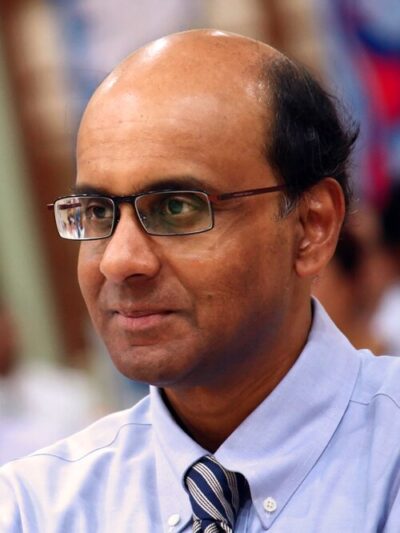 Tharman Shanmugaratnam (2023–)President of Singapore since 2023
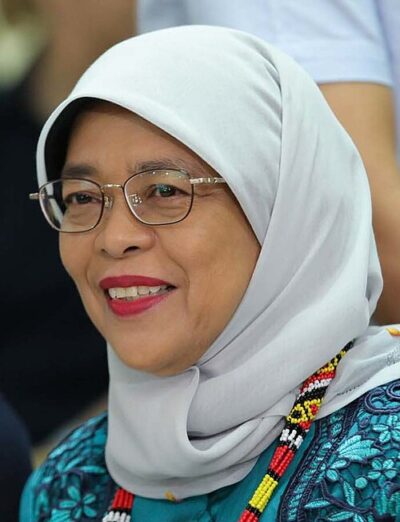 Halimah Yacob (2017–2023)8th President of Singapore
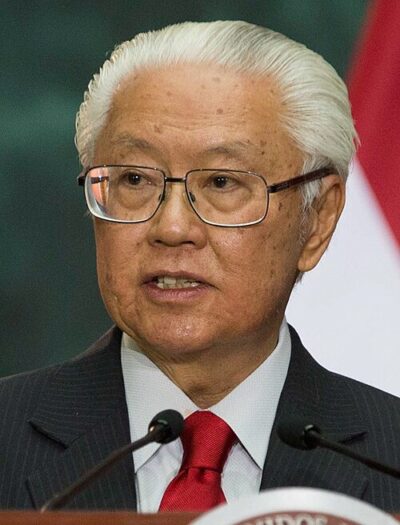 Tony Tan Keng Yam (2011–2017)7th President of Singapore
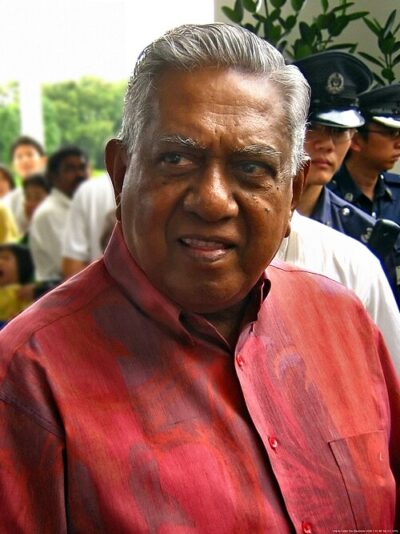 S. R. Nathan (1999–2011)6th President of Singapore (1924–2016)
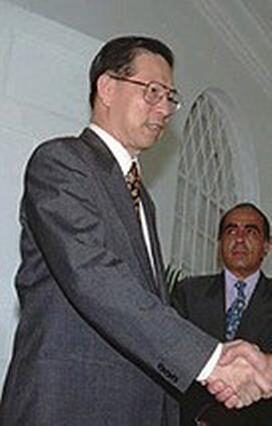 Ong Teng Cheong (1993–1999)5th President of Singapore (1936–2002)
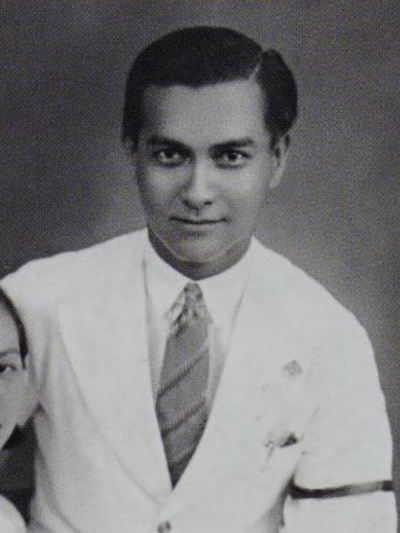 Wee Kim Wee (1985–1993)4th President of Singapore (1915–2005)
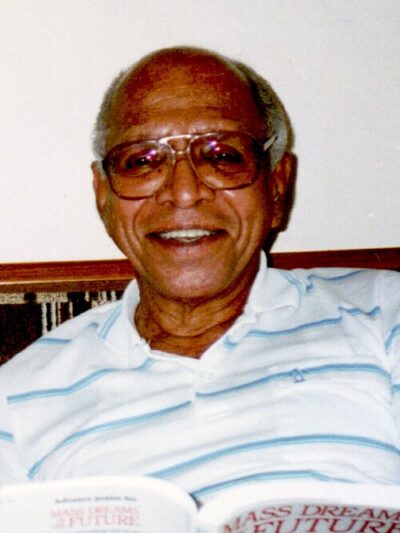 Devan Nair (1981–1985)Malaysian-Singaporean politician, 3rd President of Singapore (1923–2005)
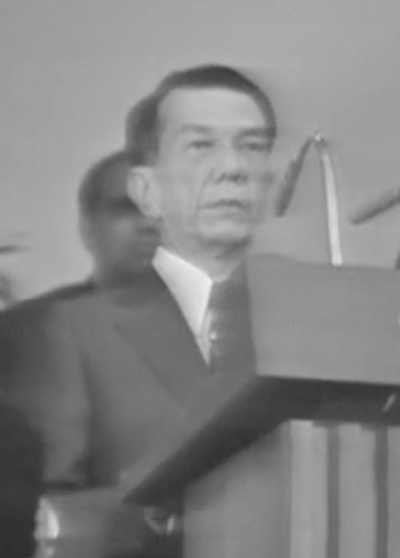 Benjamin Sheares (1971–1981)2nd President of Singapore (1907–1981)
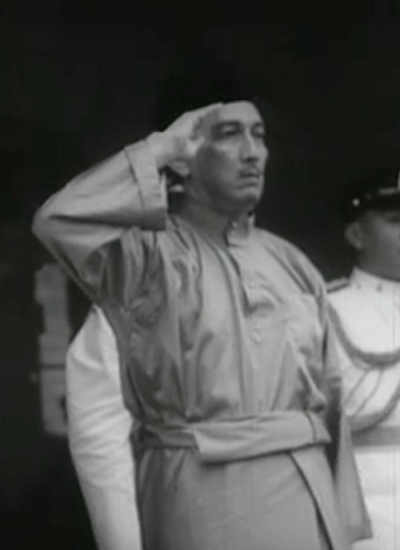 Yusof bin Ishak (1965–1970)1st President of Singapore (1910–1970)
