
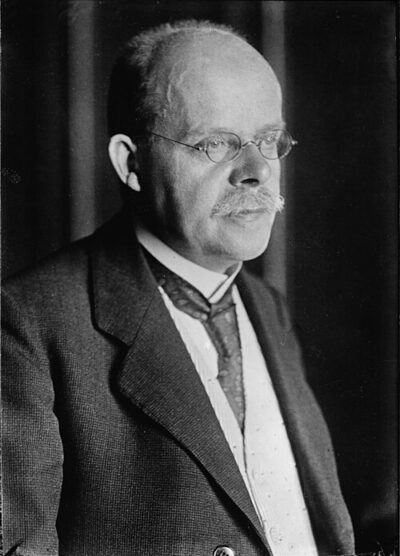
Wilhelm Marx
Wilhelm Marx was a German politician. Born January 15, 1863, in Cologne. Died August 5, 1946, in Bonn. Positions held include member of the Reichstag of the Weimar Republic, member of the Reichstag of the German Empire and Member of the Prussian House of Representatives. Educated at University of Bonn.
Facts
24 facts · 2 confirmed by two sources · 7 cited · 15 from one source
Where this comes from
Papalocal keeps its own record. It started from these sources; what each one said is kept here as it was copied, so a change on their side never changes this page by itself. Tap one to read its version.
What Wikidata says · copied November 16, 2026 · revision 2568909592
- Described as
- German politician (1863–1946)
- Born
- January 15, 1863 · 8 references
- Died
- August 5, 1946 · 8 references
- Born in
- Cologne · 1 reference
- Died in
- Bonn · 2 references
- Buried in
- Melaten-Friedhof
- Citizen of
- Germany
- Occupation
- politician · 1 reference; judge · 1 reference; jurist · 1 reference; minister · 1 reference
- Positions held
- member of the Reichstag of the Weimar Republic; member of the Reichstag of the German Empire; Member of the Prussian House of Representatives; member of Landtag of Prussia (1899–1918); Reich Chancellor in the Weimar Republic (2 times) (1923–1928); Minister President of Prussia (1925); Chancellor of Germany (1926–1928); Reich Minister of Justice (1926)
- Political party
- Centre Party
- Education
- University of Bonn
- Member of
- Katholischer Studentenverein Arminia Bonn; Katholischer Studentenverein Askania-Burgundia Berlin · 1 reference
- Children
- Josef Marx · 1 reference
- Religion
- Catholic Church
- Wikipedias with a page
- 53
Wikidata item Q77183 (wikidata.org/wiki/Q77183), public domain (CC0). Copied November 16, 2026.
What Wikipedia says · copied November 16, 2026 · revision 1376741454
Wilhelm Marx (15 January 1863 – 5 August 1946) was a German judge, lawyer, and politician who twice served as chancellor of Germany during the Weimar Republic, from 1923 to 1925 and again from 1926 to 1928. He also briefly held the position of Minister-President of Prussia in 1925. A leading figure in the Centre Party, he served as its chairman from 1922 to 1928. With a total tenure of three years and 73 days, he was the longest-serving chancellor of the Weimar Republic.
After being a member of the Reichstag of the German Empire for ten years, Marx was elected in 1919 to the Weimar National Assembly that drafted Germany's new constitution and then in 1920 to the Republic's Reichstag where he served until not long before the Nazi takeover. As chancellor, he helped steer Germany through the crisis year of 1923 with its hyperinflation and rebellious state governments. The following year, his government worked to end the immediate crisis over Germany's war reparations and then in 1927 successfully brought Germany into the League of Nations. His terms in office saw a number of progressive pieces of legislation pass, including family allowances for state employees and comprehensive unemployment insurance.
After resigning from the Reichstag in 1932, Marx worked with various civic organisations. He remained in Germany through the Nazi era and died in Bonn in 1946.
- Born, in its opening lines
- January 15, 1863
- Died, in its opening lines
- August 5, 1946
From the Wikipedia article “Wilhelm Marx” (en.wikipedia.org/wiki/Wilhelm_Marx), by its contributors, under CC BY-SA 4.0 (creativecommons.org/licenses/by-sa/4.0/). Copied November 16, 2026; not changed.
Confirmed Two sources agree. Cited One source, and it names where it got it. One source One source, without a reference of its own. Sources disagree The sources disagree. We show the best-supported value and keep theirs below.
