
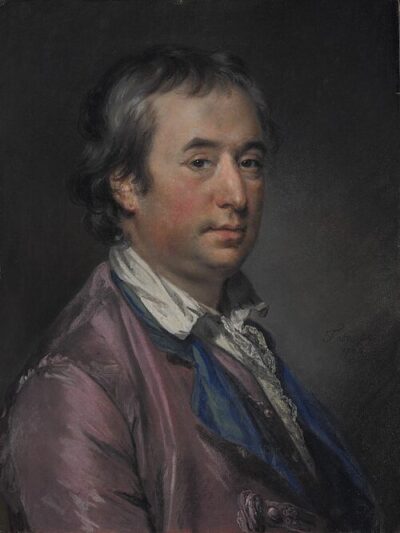
William Chambers
William Chambers was a Scottish-Swedish architect;. Born February 23, 1723, in Gothenburg. Died March 8, 1796, in London. Known for George III and the River Thames and Dundas House. Educated at École des Beaux-Arts. Awards include Fellow of the Royal Society, Knight Officer of the Order of the Polar Star and Knight Bachelor.
Facts
21 facts · 1 confirmed by two sources · 3 cited · 16 from one source · 1 where the sources disagree
What’s different
- Died: we show March 8, 1796 (Sources disagree). Wikipedia says March 10, 1796
Where this comes from
Papalocal keeps its own record. It started from these sources; what each one said is kept here as it was copied, so a change on their side never changes this page by itself. Tap one to read its version.
What Wikidata says · copied November 17, 2026 · revision 2565800796
- Described as
- Scottish-Swedish architect; (1723-1796)
- Other names
- Chambers, William Chambers Sir, Cham, Sir William Chambers, W. Chambers, Chambs, Chambrs, William, Sir Chambers, Sir Chambers, Chamrs
- Born
- February 23, 1723 · 13 references
- Died
- March 8, 1796 · 8 references
- Born in
- Gothenburg · 2 references
- Died in
- London · 1 reference
- Buried in
- Westminster Abbey
- Citizen of
- Kingdom of Great Britain; Sweden
- Occupation
- architect · 2 references
- Education
- École des Beaux-Arts
- Member of
- Royal Society of London (1776–); Royal Swedish Academy of Sciences; Royal Academy of Arts; Accademia delle Arti del Disegno
- Known for
- George III and the River Thames; Dundas House
- Awards
- Fellow of the Royal Society (1776–); Knight Officer of the Order of the Polar Star; Knight Bachelor (1771)
- Spouse
- Catherine Chambers · 1 reference
- Children
- Selina Innes
- Religion
- Anglicanism
- Wikipedias with a page
- 25
Wikidata item Q455155 (wikidata.org/wiki/Q455155), public domain (CC0). Copied November 17, 2026.
What Wikipedia says · copied November 17, 2026 · revision 1381859384
Sir William Chambers (23 February 1723 – 10 March 1796) was a Swedish-born British architect. Among his best-known works are Somerset House, the Gold State Coach and the pagoda at Kew. Chambers was a founder member of the Royal Academy.
- Born, in its opening lines
- February 23, 1723
- Died, in its opening lines
- March 10, 1796
From the Wikipedia article “William Chambers (architect)” (en.wikipedia.org/wiki/William_Chambers_(architect)), by its contributors, under CC BY-SA 4.0 (creativecommons.org/licenses/by-sa/4.0/). Copied November 17, 2026; not changed.
Confirmed Two sources agree. Cited One source, and it names where it got it. One source One source, without a reference of its own. Sources disagree The sources disagree. We show the best-supported value and keep theirs below.
