
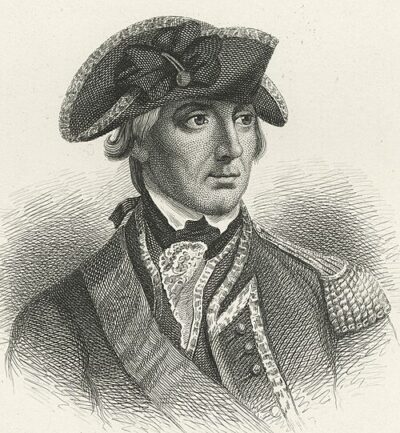
William Howe, 5th Viscount Howe
William Howe, 5th Viscount Howe was a British General in the American War of Independence. Born August 10, 1729, in London. Died July 12, 1814, in Plymouth. Positions held include member of the 11th Parliament of Great Britain, member of the 12th Parliament of Great Britain and member of the 13th Parliament of Great Britain. Educated at Eton College. Awards include Order of the Bath.
Facts
24 facts · 2 confirmed by two sources · 8 cited · 14 from one source
Where this comes from
Papalocal keeps its own record. It started from these sources; what each one said is kept here as it was copied, so a change on their side never changes this page by itself. Tap one to read its version.
What Wikidata says · copied November 16, 2026 · revision 2558282797
- Described as
- British General in the American War of Independence (1729-1814)
- Other names
- William Howe, Howe
- Born
- August 10, 1729 · 6 references
- Died
- July 12, 1814 · 7 references
- Born in
- London
- Died in
- Plymouth · 1 reference
- Buried in
- Twickenham
- Citizen of
- Kingdom of Great Britain
- Occupation
- politician; military personnel; military officer
- Positions held
- member of the 11th Parliament of Great Britain; member of the 12th Parliament of Great Britain; member of the 13th Parliament of Great Britain; member of the 14th Parliament of Great Britain
- Political party
- Whigs
- Education
- Eton College · 1 reference
- Awards
- Order of the Bath · 1 reference
- Spouse
- Frances Conolly (1765–) · 2 references
- Father
- Emanuel Howe, 2nd Viscount Howe · 1 reference
- Mother
- Charlotte Howe, Viscountess Howe · 1 reference
- Siblings
- George Howe, 3rd Viscount Howe · 1 reference; Richard Howe, 1st Earl Howe · 1 reference
- Military branch
- British Army
- Military rank
- lieutenant general; general · 1 reference
- Wikipedias with a page
- 34
Wikidata item Q333422 (wikidata.org/wiki/Q333422), public domain (CC0). Copied November 16, 2026.
What Wikipedia says · copied November 16, 2026 · revision 1378926074
General William Howe, 5th Viscount Howe (10 August 1729 – 12 July 1814), was a British Army officer and politician who rose to become Commander-in-Chief, America, during the American War of Independence. Howe was one of three brothers who had distinguished military careers. In historiography of the American war, he is usually referred to as Sir William Howe to distinguish him from his brother Richard, who was 4th Viscount Howe at that time.
Howe joined the army in 1746 and saw extensive service in the War of the Austrian Succession and Seven Years' War. He became known for his role in the capture of Quebec in 1759 when he led a British force to capture the cliffs at Anse-au-Foulon, allowing James Wolfe to land his army and engage the French in the Battle of the Plains of Abraham. Howe also participated in the British offensive campaigns of Louisbourg, Belle Île and Havana. He was appointed Lieutenant-Governor of the Isle of Wight, a post he held until 1795.
Howe was sent to North America in March 1775, arriving in May after the American War of Independence broke out. After leading British troops to a costly victory in the Battle of Bunker Hill, Howe took command of all British forces in America from Thomas Gage in September of that year. Howe's record in North America was marked by the successful capture of both New York City and Philadelphia. However, poor campaign planning for 1777 contributed to the failure of John Burgoyne's Saratoga campaign, which played a major role in the entry of France into the war. Howe's role in developing those plans and the degree to which he was responsible for British failures that year (despite his personal success at Philadelphia) have both been subjects of contemporary and historic debate.
He was knighted after his successes in 1776. He resigned his post as Commander-in-Chief, British land forces in America, in 1777, and the next year returned to England, where he was at times active in the defence of the British Isles. He sat in the House of Commons from 1758 to 1780 for Nottingham. He inherited the Howe viscountcy upon the death of his brother Richard in 1799. He married, but had no children, and the viscountcy became extinct with his death in 1814.
- Born, in its opening lines
- August 10, 1729
- Died, in its opening lines
- July 12, 1814
From the Wikipedia article “William Howe, 5th Viscount Howe” (en.wikipedia.org/wiki/William_Howe,_5th_Viscount_Howe), by its contributors, under CC BY-SA 4.0 (creativecommons.org/licenses/by-sa/4.0/). Copied November 16, 2026; not changed.
Confirmed Two sources agree. Cited One source, and it names where it got it. One source One source, without a reference of its own. Sources disagree The sources disagree. We show the best-supported value and keep theirs below.
