
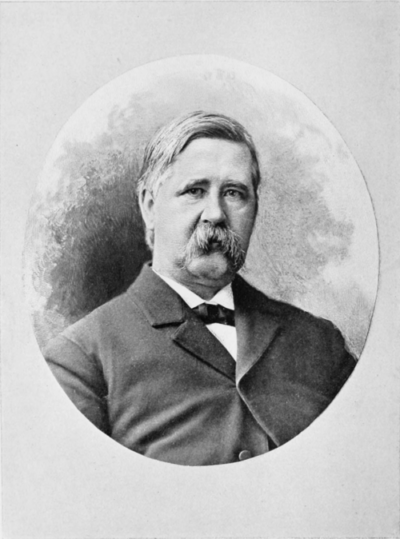
William Keith Brooks
William Keith Brooks was an American zoologist. Born March 25, 1848, in Cleveland. Died November 12, 1908, in Baltimore County. Known for The Oyster: A Popular Summary of a Scientific Study and The foundations of zoology. Educated at Harvard University and Williams College. Awards include Fellow of the American Association for the Advancement of Science and Fellow of the Royal Microscopical Society.
Facts
27 facts · 2 confirmed by two sources · 22 cited · 2 from one source · 1 where the sources disagree
What’s different
- Cause of death: we show heart failure (Sources disagree). Wikidata also lists kidney failure
Where this comes from
Papalocal keeps its own record. It started from these sources; what each one said is kept here as it was copied, so a change on their side never changes this page by itself. Tap one to read its version.
What Wikidata says · copied November 19, 2026 · revision 2513473550
- Described as
- American zoologist (1848–1908)
- Other names
- Wm. K. Brooks, W.K. Brooks, William K. Brooks
- Born
- March 25, 1848 · 10 references
- Died
- November 12, 1908 · 8 references
- Born in
- Cleveland · 5 references
- Died in
- Baltimore County · 7 references
- Buried in
- Prospect Hill Cemetery · 1 reference
- Cause of death
- heart failure · 1 reference; kidney failure · 1 reference
- Citizen of
- United States · 2 references
- Occupation
- zoologist · 3 references; malacologist · 1 reference; naturalist · 1 reference; university teacher · 4 references
- Worked for
- Johns Hopkins University (1876–1908) · 3 references
- Education
- Harvard University (–1875) · 4 references; Williams College (1868–1870) · 3 references; Hobart and William Smith Colleges (1866–1868) · 2 references
- Member of
- American Academy of Arts and Sciences; National Academy of Sciences (1884–) · 2 references; American Philosophical Society (1886–) · 1 reference; Academy of Natural Sciences of Drexel University · 1 reference; Boston Society of Natural History · 1 reference; American Society of Zoologists · 1 reference
- Known for
- The Oyster: A Popular Summary of a Scientific Study · 3 references; The foundations of zoology · 2 references
- Awards
- Fellow of the American Association for the Advancement of Science · 1 reference; Fellow of the Royal Microscopical Society · 1 reference
- Lived in
- Baltimore County (–1908) · 6 references; Cleveland (–1871) · 1 reference
- Wikipedias with a page
- 10
Wikidata item Q3568758 (wikidata.org/wiki/Q3568758), public domain (CC0). Copied November 19, 2026.
What Wikipedia says · copied November 19, 2026 · revision 1371981583
William Keith Brooks (March 25, 1848 – November 12, 1908) was an American zoologist, born in Cleveland, Ohio, March 25, 1848. Brooks studied embryological development in invertebrates and founded a marine biological laboratory where he and others studied heredity. His best known book, The Oyster, was first published in 1891 and has been reprinted many times.
- Born, in its opening lines
- March 25, 1848
- Died, in its opening lines
- November 12, 1908
From the Wikipedia article “William Keith Brooks” (en.wikipedia.org/wiki/William_Keith_Brooks), by its contributors, under CC BY-SA 4.0 (creativecommons.org/licenses/by-sa/4.0/). Copied November 19, 2026; not changed.
Confirmed Two sources agree. Cited One source, and it names where it got it. One source One source, without a reference of its own. Sources disagree The sources disagree. We show the best-supported value and keep theirs below.
