
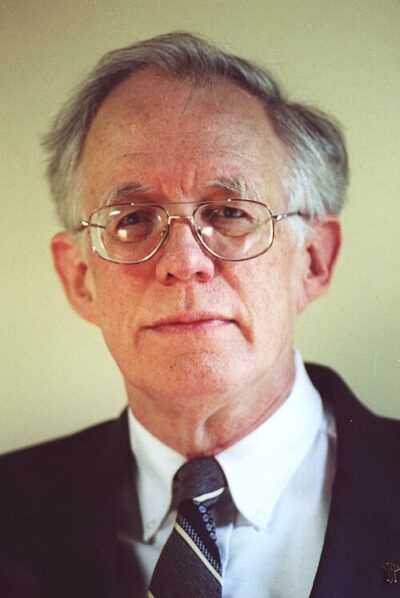
William Luther Pierce
William Luther Pierce was an American neo-Nazi. Born September 11, 1933, in Atlanta. Died July 23, 2002, in Mill Point. Known for The Turner Diaries. Educated at Rice University and University of Colorado Boulder.
Facts
27 facts · 2 confirmed by two sources · 3 cited · 22 from one source
Where this comes from
Papalocal keeps its own record. It started from these sources; what each one said is kept here as it was copied, so a change on their side never changes this page by itself. Tap one to read its version.
What Wikidata says · copied November 15, 2026 · revision 2569994017
- Described as
- American neo-Nazi (1933–2002)
- Other names
- William Pierce, Andrew Macdonald, William Luther Pierce III, William L. Pierce
- Born
- September 11, 1933 · 2 references
- Died
- July 23, 2002 · 2 references
- Born in
- Atlanta
- Died in
- Mill Point
- Cause of death
- cancer
- Citizen of
- United States
- Occupation
- physicist · 1 reference; writer; university teacher; journalist; politician · 1 reference; novelist · 1 reference; political activist
- Worked for
- Oregon State University (1962–1965); University of California (1954–1955); Los Alamos National Laboratory
- Education
- Rice University (1952–1955); University of Colorado Boulder (1956–1962); California Institute of Technology (1955–1956); Allen Academy (–1951)
- Known for
- The Turner Diaries · 1 reference
- Children
- Kelvin Pierce
- Father
- William Luther Pierce II
- Mother
- Marguerite Ferrell
- Religion
- cosmotheism · 1 reference; pantheism
- Lived in
- Hillsboro
- Wikipedias with a page
- 27
Wikidata item Q1399160 (wikidata.org/wiki/Q1399160), public domain (CC0). Copied November 15, 2026.
What Wikipedia says · copied November 15, 2026 · revision 1382342802
William Luther Pierce III (September 11, 1933 – July 23, 2002) was an American neo-Nazi political activist. For more than 30 years, he was one of the highest-profile individuals of the white nationalist movement. A physicist by profession, he authored the novels The Turner Diaries and Hunter under the pen name Andrew Macdonald. The first novel inspired multiple terrorist attacks, including the 1995 Oklahoma City bombing. Pierce founded the white nationalist National Alliance, an organization which he led for almost 30 years.
Born in Atlanta, Georgia, Pierce received a bachelor's degree in physics from Rice University in 1955 as well as a doctorate from the University of Colorado Boulder in 1962. He became an assistant professor of physics at Oregon State University in that year. In 1965, he left his tenure at Oregon State University and became a senior researcher for the aerospace manufacturer Pratt & Whitney in Connecticut. He moved to the Washington, D.C. area and became an associate of George Lincoln Rockwell, founder of the American Nazi Party, who was assassinated in 1967. Pierce became co-leader of the National Youth Alliance, which split in 1974, with Pierce founding the National Alliance.
Pierce's novel The Turner Diaries (1978) depicts a violent revolution in the United States, followed by a world war and the extermination of non-white races. Another novel by Pierce, Hunter (1989) portrays the actions of a lone-wolf white supremacist assassin. In 1985, Pierce relocated the headquarters of the National Alliance to Hillsboro, West Virginia, where he founded the Cosmotheist Community Church. Pierce spent the rest of his life in West Virginia hosting a weekly show, American Dissident Voices, and overseeing his publications, National Vanguard magazine (originally titled Attack!), as well as books which were published by his publishing firm National Vanguard Books, Inc. and the white power music label Resistance Records.
- Born, in its opening lines
- September 11, 1933
- Died, in its opening lines
- July 23, 2002
From the Wikipedia article “William Luther Pierce” (en.wikipedia.org/wiki/William_Luther_Pierce), by its contributors, under CC BY-SA 4.0 (creativecommons.org/licenses/by-sa/4.0/). Copied November 15, 2026; not changed.
Confirmed Two sources agree. Cited One source, and it names where it got it. One source One source, without a reference of its own. Sources disagree The sources disagree. We show the best-supported value and keep theirs below.
