
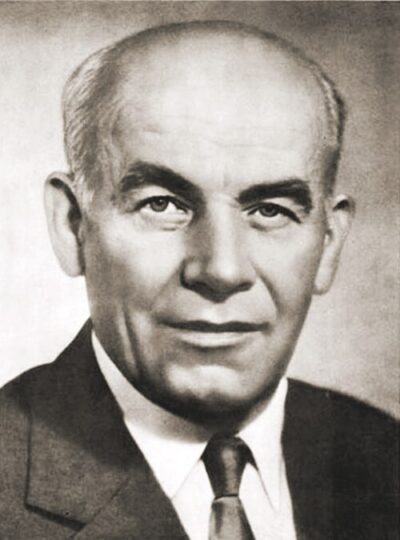
Władysław Gomułka
Władysław Gomułka was a Polish politician. Born February 6, 1905, in Krosno. Died September 1, 1982, in Warsaw. Positions held include President of the Republic of Poland and member of the Sejm of the Polish People's Republic. Educated at International Lenin School. Awards include Order of the Builders of People's Poland, Grand Cross of the Order of Polonia Restituta and Order of the Cross of Grunwald, 1st class.
Facts
36 facts · 2 confirmed by two sources · 6 cited · 28 from one source
Where this comes from
Papalocal keeps its own record. It started from these sources; what each one said is kept here as it was copied, so a change on their side never changes this page by itself. Tap one to read its version.
What Wikidata says · copied November 16, 2026 · revision 2558930501
- Described as
- Polish politician (1905-1982)
- Born
- February 6, 1905 · 14 references
- Died
- September 1, 1982 · 13 references
- Born in
- Krosno · 2 references
- Died in
- Warsaw · 2 references
- Buried in
- Powązki Military Cemetery
- Cause of death
- lung cancer
- Citizen of
- Cisleithania; Second Polish Republic; Polish People's Republic
- Occupation
- politician · 1 reference; trade unionist
- Positions held
- President of the Republic of Poland; member of the Sejm of the Polish People's Republic · 1 reference
- Political party
- Polish United Workers' Party; Polish Workers' Party · 1 reference; Communist Party of the Soviet Union (–1942); Independent Peasant Party · 1 reference
- Education
- International Lenin School · 1 reference
- Member of
- Society of Fighters for Freedom and Democracy · 1 reference
- Awards
- Order of the Builders of People's Poland; Grand Cross of the Order of Polonia Restituta (1946); Order of the Cross of Grunwald, 1st class; Partisan Cross (Poland); Medal for Warsaw 1939-1945; Order of Lenin (1970); Jubilee Medal "In Commemoration of the 100th Anniversary of the Birth of Vladimir Ilyich Lenin"; Honorary badge "For Merits for Warsaw"; Medal of Rodło; For services to the city of Gdańsk (1960); Badge of the 1000th Anniversary of the Polish State (1966); Grand Cross of the Legion of Honour · 1 reference; Order of Georgi Dimitrov · 1 reference; Miner's Glory 1st class · 1 reference
- Spouse
- Zofia Gomułkowa (1951–1982)
- Children
- Ryszard Strzelecki-Gomułka
- Religion
- atheism
- Wikipedias with a page
- 55
Wikidata item Q159603 (wikidata.org/wiki/Q159603), public domain (CC0). Copied November 16, 2026.
What Wikipedia says · copied November 16, 2026 · revision 1379930365
Władysław Gomułka (Polish: [vwaˈdɨswav ɡɔˈmuwka] ; 6 February 1905 – 1 September 1982) was a Polish communist politician. He was the de facto leader of post-war Poland from 1956 to 1970.
Gomułka was born in 1905 in Galicia. A plumber from the age of fourteen, he joined the revolutionary movement, made propaganda in the trade unions and suffered the rigours of the Witos government, then of the Pilsudski dictatorship. During the textile strike at Łódź in 1932, he was seriously wounded in the leg by the police, which ultimately left him with permanent walking impairment. Held as a political prisoner for several years, he was released during the invasion of Poland in 1939 and took refuge in Lwów.
He was ordered to Warsaw and became one of the most energetic organisers of the resistance against the Nazis. In 1943, he became the leader of the left-wing resistance fighters, the general secretary of the underground Polish Workers' Party (PPR). When Poland was occupied by the Red Army, it collaborated with the Lublin government, formed by the Soviets with the Polish Bierut group, which received Stalin's blessing.
Following the Polish October, he became leader again from 1956 to 1970. Gomułka was initially very popular for his reforms; his seeking a "Polish way to socialism"; and giving rise to the period known as "Polish thaw". He put an end to the forced collectivization of land, eased relations with the Catholic Church, and secured the departure of Soviet advisers. During the 1960s, however, he became more rigid and authoritarian — afraid of destabilising the system, he was not inclined to introduce or permit changes. In 1967 to 1968, Gomułka allowed outbursts of anti-Zionist and antisemitic political campaign. Many of the remaining Polish Jews left the country. At that time, he was also responsible for persecuting protesting students and toughening censorship of the media. Gomułka supported Poland's participation in the Warsaw Pact invasion of Czechoslovakia in August 1968.
In the treaty with West Germany, signed in December 1970 at the end of Gomułka's period in office, West Germany recognised the post-World War II borders, which established a foundation for future peace, stability and cooperation in Central Europe. In the same month, economic difficulties led to price rises and subsequent bloody clashes with shipyard workers on the Baltic coast, in which several dozen workers were fatally shot. The tragic events forced Gomułka's resignation and retirement. In a generational replacement of the ruling elite, Edward Gierek took over the Party leadership, and tensions eased.
- Born, in its opening lines
- February 6, 1905
- Died, in its opening lines
- September 1, 1982
From the Wikipedia article “Władysław Gomułka” (en.wikipedia.org/wiki/Władysław_Gomułka), by its contributors, under CC BY-SA 4.0 (creativecommons.org/licenses/by-sa/4.0/). Copied November 16, 2026; not changed.
Confirmed Two sources agree. Cited One source, and it names where it got it. One source One source, without a reference of its own. Sources disagree The sources disagree. We show the best-supported value and keep theirs below.
