
Polish Workers' Party
The Polish Workers' Party is a political party. It was founded in 1942. Its headquarters are in Polish Workers' Party headquarter. It stands for Marxism–Leninism, anti-fascism and Stalinism.
- Country
- Poland
- Founded
- January 5, 1942
- Ideology
- Marxism–Leninism
All 12 facts, and where they come from
Facts
12 facts · 0 confirmed by two sources · 3 cited · 9 from one source
Where this comes from
Papalocal keeps its own record. It started from these sources; what each one said is kept here as it was copied, so a change on their side never changes this page by itself. Tap one to read its version.
What Wikidata says · copied November 17, 2026 · revision 2557606656
- Described as
- political party
- What it is
- political party
- Comes after
- Communist Party of Poland
- Followed by
- Polish United Workers' Party
- Founded
- January 5, 1942
- Ended
- December 1948 · 1 reference
- Headquarters
- Polish Workers' Party headquarter
- Country
- Poland
- Chair
- Władysław Gomułka (–1948) · 1 reference; Bolesław Bierut (1948) · 1 reference
- Ideology
- Marxism–Leninism; anti-fascism; Stalinism
- Wikipedias with a page
- 23
Wikidata item Q687409 (wikidata.org/wiki/Q687409), public domain (CC0). Copied 2026-11-17.
What Wikipedia says · copied November 17, 2026 · revision 1385493667
The Polish Workers' Party (Polish: Polska Partia Robotnicza, PPR) was a Marxist-Leninist and Stalinist political party in Poland from 1942 to 1948. It was founded as a reconstitution of the Communist Party of Poland (KPP) and forcibly absorbed the Polish Socialist Party (PPS) in 1948 to form the Polish United Workers' Party (PZPR). From the end of World War II the PPR led Poland, with the Soviet Union exercising moderate influence. During the PPR years, the centers of opposition activity were largely diminished, and a socialist system was established in the country.
Arriving from the Soviet Union, a group of Polish communists was parachuted into occupied Poland in December 1941. With Joseph Stalin's permission, in January 1942 they established the Polish Workers' Party, a new communist party. The PPR established a partisan military organization Gwardia Ludowa, later renamed Armia Ludowa. In November 1943, Władysław Gomułka became secretary (chief executive) of the Central Committee of the PPR. On 1 January 1944 the party created the State National Council (KRN), proclaimed to be a wartime parliament of Poland; the body was chaired by Bolesław Bierut. In June 1944 the Union of Polish Patriots, a rival to the PPR Polish-communist organization operating in the Soviet Union, recognized the KRN as "the true representation of the Polish nation". The PPR was initially a small party with marginal support; it grew because of its alliance with the victorious Soviet Union.
In July 1944 the Polish communists, working in close cooperation with Stalin and other Soviet leaders, established and declared in liberated Lublin a provisional executive quasi-government of Poland, which they called the Polish Committee of National Liberation (PKWN). In the PKWN Manifesto issued at that time, the PKWN claimed its authority in Poland and promised post-war reconstruction as well as land reform. The KRN and the PKWN were established when the Polish government-in-exile in London was the internationally recognized government of Poland. By the end of 1944, the PKWN was replaced by the Provisional Government of the Republic of Poland, recognized by the Soviet Union, with which it signed in April 1945 a 20-year friendship, alliance and cooperation treaty. As a result of the Yalta Conference Allied determinations, the Provisional Government was converted to a formally coalition Provisional Government of National Unity (TRJN) in June 1945. The Polish government-in-exile was excluded from participation and the PPR ended up controlling the new government, which was soon recognized by the United States, the United Kingdom, and other countries. The establishment of a permanent government was conditioned on national elections being held, as mandated by the Allies. In the meantime the PPR engaged in a massive program of rebuilding the country and its industry, in combating and containing the various forms and manifestations of opposition to its rule, but also in manipulating the election preparation process to ensure the party's lasting domination.
The 1946 Polish people's referendum and the following 1947 Polish legislative election were rigged and declared a decisive victory for the PPR's "Democratic Bloc". The only legal opposition, the Polish People's Party, was marginalized. Gomułka's victory, however, was short-lived. Pressured by the Cold War, Stalin had no more patience for the Polish leader's national brand of communism, and from August 1948 the PPR was led by Bierut. In December 1948, the PPR and the purged PPS were merged to form the PZPR. What was left of democratic and pluralistic practices and pretenses was abandoned and Poland entered its period of Stalinist rule.
From the Wikipedia article “Polish Workers' Party” (en.wikipedia.org/wiki/Polish_Workers'_Party), by its contributors, under CC BY-SA 4.0 (creativecommons.org/licenses/by-sa/4.0/). Copied 2026-11-17; not changed.
Confirmed Two sources agree. Cited One source, and it names where it got it. One source One source, without a reference of its own. Sources disagree The sources disagree. We show the best-supported value and keep theirs below.
People connected 11
Party members
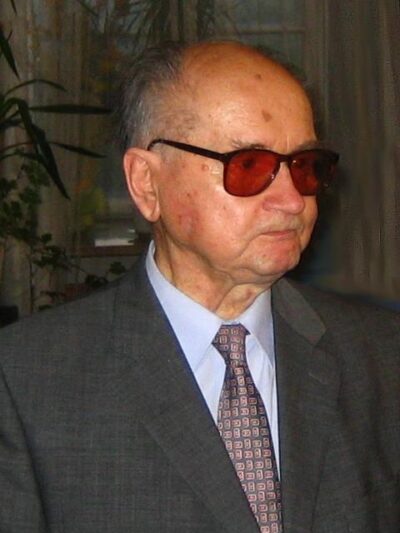 Wojciech JaruzelskiPolish military and political official, leader of the Polish People's Republic from 1981 to 1989
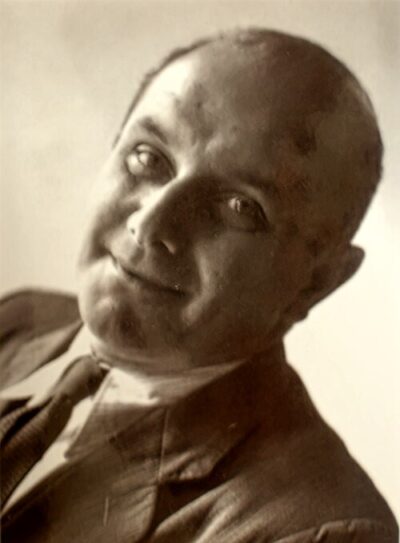 Stanisław Jerzy LecPolish writer (1909–1966)
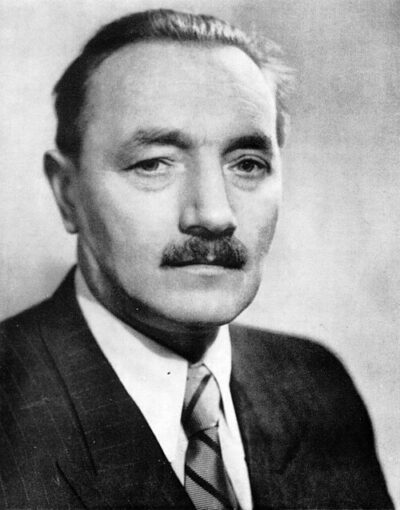 Bolesław Bierut (1942–1948)Polish politician and leader of Poland (1947–1956)
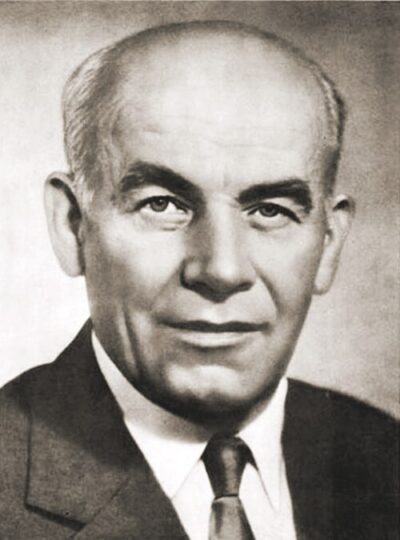 Władysław GomułkaPolish politician (1905-1982)
 Edward Gierek (1948)Polish politician (1913-2001)
 Stanisław Kania (1945–1948)Polish politician (1927-2020)
 Edward OchabPolish general (1906-1989)
 Czesław KiszczakPolish military officer and politician (1925–2015)
 Wanda WasilewskaPolish writer (1905-1964)
 Piotr JaroszewiczPrime Minister of Poland from 1970 to 1980 (1909–1992)
 Aleksander ZawadzkiPolish politician (1899-1964)
