
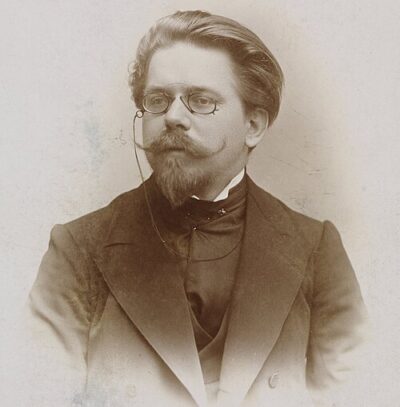
Władysław Reymont
Władysław Reymont was a Polish novelist. Born May 7, 1867, in Kobiele Wielkie. Died December 5, 1925, in Warsaw. Known for The Peasants and The Promised Land. Awards include Nobel Prize in Literature, Commander of the Legion of Honour and Officer of the Order of Polonia Restituta.
Facts
29 facts · 2 confirmed by two sources · 10 cited · 17 from one source
Where this comes from
Papalocal keeps its own record. It started from these sources; what each one said is kept here as it was copied, so a change on their side never changes this page by itself. Tap one to read its version.
What Wikidata says · copied November 16, 2026 · revision 2567362000
- Described as
- Polish novelist (1867-1925)
- Other names
- Wladyslaw Reymont, Ladislas Reymont, Władysław Stanisław Reymont
- Born
- May 7, 1867 · 12 references
- Died
- December 5, 1925 · 12 references
- Born in
- Kobiele Wielkie · 1 reference
- Died in
- Warsaw · 3 references
- Buried in
- Powązki Cemetery (1925–) · 1 reference
- Name at birth
- Władysław Stanisław Rejment · 1 reference
- Citizen of
- Russian Empire; Second Polish Republic
- Occupation
- writer · 3 references; novelist; screenwriter; prose writer · 1 reference; author · 1 reference
- Political party
- National League; Polish People's Party "Piast" (1925) · 1 reference
- Member of
- Związek Zawodowy Literatów Polskich · 1 reference
- Known for
- The Peasants; The Promised Land
- Awards
- Nobel Prize in Literature (1924) · 2 references; Commander of the Legion of Honour (1925) · 1 reference; Officer of the Order of Polonia Restituta (1921) · 1 reference; Commander of the Order of Polonia Restituta (1921) · 1 reference; Grand Cross of the Order of Polonia Restituta (1924) · 1 reference; Order of the White Eagle (2018) · 1 reference
- Field
- fiction · 1 reference; creative and professional writing · 1 reference; prose · 1 reference; short story · 1 reference
- Spouse
- Aurelia Szacnajder Szabłowska
- Wikipedias with a page
- 108
Wikidata item Q121180 (wikidata.org/wiki/Q121180), public domain (CC0). Copied November 16, 2026.
What Wikipedia says · copied November 16, 2026 · revision 1377471107
Władysław Stanisław Reymont (Polish: [vwaˈdɨswaf ˈrɛjmɔnt]; born Rejment; 7 May 1867 – 5 December 1925) was a Polish novelist and the laureate of the 1924 Nobel Prize in Literature. His best-known work is the award-winning four-volume novel Chłopi (The Peasants).
Born into an impoverished noble family, Reymont was educated to become a master tailor, but instead worked as a gateman at a railway station and then as an actor in a troupe. His intensive travels and voyages encouraged him to publish short stories, with notions of literary realism. Reymont's first successful and widely praised novel was The Promised Land from 1899, which brought attention to the bewildering social inequalities, poverty, conflictive multiculturalism and labour exploitation in the industrial city of Łódź (Lodz). The aim of the novel was to extensively emphasize the consequences of extreme industrialization and how it affects society as a whole. In 1900, Reymont was severely injured in a railway accident, which halted his writing career until 1904 when he published the first part of Chłopi.
Władysław Reymont was popular in communist Poland due to his style of writing and the symbolism he used, including socialist concepts, romantic portrayal of the agrarian countryside and toned criticism of capitalism, all present in literary realism. His work is widely attributed to the Young Poland movement, which featured decadence and literary impressionism.
- Born, in its opening lines
- May 7, 1867
- Died, in its opening lines
- December 5, 1925
From the Wikipedia article “Władysław Reymont” (en.wikipedia.org/wiki/Władysław_Reymont), by its contributors, under CC BY-SA 4.0 (creativecommons.org/licenses/by-sa/4.0/). Copied November 16, 2026; not changed.
Confirmed Two sources agree. Cited One source, and it names where it got it. One source One source, without a reference of its own. Sources disagree The sources disagree. We show the best-supported value and keep theirs below.
