
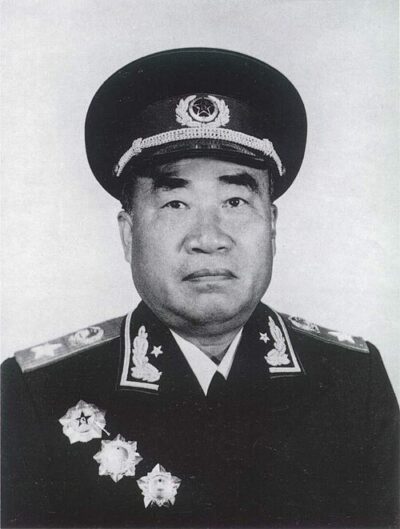
Zhu De
Zhu De was a Marshal of the People's Republic of China (1886-1976). Born December 1, 1886, in Zhu De's Former Residence. Died July 6, 1976, in Beijing. Positions held include Vice President of the People's Republic of China (1954–1959), Chairman of the Standing Committee of the National People's Congress (1959–1976) and Vice Chairman of the Chinese Communist Party (1956–1966). Educated at Yunnan Military Academy and University of Göttingen. Awards include First Class Red Star Medal, People's Liberation Army Strategist and Order of Independence and Freedom, First Class.
Facts
35 facts · 2 confirmed by two sources · 2 cited · 31 from one source
Where this comes from
Papalocal keeps its own record. It started from these sources; what each one said is kept here as it was copied, so a change on their side never changes this page by itself. Tap one to read its version.
What Wikidata says · copied November 16, 2026 · revision 2569060374
- Described as
- Marshal of the People's Republic of China (1886-1976)
- Other names
- Chu Teh, Zhu Yujie, Chu Yu-chieh, Zhude, Zhuyujie, Zhu Yu Jie
- Born
- December 1, 1886 · 2 references
- Died
- July 6, 1976 · 5 references
- Born in
- Zhu De's Former Residence
- Died in
- Beijing · 3 references
- Buried in
- Babaoshan Revolutionary Cemetery
- Citizen of
- Qing dynasty (–1912); Republic of China (1912–1949); People's Republic of China (1949–)
- Occupation
- politician
- Positions held
- Vice President of the People's Republic of China (1954–1959); Chairman of the Standing Committee of the National People's Congress (1959–1976); Vice Chairman of the Chinese Communist Party (1956–1966); Secretary of the Central Commission for Discipline Inspection (1949–1955); National People's Congress deputy; member of the Politburo Standing Committee of the Chinese Communist Party (2 times) (1956–1976)
- Political party
- Chinese Communist Party; Tongmenghui
- Education
- Yunnan Military Academy; University of Göttingen; Moscow Sun Yat-sen University · 1 reference; Sichuan University · 1 reference
- Awards
- First Class Red Star Medal (1933) · 1 reference; People's Liberation Army Strategist; Order of Independence and Freedom, First Class (1955) · 1 reference; Order of Liberation 1st Class (1955) · 1 reference; Star of the Republic of Indonesia · 1 reference; Order of Bayi 1st Class (1955)
- Spouse
- Liu Congzhen (1905–); Chen Yuzhen (1917–); Wu Ruolan (1928–1929); Kang Keqing (1929–1976)
- Children
- Zhu Min
- Religion
- atheism
- Military branch
- National Revolutionary Army · 1 reference
- Military rank
- Marshal of the People's Republic of China
- Wikipedias with a page
- 52
Wikidata item Q22513 (wikidata.org/wiki/Q22513), public domain (CC0). Copied November 16, 2026.
What Wikipedia says · copied November 16, 2026 · revision 1385578262
Zhu De (1 December 1886 – 6 July 1976) was a Chinese general, military strategist, politician and revolutionary in the Chinese Communist Party (CCP).
Zhu was born into poverty and was adopted by a wealthy uncle at age nine and received a superior early education that led to his admission into a military academy. After graduating, he joined a rebel army and became a warlord. After that, he joined the CCP (Chinese Communist Party). He commanded the Eighth Route Army during the Second Sino-Japanese War and the Chinese Civil War. By the end of the civil war, he was also a high-ranking party official.
Zhu is regarded as one of the principal founders of the People's Republic of China, and was a prominent political figure until dying in 1976. In 1955, he was ranked first among the ten marshals. He was chairman of the Standing Committee of the National People's Congress from 1959 to 1976.
- Born, in its opening lines
- December 1, 1886
- Died, in its opening lines
- July 6, 1976
From the Wikipedia article “Zhu De” (en.wikipedia.org/wiki/Zhu_De), by its contributors, under CC BY-SA 4.0 (creativecommons.org/licenses/by-sa/4.0/). Copied November 16, 2026; not changed.
Confirmed Two sources agree. Cited One source, and it names where it got it. One source One source, without a reference of its own. Sources disagree The sources disagree. We show the best-supported value and keep theirs below.
