
augur
Augur is a position. It is an office of Ancient Rome.
- Office of
- Ancient Rome
- Country
- Ancient Rome
All 5 facts, and where they come from
Facts
5 facts · 0 confirmed by two sources · 0 cited · 5 from one source
Where this comes from
Papalocal keeps its own record. It started from these sources; what each one said is kept here as it was copied, so a change on their side never changes this page by itself. Tap one to read its version.
What Wikidata says · copied November 17, 2026 · revision 2569138192
- Described as
- priest in the classical Roman world whose main role was the practice of augury
- Other names
- augurs
- What it is
- position; religious role
- Country
- Ancient Rome
- Field
- ancient Roman religion
- Office of
- Ancient Rome
- Wikipedias with a page
- 51
Wikidata item Q215909 (wikidata.org/wiki/Q215909), public domain (CC0). Copied 2026-11-17.
What Wikipedia says · copied November 17, 2026 · revision 1338476409
An augur was a priest and official in the classical Roman world. His main role was the practice of augury, the interpretation of the will of the gods by studying events he observed within a predetermined sacred space (templum). The templum corresponded to the heavenly space above. The augur's decisions were based on what he personally saw or heard from within the templum; they included thunder, lightning and any accidental signs such as falling objects, but in particular, birdsigns; whether the birds he saw flew in groups or alone, what noises they made as they flew, the direction of flight, what kind of birds they were, how many there were, or how they fed. This practice was known as "taking the auspices". As circumstance did not always favour the convenient appearance of wild birds or weather phenomena, domesticated chickens kept for the purpose were sometimes released into the templum, where their behaviour, particularly how they fed, could be studied by the augur.
The augural ceremony and function of the augur was central to any major undertaking in Roman society – public or private – including matters of war, commerce, and religion. Augurs sought the divine will regarding any proposed course of action which might affect Rome's pax, fortuna, and salus (peace, good fortune, and well-being).
From the Wikipedia article “Augur” (en.wikipedia.org/wiki/Augur), by its contributors, under CC BY-SA 4.0 (creativecommons.org/licenses/by-sa/4.0/). Copied 2026-11-17; not changed.
Confirmed Two sources agree. Cited One source, and it names where it got it. One source One source, without a reference of its own. Sources disagree The sources disagree. We show the best-supported value and keep theirs below.
People connected 7
Held this office
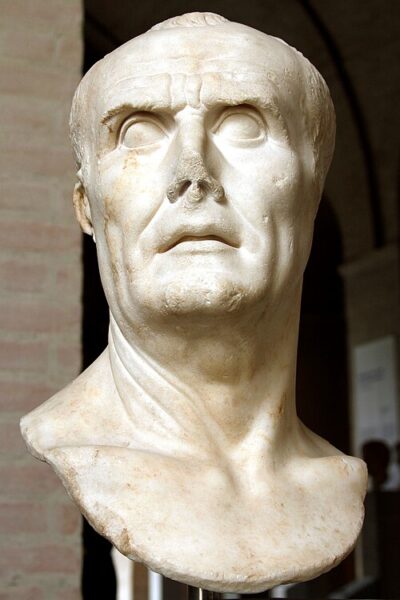 Gaius Marius (-97–-86)Roman general, statesman and military reformer (157-86 BC)
- LLucius Julius Caesar (-79–-40)Roman consul in 64 BC
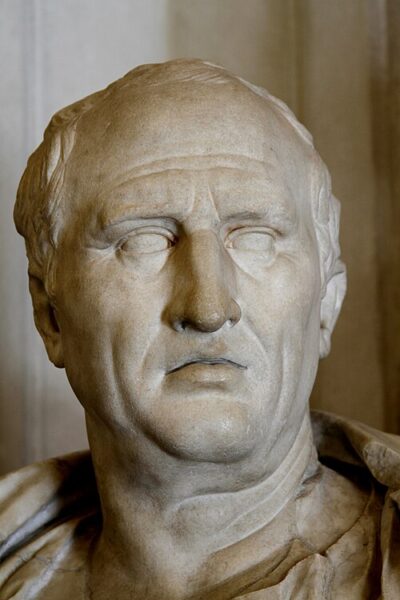 Cicero (-53–-43)Roman statesman, lawyer, orator, and philosopher (106–43 BC)
- TTiberius Sempronius Gracchus (-204–)Roman consul 177 BC
 Tiberius Gracchus (-142–-133)ancient Rome politician
- MMarcus Antonius (-100–-87)Roman orator and grandfather of Mark Antony the triumvir
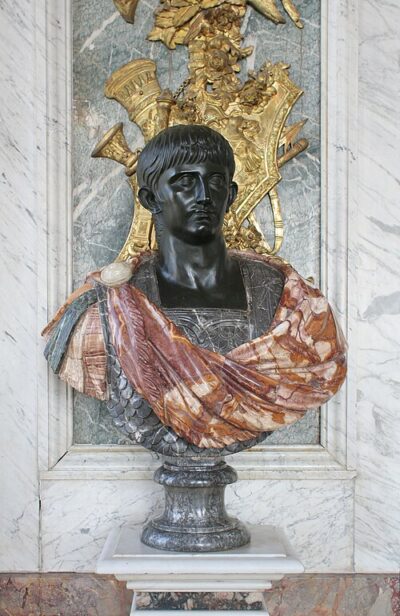 Claudiusfourth Roman emperor (41–54)
