Austro-Hungarian Army
The Austro-Hungarian Army is a ground force of the Austro-Hungarian Dual Monarchy from 1867 to 1918.
- Founded
- 1867
- Country
- Austria–Hungary
All 4 facts, and where they come from
Facts
4 facts · 0 confirmed by two sources · 0 cited · 4 from one source
Where this comes from
Papalocal keeps its own record. It started from these sources; what each one said is kept here as it was copied, so a change on their side never changes this page by itself. Tap one to read its version.
What Wikidata says · copied November 17, 2026 · revision 2536858925
- Described as
- ground force of the Austro-Hungarian Dual Monarchy from 1867 to 1918
- Other names
- K.u.k. Wehrmacht, Österreichisch-ungarische Armee, Österreich-Ungarische Armee
- What it is
- army
- Founded
- 1867
- Ended
- 1918
- Country
- Austria–Hungary
- Wikipedias with a page
- 31
Wikidata item Q682645 (wikidata.org/wiki/Q682645), public domain (CC0). Copied 2026-11-17.
What Wikipedia says · copied November 17, 2026 · revision 1385957351
The Austro-Hungarian Army, also known as the Imperial and Royal Army, was the principal ground force of Austria-Hungary from 1867 to 1918, one of the two branches of the Austro-Hungarian Armed Forces. It consisted of three organisations: the Common Army (German: Gemeinsame Armee, recruited from all parts of Austria-Hungary), the Imperial-Royal Landwehr (recruited from Cisleithania) and the Royal Hungarian Honvéd,with Royal Croatian Home Guard (recruited from Transleithania).
In the wake of fighting between the Austrian Empire and the Kingdom of Hungary and the subsequent two decades of uneasy co-existence, Hungarian troops served either in ethnically mixed units or were stationed away from Hungarian regions. With the Austro-Hungarian Compromise of 1867, the Austro-Hungarian Army was brought into being. It existed until the disestablishment of Austria-Hungary in 1918 following the end of World War I. Common Army units were generally poorly trained and had very limited access to new equipment, because the governments of the Austrian and Hungarian parts of the empire often preferred to generously fund their own units instead of outfitting all three army branches equally. All Landwehr and Honvéd regiments were composed of three battalions, while Common Army regiments had four.
The long-standing white infantry uniforms were replaced in the later half of the 19th century with dark blue tunics, which in turn were replaced by cadet grey uniforms during the initial stages of World War I. In September 1915, field gray was adopted as the new official uniform colour. As the Common Army was plagued with supply shortages, when field gray uniforms were first introduced, remaining stocks of the preexisting cadet grey uniforms remained in use alongside the newer colour. The last known surviving member of the Austro-Hungarian Army was Franz Künstler, who died in Bad Mergentheim in May 2008 at the age of 107.
From the Wikipedia article “Austro-Hungarian Army” (en.wikipedia.org/wiki/Austro-Hungarian_Army), by its contributors, under CC BY-SA 4.0 (creativecommons.org/licenses/by-sa/4.0/). Copied 2026-11-17; not changed.
Confirmed Two sources agree. Cited One source, and it names where it got it. One source One source, without a reference of its own. Sources disagree The sources disagree. We show the best-supported value and keep theirs below.
Picture: Wikimedia Commons: KuK Kavallerie 1898.jpg · See Commons file page
People connected 15
Military branch
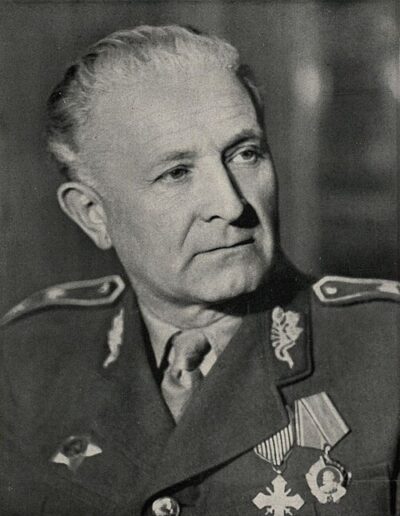 Ludvík SvobodaCzechoslovak general and politician (1895-1979)
 Ferenc SzálasiHungarian fascist politician, executed for war crimes (1897-1946)
 Franz Conrad von HötzendorfField Marshal of the Austro-Hungarian Empire (1852–1925)
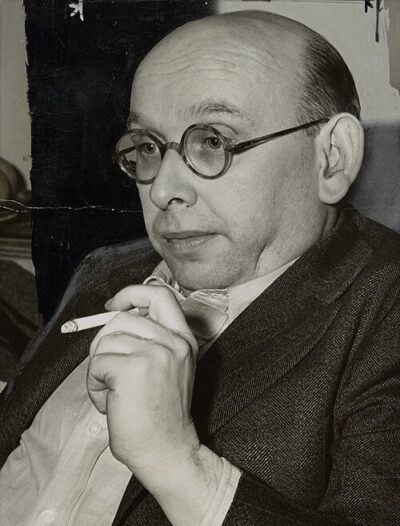 Hanns EislerAustrian and German composer (1898–1962)
 Rudolf HilferdingGerman politician (1877-1941)
 Franz BöhmeWorld War II Nazi war criminal (1885-1947)
 Eduard von Böhm-ErmolliAustro-Hungarian general (1856-1941)
 Alfred RedlAustro-Hungarian army officer
 Konrad HenleinCzechoslovak German nation politician (1898-1945)
 Svetozar BoroevićAustro-Hungarian field marshal
 Archduke Joseph August of AustriaArchduke of Austria (1872-1962)
 Stanisław SosabowskiPolish general (1892-1967)
 Gusztáv JányHungarian military officer (1883–1947)
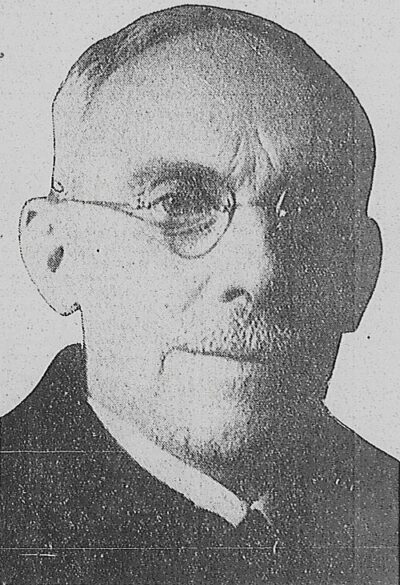 Vladko MačekCroatian politician (1879–1964)