Dr. Strangelove
Dr. Strangelove is a 1964 British satire film directed by Stanley Kubrick. It stars Peter Sellers, George C. Scott and Sterling Hayden. It is based on Red Alert. It won the Bodil Award for Best Non-American Film and 5 more.
- Released
- 1964
- Directed by
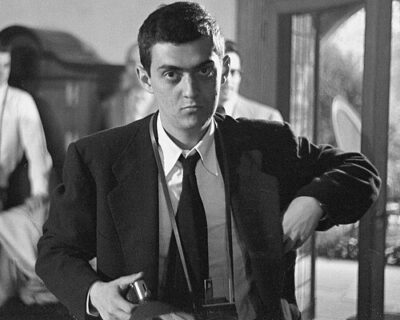
- Stanley Kubrick
- Genre
- black comedy film
- Country of origin
- United States
All 34 facts, and where they come from
Facts
34 facts · 0 confirmed by two sources · 23 cited · 11 from one source
Where this comes from
Papalocal keeps its own record. It started from these sources; what each one said is kept here as it was copied, so a change on their side never changes this page by itself. Tap one to read its version.
What Wikidata says · copied November 16, 2026 · revision 2566803238
- Described as
- 1964 British satire film directed by Stanley Kubrick
- Other names
- Dr. Strangelove or: How I Learned to Stop Worrying and Love the Bomb, How I Learned to Stop Worrying and Love the Bomb
- What it is
- film
- Directed by
- Stanley Kubrick · 5 references
- Music by
- Laurie Johnson · 1 reference
- Screenplay by
- Peter George · 1 reference; Terry Southern · 1 reference; Stanley Kubrick · 1 reference; James B. Harris
- Produced by
- Stanley Kubrick · 1 reference
- Starring
- Peter Sellers · 6 references; George C. Scott · 5 references; Sterling Hayden · 4 references; Keenan Wynn · 3 references; Slim Pickens · 2 references; James Earl Jones · 2 references; Peter Bull · 2 references; Jack Creley · 2 references; Tracy Reed · 2 references; Frank Berry · 2 references
- Genre
- black comedy film · 2 references; comedy film · 4 references; war film · 4 references
- Released
- January 29, 1964 · 6 references; April 13, 1964 · 1 reference; April 10, 1964 · 1 reference
- Original language
- English · 1 reference; Russian · 2 references
- Country of origin
- United States · 1 reference; United Kingdom · 1 reference
- Based on
- Red Alert
- Awards
- Bodil Award for Best Non-American Film (1964); New York Film Critics Circle Award for Best Director (1964); BAFTA Award for Best British Film (1965); BAFTA Award for Best Film (1965); United Nations Awards (1965); Hugo Award for Best Dramatic Presentation (1965) · 1 reference
- Named after
- Dr. Strangelove
- Wikipedias with a page
- 72
Wikidata item Q105702 (wikidata.org/wiki/Q105702), public domain (CC0). Copied 2026-11-16.
What Wikipedia says · copied November 16, 2026 · revision 1384052297
Dr. Strangelove or: How I Learned to Stop Worrying and Love the Bomb (usually shortened to Dr. Strangelove) is a 1964 political satire black comedy film co-written, produced, and directed by Stanley Kubrick. It is loosely based on the thriller novel Red Alert (1958) by Peter George, who wrote the screenplay with Kubrick and Terry Southern. Financed and released by Columbia Pictures, the film was a co-production between the United States and the United Kingdom.
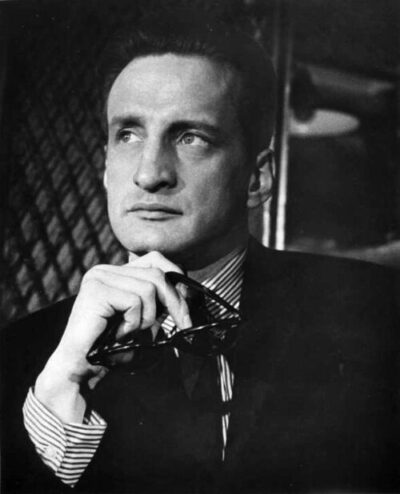
Dr. Strangelove parodies the heightened fears during the Cold War of a nuclear war between the United States and the Soviet Union and stars Peter Sellers (portraying three different characters), George C. Scott, Sterling Hayden, Keenan Wynn, Slim Pickens, and Tracy Reed. The story begins when a paranoid United States Air Force brigadier general goes rogue and orders an unprovoked pre-emptive attack on the Soviet Union using all his B-52s. The President of the United States, his scientific advisor Dr. Strangelove, a Royal Air Force exchange officer, and the Chairman of the Joint Chiefs of Staff luckily recall the B-52s; unfortunately, an isolated and crippled B-52 still bombs the Soviet Union, triggering their new doomsday device.
The film is widely considered one of the best comedy films and one of the greatest and most influential films ever made. In 1998, the American Film Institute ranked it 26th in its list of the best American films (in the 2007 edition, the film ranked 39th), and in 2000, it was listed as number three on its list of the funniest American films. In 1989, the United States Library of Congress included Dr. Strangelove as one of the first 25 films selected for preservation in the National Film Registry for being "culturally, historically, or aesthetically significant". The film received four Academy Award nominations, including Best Picture, Best Director, Best Adapted Screenplay, and Best Actor for Sellers. The film was also nominated for seven BAFTA Film Awards, winning Best Film From Any Source, Best British Film, and Best Art Direction (Black and White), and it also won the Hugo Award for Best Dramatic Presentation.
From the Wikipedia article “Dr. Strangelove” (en.wikipedia.org/wiki/Dr._Strangelove), by its contributors, under CC BY-SA 4.0 (creativecommons.org/licenses/by-sa/4.0/). Copied 2026-11-16; not changed.
Confirmed Two sources agree. Cited One source, and it names where it got it. One source One source, without a reference of its own. Sources disagree The sources disagree. We show the best-supported value and keep theirs below.
Picture: Wikimedia Commons: Dr. Strangelove - General Buck Turgidson.png · See Commons file page